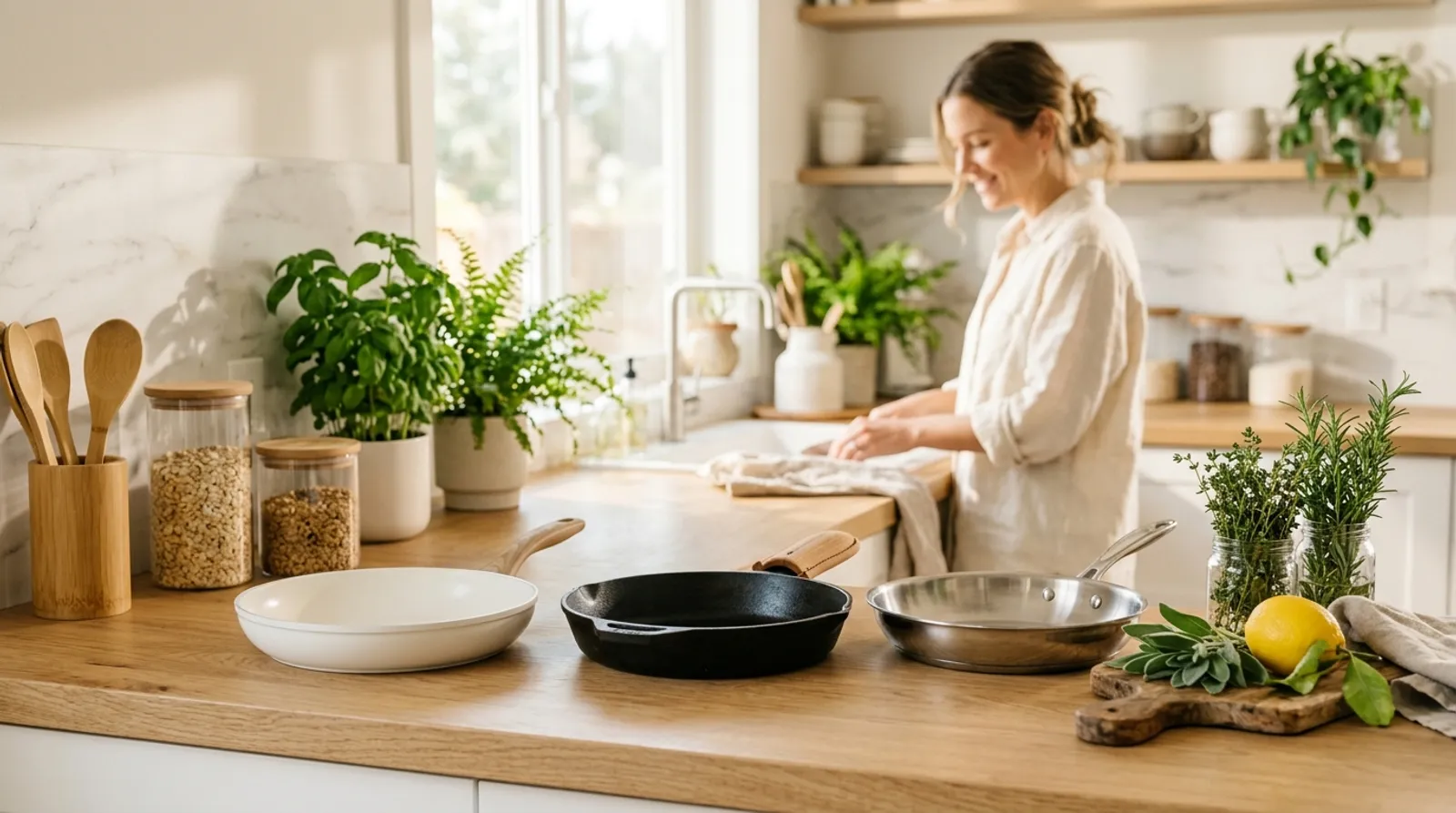
A non-toxic kitchen is not about throwing everything in a box and starting over. It comes down to three areas: the cookware you heat food in, the containers you store and reheat food in, and the water you drink and cook with. Get those three right, start with whatever you use every single day, and you have done most of the work. You do not need a perfect kitchen. You need a few sensible swaps made in the right order.
I learned the order the hard way. When I first saw how many questionable ingredients were in ordinary products, I was genuinely shocked and decided to replace everything at once. It got expensive fast, and in a family you cannot just throw out things that still work. So this guide is organised the way I wish someone had handed it to me: three areas, the real trade-offs in each, and a clear "start here" at the end. The deep dives live in their own guides, linked throughout, so this page stays a map, not a maze.
The three areas that actually matter
Most of your real exposure in a kitchen comes from heat and contact. Heat is the lever: a plastic container that is perfectly fine holding cold leftovers behaves differently when you microwave it, and a coating that is stable at low heat can break down when you crank the burner. So the question for every item is simple: does it touch hot food or hot water?
That gives us three areas, roughly in order of how much food passes through them:
| Area | The main concern | The easy win |
|---|---|---|
| Cookware | Coatings and metals under heat | Stainless steel or cast iron |
| Storage and reheating | Plastic in contact with hot food | Glass containers, reheat on a plate |
| Drinking water | What comes out of the tap | A filter you will actually maintain |
Work through them in that order and you are prioritising by how often each one meets your food. Now the detail.
Cookware: what you cook in every day
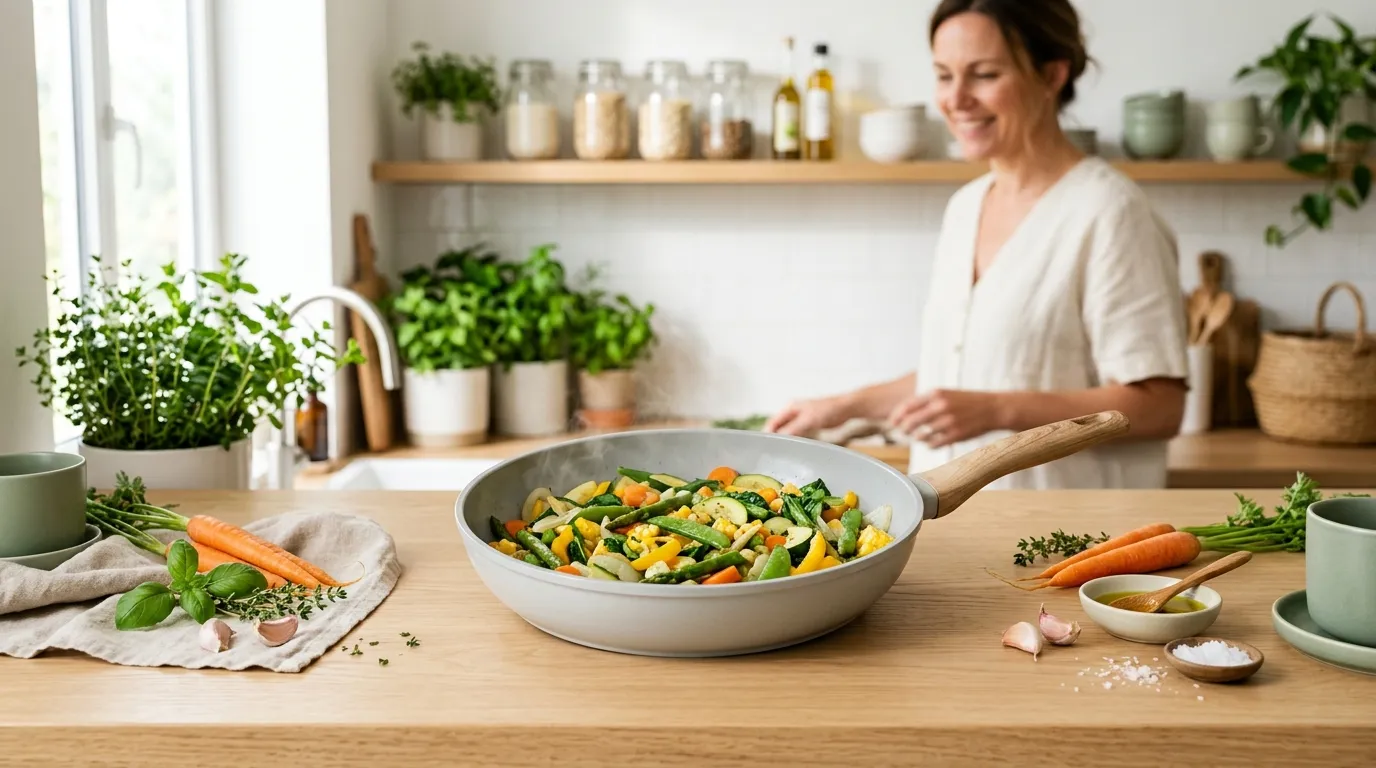
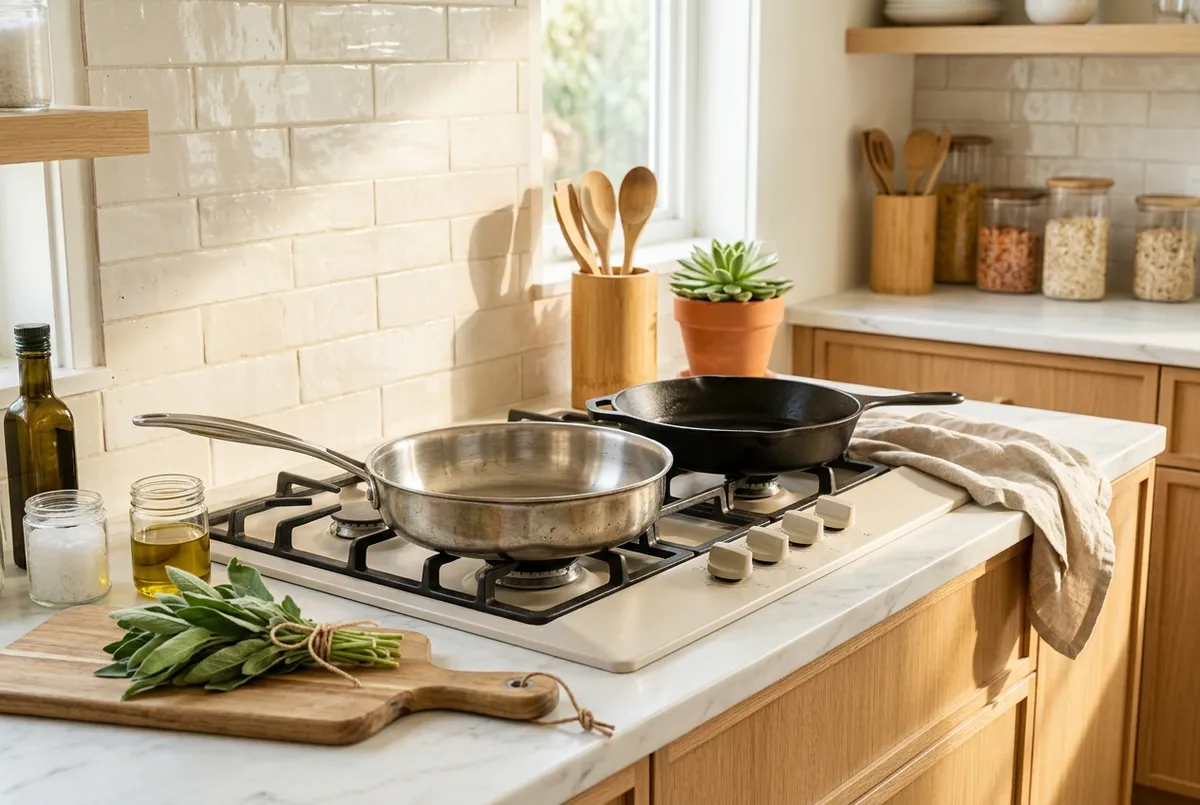
Cookware is where I would spend attention first, because it meets heat and food at the same time, every day. In our home it is mostly stainless steel, with no nonstick at all. Stainless is boring in the best way: it is durable, it handles high heat, and there is no coating to wear off.
The nonstick question
The big worry people have is nonstick, and it is a fair one. Traditional nonstick coatings are made with PFAS, a family of "forever chemicals" that the EPA is actively studying and regulating because they persist in the environment and in our bodies. That does not mean your old pan is a crisis. It means it is worth understanding before you buy your next one. I cover exactly what the evidence shows, and what overheating actually does, in Is Nonstick Cookware Toxic? PFAS and Teflon Explained.
If you love the ease of nonstick, you do not have to give it up. There are PFAS-free coated pans now, usually ceramic-based. My honest caveat: these coatings wear down with use, and faster if you use high heat, metal utensils, abrasive scrubbers or the dishwasher. They are not forever pans. If you go this route, treat them gently and expect to replace them. See Best PFAS-Free Nonstick Pans for the ones worth considering.
Ceramic vs stainless vs cast iron
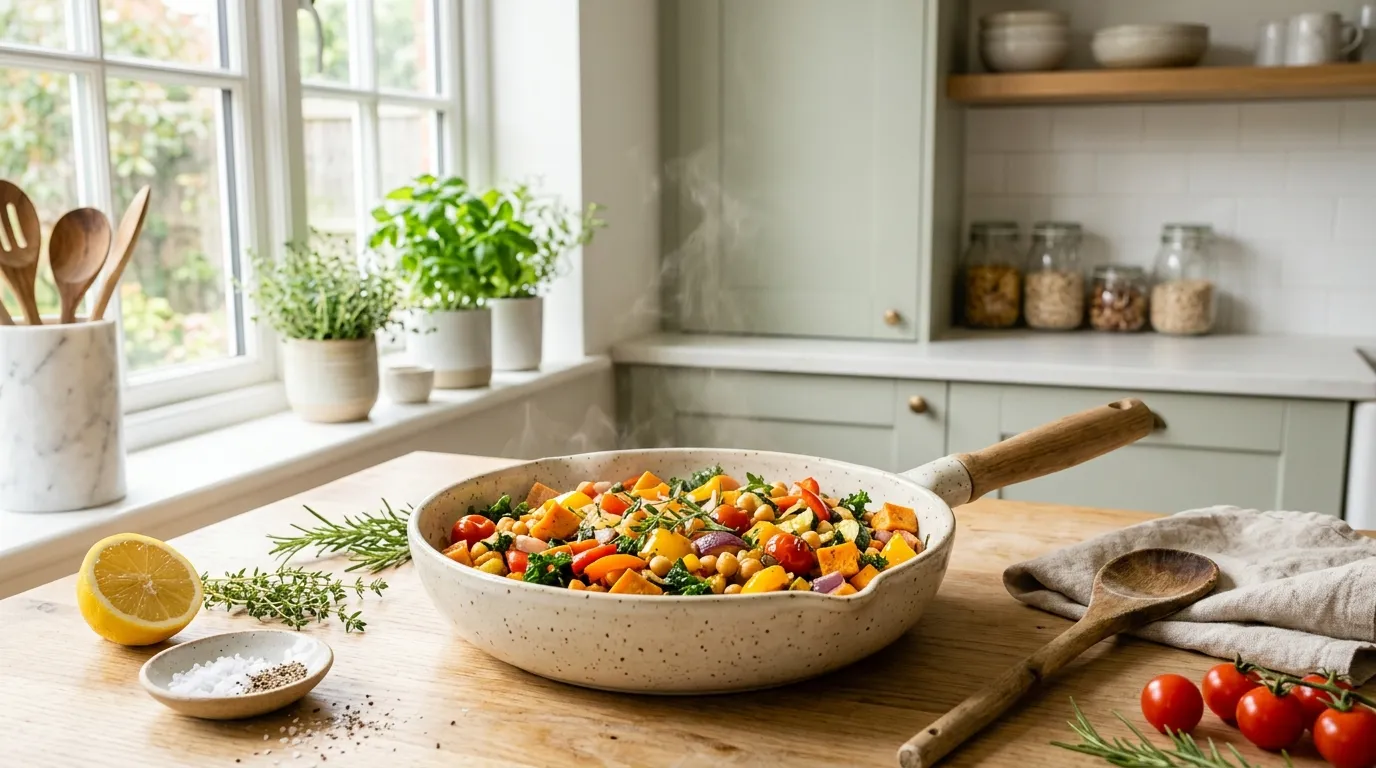
There is no single "safest" pan, there is a safest pan for a given job. Stainless is my everyday workhorse. Cast iron is hard-to-beat for searing and lasts generations. Ceramic-coated is the gentle-release option with a shorter lifespan. If you are weighing two of them against each other, I have put them head to head in Ceramic vs Stainless Steel Cookware: Which Is Safer?, and compared all three in Best Non-Toxic Cookware: Ceramic, Cast Iron and Stainless Compared.
My opinion, plainly: if you are building a kitchen from scratch and want one decision you never have to revisit, buy stainless steel and one cast iron skillet. Add a PFAS-free pan only if you genuinely cook eggs or fish and hate the stainless learning curve. Do not buy a full ceramic set expecting it to last forever. It will not.
Do not forget bakeware
Bakeware gets skipped because it lives in a drawer, but it meets high heat too, and dark nonstick sheet pans are the same story as nonstick pans. I would not panic-replace anything that works, but when a warped old tray finally goes, uncoated stainless or glass is the simple swap. Details in Best Non-Toxic Bakeware.
Food storage and reheating: the easiest win in the whole kitchen
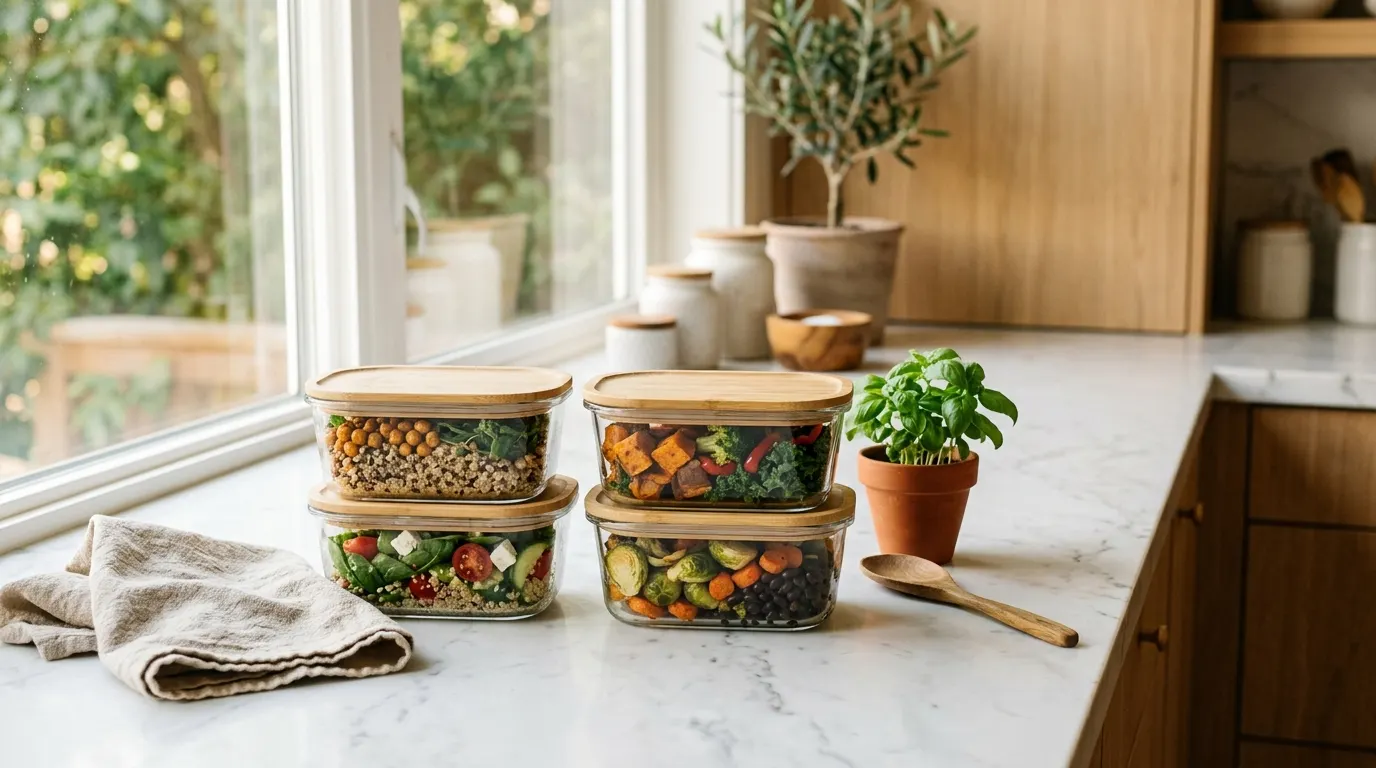
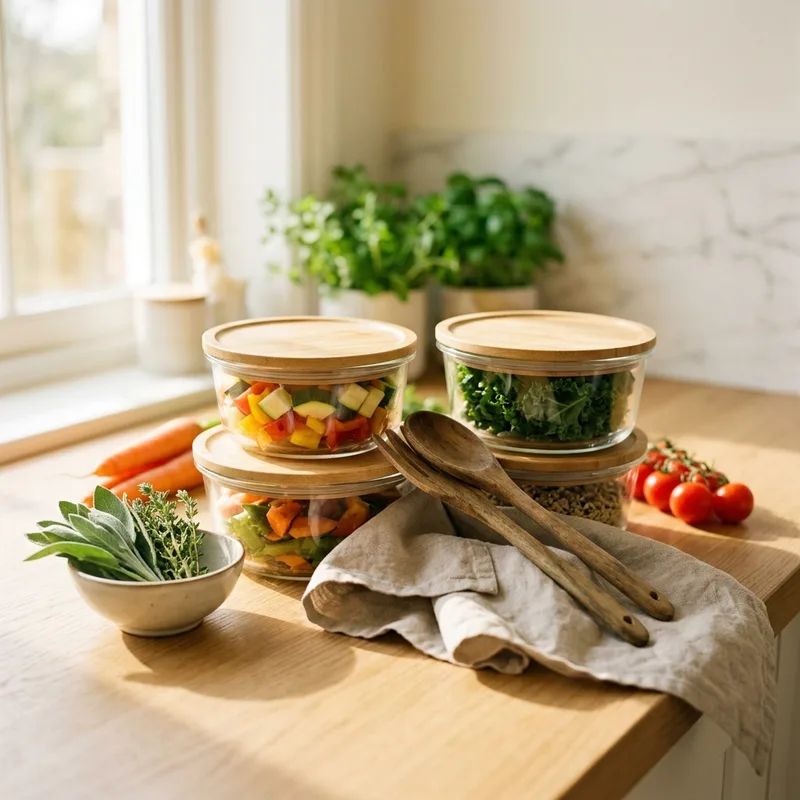
If you want a fast confidence boost, start here. Switching to glass food storage was almost too easy for me: a few sets, bought once, and they simply last. It is a one-time cost with great value, which is rare in low-tox living, where most swaps are ongoing.
Why plastic gets more attention when it is hot
Plastic food containers are not automatically dangerous sitting in your fridge. The concern is chemicals migrating into food, and that migration goes up with heat, fat and acidity. Older containers raised the BPA question; newer "BPA-free" ones swapped in related compounds that are still being studied. And then there is the microplastics conversation, which research is only beginning to map. The FDA regulates food-contact materials, and the honest summary is that cold storage in good-condition plastic is low on my worry list, while heating food in plastic is higher. I go through the BPA and microplastics evidence calmly in Are Plastic Food Containers Safe? BPA and Microplastics.
The one rule I never break
Here is the habit that costs nothing and removes the hottest part of the problem: I never heat food in a storage container. Food goes onto a plate, and the plate goes in the microwave. The container stays cold. That single rule means I am not relying on any container surviving a microwave, and it works whether the container is glass or plastic.
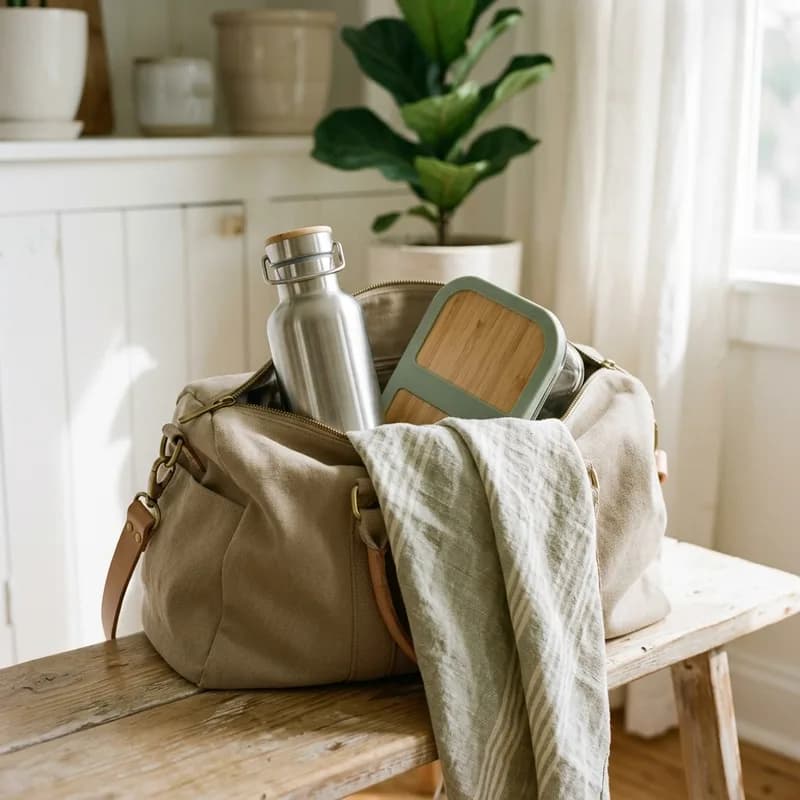
In our home the containers themselves are glass with snap lids, no specific brand, and I like them. They do not stain, they do not hold onto garlic smell, and you can see what is inside. If you want help choosing, I rounded up what to look for in Best Glass Food Storage Containers, Plastic-Free.
You do not have to do it all at once
Please do not bin a drawer of working containers in one afternoon. Use them up, then swap as they crack, warp or get cloudy. If you want a calm, phased plan for the whole plastic situation, from bags to utensils to wrap, follow How to Detox Your Kitchen of Plastic, Step by Step. And if small people eat at your table, their plates and cups are their own category, covered in Best Non-Toxic Kids Plates and Utensils.
Drinking water: filter what you drink and cook with
Water goes into everything: your glass, your coffee, your pasta, your soup. That is why it earns a spot in the three core areas even though it is invisible.
Why I filter even though my water is good
I filter even though the water where I live is good. That is not paranoia, it is a small, cheap margin. Public water in the US is regulated, and your utility publishes an annual report, the Consumer Confidence Report, that tells you what is actually in your supply. You can look yours up through the EPA. Start there before buying anything, because the right filter depends on what your report shows, your home's plumbing age and whether you are on a well.
What I actually use
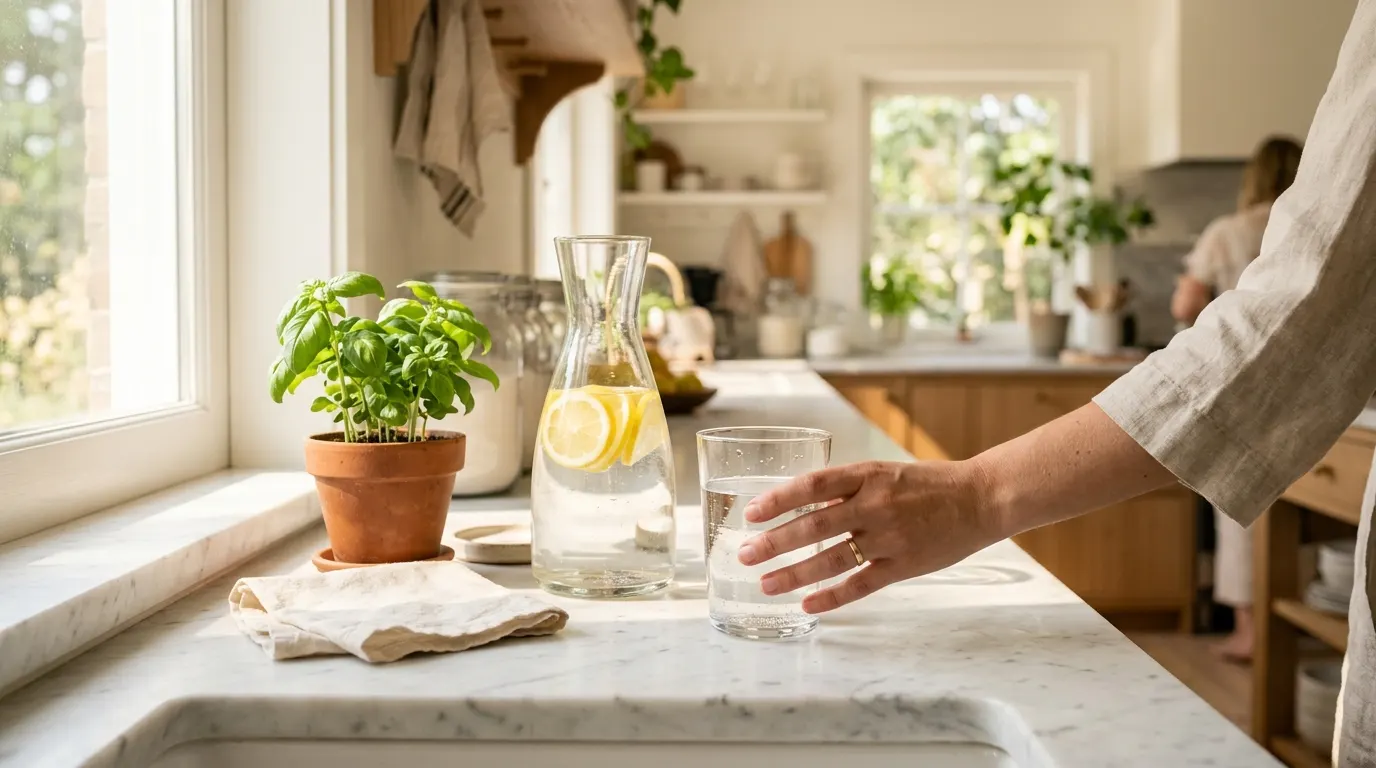
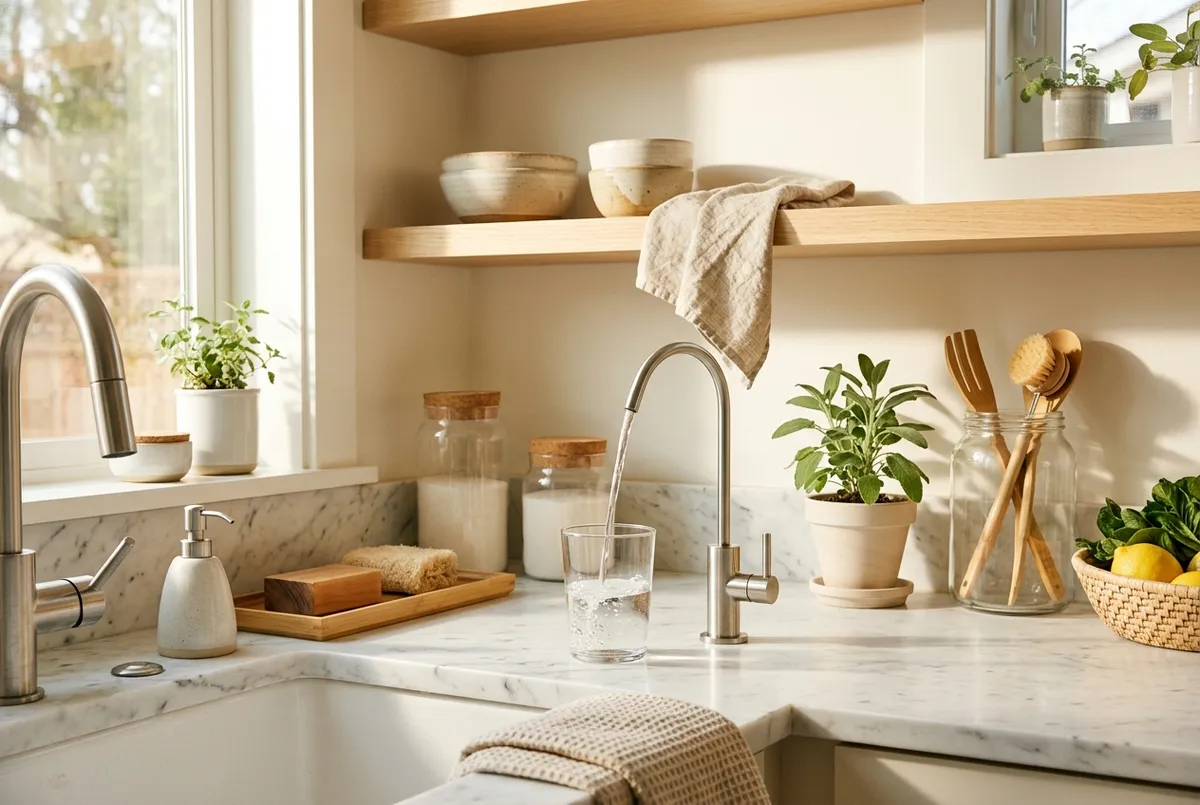
In our kitchen, drinking water is filtered two ways: an under-sink filter at the kitchen tap plus a pitcher filter. The combination is belt-and-suspenders, and honestly a pitcher alone is a perfectly good starting point for most people. The point is to pick a filter certified to reduce the contaminants your report flags, not the one with the best marketing.
There is also a shower filter attached to our faucet line (not a shower-head filter, though a shower-head one is on my wish list). That is a bathroom topic, not a kitchen one, so I mention it only so you know the kitchen and shower are separate decisions.
For matching a filter to your water and your budget, pitcher versus under-sink and what the certifications mean, see Best Non-Toxic Water Filter for Home, Pitcher and Under-Sink.
What I would not stress about
A non-toxic kitchen is not a sterile lab, and chasing perfection is the fastest way to do nothing. You cannot remove every exposure, the air alone brings some, unless you live like a hermit in a forest growing your own food. So here is where I spend zero worry: cold leftovers in a good plastic container, a cast iron pan that someone touched with a metal spatula, the occasional meal eaten off a conventional plate at someone else's house.
I also accept that a family has free will. When a clean swap does not work, someone says so, and we go back to the conventional version for now. It happens. I wait for better options, and they keep appearing as awareness grows. The goal is a healthier direction, not a scorecard.
Where the real exposure is (and is not)
If I am honest about the whole picture, the two biggest sources of kitchen-related exposure in my view are not gadgets at all. They are food and personal care. In the kitchen specifically, that means my biggest ongoing focus is clean food: less ultra-processed stuff, organic when it is sensible (it is expensive and not always better, and when it is not organic I just wash produce well), and pasture-raised and free-range where I can. That is the Food & Kitchen work that never really ends, and it matters more than owning the perfect pan.
Cookware, storage and water are the one-time infrastructure. They cost more up front and then last for years, which makes them the easy part once you have done them. Food is the daily practice. Both count.
A simple priority order for a non-toxic kitchen
If you want one decision rule, here it is. Rank your swaps by how often an item meets hot food or hot water, then by how cheap the fix is. That almost always lands you here:
- Stop heating food in plastic today. Free. Just reach for a plate. Highest impact, zero cost.
- Add a water filter matched to your Consumer Confidence Report. A pitcher is a fine start.
- Swap containers to glass as the old ones wear out. Cheap, one-time, satisfying.
- Replace cookware only as pieces die, starting with your most-used pan. Stainless or cast iron if you want forever; PFAS-free if you want easy release and accept it wears.
- Bakeware and specialty items last, because they meet food least often.
Notice what is not step one: buying a whole new cookware set. That is the most expensive, least urgent move, and the industry would love you to do it first. Do it last, and only as things wear out.
Safer Swaps
Use up what you have, then switch in this order:
- Reheat on a plate, not in the container (free, do it tonight). This removes the single hottest point of plastic contact without buying anything. Then phase in glass as containers wear out: see Best Glass Food Storage Containers, Plastic-Free.
- Add a filter you will actually maintain. Check your water report first via the EPA, then choose a pitcher or under-sink unit from Best Non-Toxic Water Filter for Home.
- Replace your most-used pan when it wears out, not before. Compare the honest trade-offs in Best Non-Toxic Cookware: Ceramic, Cast Iron and Stainless Compared.
The Bottom Line
A non-toxic kitchen is three areas, worked in order of how often each meets your food: cookware, storage and water. You do not need to buy anything to start. Tonight, put your leftovers on a plate before they go in the microwave and leave the container out of the heat. That is the free, highest-impact swap, and it is the exact habit I never break in my own kitchen. Everything else, glass containers, a filter, better pans, you can phase in as things wear out and as your budget allows. One swap beats no swap, every time.