If you have already decided on silicone, buy one that states it is 100% food-grade or platinum (medical-grade) silicone with no plastic fillers, and check the heat rating matches how you cook (most quality silicone is rated around 400-450°F; some sets state up to 600°F). That single line on the packaging is the whole game. Filler-laden silicone is the cheap stuff that can leave an oily smear when you twist it and is less predictable at high heat.
Silicone is genuinely one of the easier non-toxic utensil choices: it is soft on your pans, handles heat, and does not splinter like cheap wood or leach like soft plastic. But "silicone" on a label tells you almost nothing on its own, because manufacturers can cut pure silicone with plastic fillers to lower the price. This guide is for buyers already sold on silicone who just want to pick a safe set without second-guessing it. If you are still weighing materials, I compare them all in our best non-toxic kitchen utensils guide and make the case for wood here. If you want the evidence on silicone itself first, are silicone utensils really non-toxic walks through the migration research and heat limits.
Affiliate disclosure: some links below are affiliate links. If you buy through them we may earn a small commission at no extra cost to you. We only include products that meet the criteria in this guide.
What "Food-Grade" Actually Means (and Why Fillers Matter)
Food-grade silicone is silicone that meets purity standards for contact with food. In the US, the FDA regulates silicones used in food-contact articles, and well-made food-grade silicone is considered stable and inert at normal cooking temperatures.
The problem is the cheap end of the market. To cut costs, some manufacturers blend pure silicone with plastic fillers. You cannot always tell by looking, but you can often tell by twisting: pinch and twist a flat section, and if a whitish, streaky color appears, fillers are likely present. Pure platinum-cured silicone usually stays its original color.
Why care? Filler-laden silicone is less heat-stable, can feel tacky or develop an oily film over time, and is more likely to pick up and hold food smells and color. None of this is a dramatic health emergency. It is a quality and durability problem that, over months of daily use, is exactly the kind of thing you do not want touching hot food. My honest position: pay the small premium for a stated grade and skip the mystery silicone.
Platinum vs. Peroxide-Cured: The One Spec Worth Knowing
Silicone is cured one of two ways. Peroxide-cured is standard and fine for most utensils. Platinum-cured (often called medical-grade) uses a platinum catalyst, produces fewer byproducts, and tends to be more heat-stable, more durable, and more odor-resistant. It is what you will see on the premium end.
Is platinum worth it? For a baby product or something you heat hard every day, yes, I would spend up. For an everyday spatula you use at medium heat, a well-reviewed food-grade peroxide-cured set is perfectly reasonable. Do not let "platinum or nothing" talk you out of a good affordable set.
Quick buyer's checklist
- States 100% food-grade or platinum/medical-grade silicone
- Heat rating that matches your cooking (400-450°F is typical; higher is a bonus for searing and air fryer use)
- BPA-free confirmed (silicone should not contain BPA anyway, but the label reassures)
- One-piece or securely sealed construction so food cannot lodge in seams
- Steel-core handles are a plus for stiffness; plastic handles are the part to scrutinize, not the silicone head
Our Top Picks at a Glance
| Product | Best For | Key Material or Certification | Why It Wins |
|---|---|---|---|
| NonToxic Platinum Silicone Utensils | Best Overall | 100% plastic-free platinum silicone | Highest non-toxic credibility, states no plastic |
| HOTEC 600°F Spatula Set | Best Budget Pick | Food-grade, BPA-free, 600°F | Huge following, high heat, low price |
| Coukre Food-Grade Spatula Set | Best for Baking | Food-grade silicone, dishwasher safe | Explicit food-grade label, baking-friendly |
| Coukre 14-Piece Utensil Set | Best Full Set | Heat-resistant silicone | Covers a whole kitchen in one buy |
Best Overall: NonToxic Platinum Silicone Utensils (4-Piece)
This is the pick I would hand to someone who wants zero ambiguity. It is explicitly 100% plastic-free platinum silicone, which is the strongest non-toxic claim of anything here, and the one that answers the filler question before you even ask it. The beige, neutral look is a bonus if you dislike bright kitchen tools.
Pros:
- Explicitly 100% plastic-free, platinum silicone (the premium cure)
- Highest non-toxic credibility of the group
- Well-rated with a solid base of reviews
- Clean, neutral beige finish
Cons: It is a smaller 4-piece set at a higher price, so a busy cooking household may want to add a few extra tools.

Best Budget Pick: HOTEC 600°F Heat-Resistant Spatula Set (5-Piece)
If you mostly need good spatulas and want to spend as little as possible without dropping to mystery silicone, this is it. It is food-grade, BPA-free, and rated to 600°F, which is higher than most home stovetops ever reach. The enormous review base tells you a lot of kitchens run these daily and keep them.
Pros:
- 600°F heat resistance, higher than most of the field
- Food-grade and BPA-free
- Very affordable for a 5-piece set
- One of the most-reviewed silicone sets available
Cons: It is spatulas only, so you will still need tongs, a ladle or a slotted spoon from elsewhere.

Best for Baking: Coukre Food-Grade Spatula Set (5-Piece)
For folding batter, scraping bowls and getting the last of the nut butter out of the jar, a flexible food-grade spatula set earns its spot. This Coukre set is explicitly labeled food-grade silicone, is dishwasher safe, and comes in a cheerful aqua green if you like a pop of color in the drawer.
Pros:
- Explicitly food-grade silicone
- Dishwasher safe
- Affordable 5-piece set
- Flexible heads ideal for baking and scraping
Cons: It is spatula-focused, so it will not replace tongs, a ladle or a whisk.

Best Full Set: Coukre 14-Piece Kitchen Utensil Set
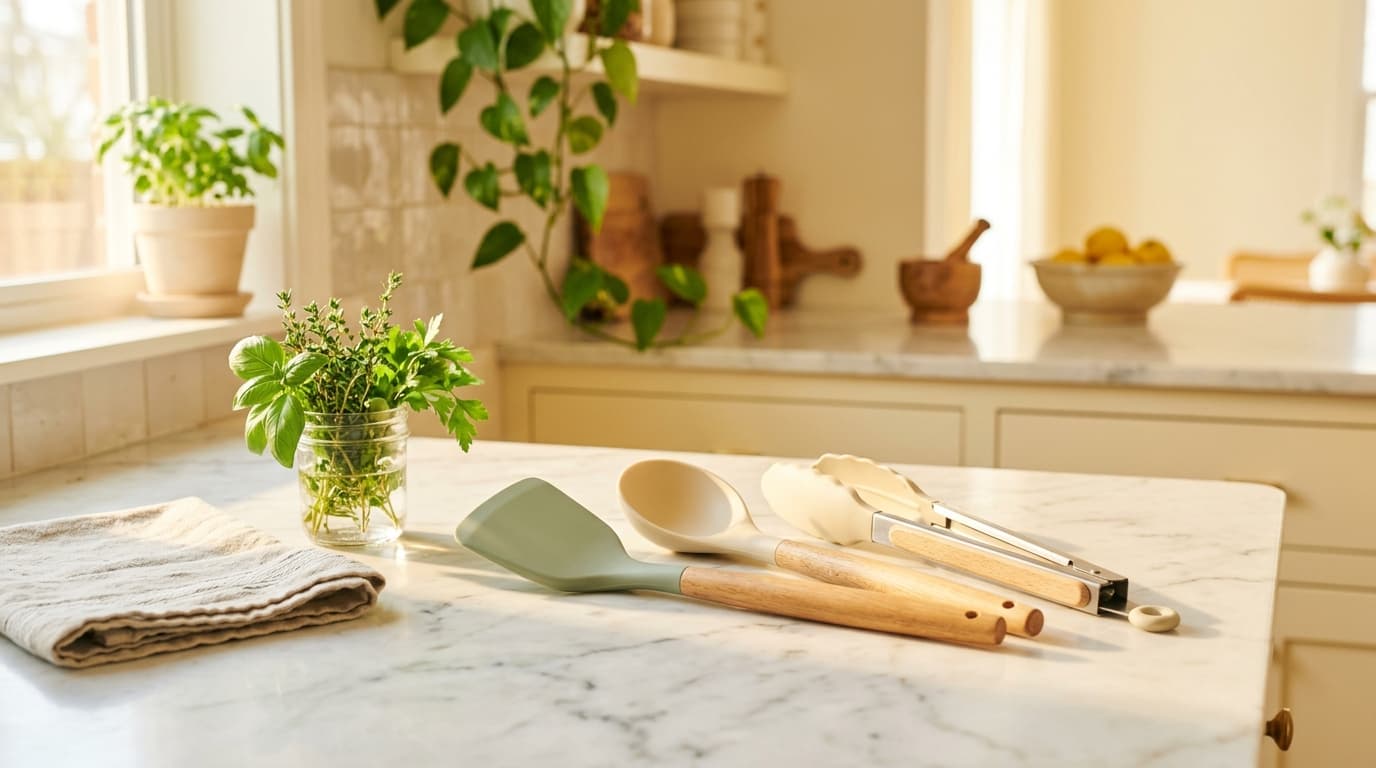
If you are outfitting a kitchen in one go, a 14-piece set is the efficient move: spatulas, spoons, turners and serving tools together, all heat-resistant silicone. It is the comprehensive, one-and-done option and solidly rated.
Pros:
- Large 14-piece set covers most cooking tasks
- Heat-resistant silicone across the range
- Convenient single purchase for a full kitchen
- Strong overall rating
Cons: It is less explicit about the silicone certification grade than the top picks, so if a stated grade is your top priority, start with the NonToxic platinum set.

How We Chose
We prioritized sets that state their silicone grade (food-grade or platinum), publish a clear heat rating, and confirm BPA-free construction. We favored one-piece or securely sealed designs where food cannot trap in seams, and we read how real buyers describe durability and odor over time. We have not hands-on tested these specific sets; our vetting is based on stated materials, certifications and manufacturer transparency.
Reading Silicone Labels: FDA, LFGB, Platinum
- "FDA food-grade" or "meets FDA requirements." The US baseline. It means the material is intended for food contact; it does not mean the FDA tested this particular set.
- LFGB. A German food-contact standard some silicone makers test to, and a common claim on premium sets. It is most useful when the brand shows the test report rather than just the logo.
- Platinum-cured / medical-grade. A curing method that leaves fewer byproducts; the strongest quality signal you will see on a utensil listing.
- "BPA-free." Reassuring wording, but silicone is not made with BPA anyway, so it tells you little about quality.
- No grade at all. Treat it as unknown, especially at a very low price.
Why the grade matters: what silicone can release are small, unreacted molecules called siloxanes. A study of 37 silicone baking moulds found they did migrate into cakes but stayed well below EU limits, and later work found poorly cured silicone released the most. Better curing, which is what "platinum" and a stated grade point to, is exactly what keeps that low. Washing a new set and keeping it away from heat beyond its rating does the rest.
Is Silicone Dishwasher Safe? (Care Tips)
Yes. Food-grade silicone is dishwasher safe and one of the easiest utensil materials to keep clean, which is a real advantage over wood that you should never soak. A few habits keep a set lasting years:
- Top rack is safest for any pieces with plastic handles, even though the silicone itself does not mind the heat.
- Avoid abrasive scrubbers on the silicone heads; they are durable but you do not need steel wool.
- If odors build up, a soak in hot water with a little baking soda usually clears it. Cheaper, filler-heavy silicone holds smells more stubbornly, which is one more reason to buy the stated-grade stuff.
- Store dry. Nothing dramatic happens if you do not, but trapped moisture around handle seams is worth avoiding.
One note on heat: silicone does not conduct heat well, which is why the handle stays cool while you stir. That does not make it safe to leave resting against a hot pan or on a pan edge, where the head can sit at searing temperature for minutes; take it out between stirs, do not use it as a trivet for a screaming-hot pot beyond its rating, and keep the heads out of open flame.
What to Avoid When Buying Silicone Utensils
- "Silicone" with no grade stated and a suspiciously low price. This is the filler risk. Skip it.
- Thin, floppy heads on cheap sets that warp with heat. A good silicone head holds its shape.
- Bargain plastic handles that discolor or smell. The silicone may be fine while the handle is the weak link, so look at the whole tool.
- Over-the-top "detox" marketing that treats silicone as magic. It is a good, stable material when it is food-grade. That is the real, calm story, and you can read the full evidence in are silicone kitchen utensils really non-toxic.
Silicone also pairs well with other low-tox kitchen choices. In our home the cookware is mostly stainless steel with no Teflon (PTFE) at all, and food storage is glass. If you are still sorting out pans, cookware deserves its own deep dive in best non-toxic cookware, and storage in best glass food storage containers.
When to Replace a Silicone Utensil
Good silicone lasts years. Replace a piece when you see cracks or tears (food traps there), when the surface turns permanently sticky or oily no matter how you clean it, or when a head has warped or melted from contact with a burner. A persistent off smell that will not wash out is also a fair reason to retire it. There is no need to toss a set that still works well: use what you have, then upgrade the weak pieces.
Safer Swaps
Start with the tools that touch hot food most, in this order:
- Swap your scraping and flipping spatulas first. They see the most heat and the most pan contact. A food-grade or platinum set here is the highest-impact change. Use up your current ones, then switch.
- Add food-grade silicone for anything that touches nonstick, whether that is an older pan or a PFAS-free nonstick pan, since silicone will not scratch a coating. If you are mixing materials, our full kitchen utensils comparison shows where silicone and wood each win.
- For kids' tools and small hands, stated food-grade or platinum silicone is especially worth it. See best non-toxic kids plates and utensils.
The Bottom Line
Silicone is a sound non-toxic choice, as long as you buy the grade, not the hype. Look for 100% food-grade or platinum silicone, a clear heat rating, and BPA-free, and do the twist test if you are unsure. If you want one simple next step, start your kitchen declutter here and replace your most-used spatula with a stated food-grade pick. For the widest view of your kitchen swaps, browse our food and kitchen hub.