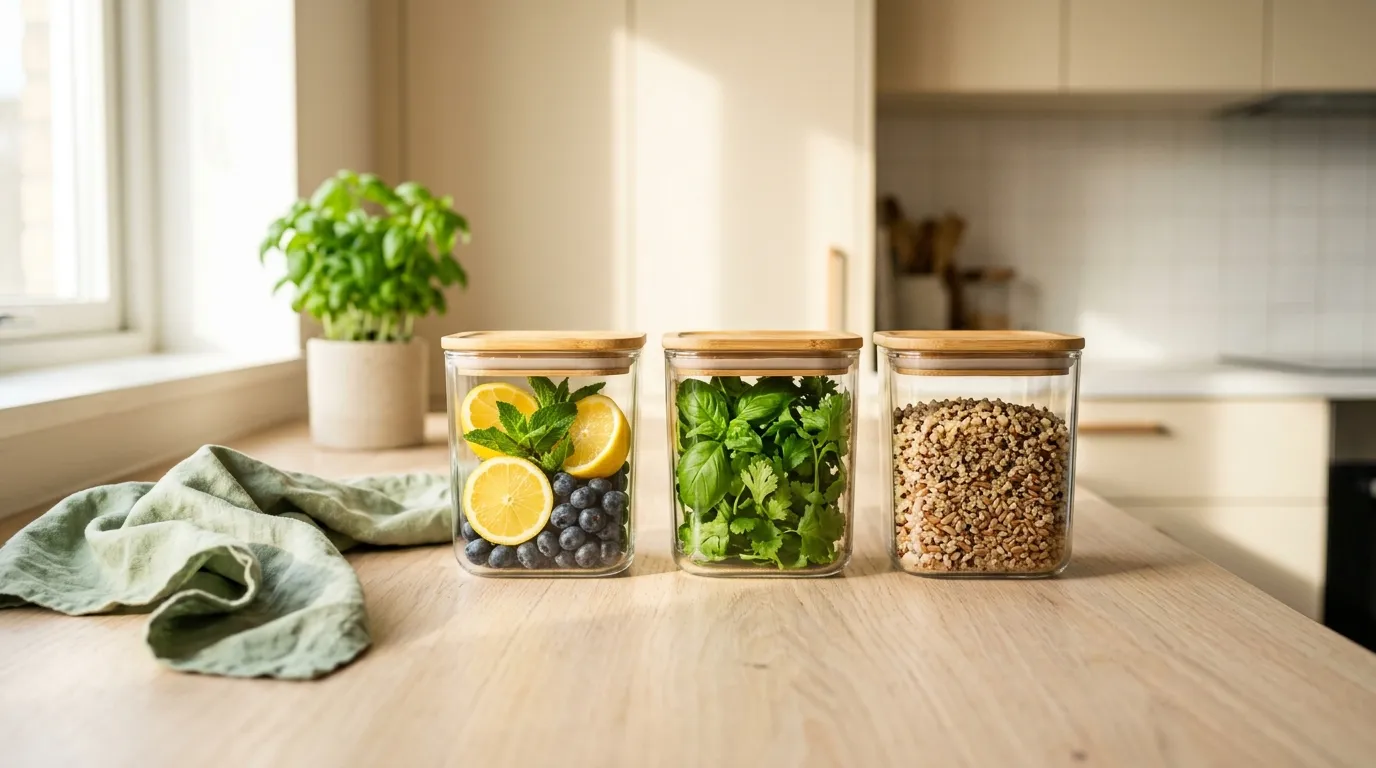
If you only make one plastic swap in your kitchen this year, make it this one. Glass food storage containers are the easiest, cheapest, most forgiving low-tox change I have ever done: a few sets, bought once, and they simply last. For most people, everyday soda-lime glass from a trusted brand is exactly right. You do not need expensive borosilicate unless you regularly move a dish from the freezer straight into a hot oven, and most of us don't.
Here is the honest version the glossy roundups skip: a lot of familiar kitchen glass is tempered soda-lime rather than borosilicate, and for everyday storage that is fine. Below I explain the difference in plain English, then give picks that actually match the advice, so you are not paying a premium for a property you will never use. Storage is just one piece of a safer kitchen. For the full picture, see The Non-Toxic Kitchen.
Why Glass Beats Plastic for Food Storage
Plastic containers aren't the villain of a horror movie, but they are the weak link. The concern is migration: chemicals moving from the container into your food, especially with heat, fat and time. Bisphenols (used to harden plastic) and phthalates (the chemicals that make plastic soft) are the usual suspects, and reheating leftovers in plastic is the worst-case scenario. The FDA considers approved plastics safe at expected exposure levels, but the NIEHS notes that bisphenol A is an endocrine disruptor studied for its hormone effects. Why gamble when glass solves it completely?
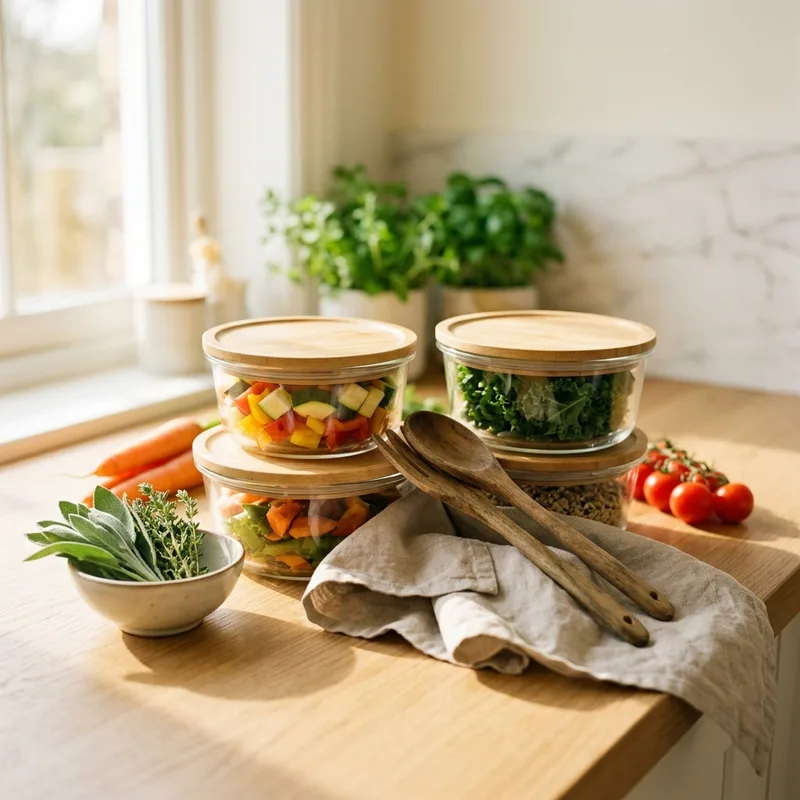
Glass does not leach. It does not stain, hold tomato-sauce orange, or keep last week's garlic smell. You can see what's inside, and if you do heat food in it, the glass part is microwave- and oven-safe with the lid off. If you want the deeper science on plastics, I cover it in Are Plastic Food Containers Safe?.
Borosilicate vs Soda-Lime: The Difference Nobody Explains Honestly
This is where most buying guides mislead you. Here is the straight story.
Soda-lime glass is standard everyday glass. It is strong, affordable and perfectly safe for food. Its one limit is thermal shock: a sudden, extreme temperature swing (say, a frozen dish into a 425°F oven) can crack it.
Borosilicate glass handles bigger temperature swings without cracking because it expands less when heated. Classic lab beakers are borosilicate. It is more expensive and, in the US food-storage aisle, genuinely hard to find.
Here is the uncomfortable truth: most "Pyrex-style" containers sold in the US today are made of soda-lime (tempered) glass, not the borosilicate that the brand used decades ago. That is not a scandal. Tempered soda-lime is strong and safe. But it does mean paying extra for "borosilicate" food storage is usually unnecessary for how real people cook.
| If you... | You need | Why |
|---|---|---|
| Store leftovers, pack lunches, reheat in microwave | Soda-lime (tempered) | Cheaper, plenty strong for everyday use |
| Go freezer straight to hot oven regularly | Borosilicate | Better thermal-shock resistance |
| Just want safe, plastic-free storage | Soda-lime | The common, affordable default |
My blunt opinion: do not hunt for borosilicate for leftovers. Buy good tempered soda-lime, avoid sudden temperature extremes, and you will be fine for years.
What Actually Makes a Glass Container Low-Tox
The glass is the easy part. The lid is where "glass storage" quietly sneaks plastic back in.
- Glass body. Your food should sit in glass, not plastic. Every set below gets this right; only the lid is plastic.
- Lid material. Most sets use BPA-free plastic lids. The food barely touches the lid, so this is a much smaller concern than a plastic base, but strict plastic-free shoppers may want glass or bamboo lids (rarer and pricier).
- Airtight seal if you store liquids. Soups and sauces need a true leak-proof lid. Snap-lid sets usually win here. Glass with snap lids is what we use at home, and honestly, they have been great.
- BPA-free labeling on lids. Look for it explicitly. For help reading any label, see Decoding Product Labels.
You will notice every honest pick involves one trade-off: a plastic lid. That is the reality of the current market. The plastic lid touches far less food than a plastic container would, and you can always store lid-up to reduce contact.
Our Top Picks at a Glance
| Product | Best For | Key Material or Certification | Why It Wins |
|---|---|---|---|
| Pyrex Simply Store (12-Pack) | Best Overall | Tempered glass, BPA-free plastic lids | Trusted brand, food sits in glass |
| Rubbermaid Brilliance Glass (9-Set) | Best for Liquids & Leftovers | BPA-free, leak-proof | Truly airtight lids |
| Vtopmart 8-Pack | Best Budget Pick | Glass bodies, BPA-free plastic lids | Lowest cost per container |
| M MCIRCO 24-Piece | Best for Big Families | BPA-free airtight snap lids | Covers every size at once |
Best Overall: Pyrex Simply Store (12-Pack)
Pyrex is the name people trust for a reason: decades of track record and sturdy tempered glass. This 12-pack covers the everyday sizes most kitchens actually use. Food sits in glass; only the lid is plastic (BPA-free), so store it lid-up and leave a little headroom and the lid barely touches anything. If you heat food in the dish rather than on a plate, take the lid off first.
Pros:
- Trusted, long-established brand with an enormous user base
- Durable tempered glass; the glass body is oven and microwave safe
- Food sits in glass, with plastic only in the lid
- Clear glass so you see leftovers before they become science experiments
Cons: The lids are plastic, and they are not fully airtight, so this set is not ideal for liquid-heavy storage like soups.

Best for Liquids & Leftovers: Rubbermaid Brilliance Glass (Set of 9)
If your fridge is full of soups, stews and saucy leftovers, you want a genuinely leak-proof lid, and Brilliance delivers it. The glass bases are solid, the BPA-free lids seal tightly, and the assorted sizes handle both a single portion and a family batch. It is the pricier set here, but you are paying for the seal.
Pros:
- Leak-proof lids, the strongest airtight seal in this lineup
- BPA-free lid material
- Assorted sizes cover a wide range of needs
- Great for commuting lunches and liquid storage
Cons: Higher price point than the other sets (roughly in the premium range for a 9-piece set).

Best Budget Pick: Vtopmart 8-Pack
This is the set I'd point a first-time swapper to. The per-container cost is the lowest here, the bodies are glass with BPA-free plastic lids, and eight containers is enough to replace most of a plastic drawer in one go. A smaller brand, yes, but the value is hard to argue with when you are trying to go plastic-free without a big upfront spend.
Pros:
- Excellent value, lowest cost per container in this guide
- Eight pieces, enough for a meaningful first swap
- Glass bodies with BPA-free lids
Cons: Smaller brand with a shorter long-term track record than Pyrex or Rubbermaid.

Best for Big Families: M MCIRCO 24-Piece
Feeding a household and meal-prepping on Sundays? The 24 pieces are listed as 12 glass containers with 12 lids in mixed sizes, so you can match every portion to the right size instead of cramming leftovers into whatever's clean. The gray snap lids are BPA-free and airtight, and the value per piece is strong for a set this large.
Pros:
- 12 containers plus 12 lids in mixed sizes
- BPA-free airtight snap lids
- Strong value per container for the volume
- Good for batch cooking and big-family fridges
Cons: The lids are plastic, which may bother the strictest plastic-free shoppers.

How We Chose
We prioritized three things: food that sits in glass rather than plastic, lids that are clearly BPA-free, and brands transparent about their materials. We favored tempered soda-lime glass as the sensible everyday default and flagged the single honest trade-off in every set (the plastic lid). We did not test these in our own kitchen; these picks reflect our low-tox vetting criteria and material transparency, not hands-on trials.
Why This Was My Easiest Swap
When I first saw how many questionable ingredients were hiding in ordinary products, I panicked and tried to replace everything at once. It got expensive fast, and in a family you cannot just throw things out. That early mistake taught me to start with the swaps that are genuinely easy, and glass storage is the poster child. A few sets, bought once, and they simply last. Years later my kitchen items and water bottles sit at about 95 percent clean, and glass containers did a lot of that heavy lifting with almost no effort or ongoing cost.
Food storage is a one-time cost with great value: no monthly refill, no "is the clean version as good" doubt, no family pushback. If you are overwhelmed about where to begin, prioritizing changes on a budget starts with wins exactly like this one, and the free swap priority planner ranks what to change next.
Caring for Glass (So It Lasts for Years)
- Avoid sudden temperature extremes with soda-lime glass. No frozen-glass-into-hot-oven. Let a cold dish sit on the counter a few minutes first.
- Wash lids by hand or top rack. Plastic lids warp over time in high heat; the glass is dishwasher-safe.
- Store lids separately or ajar to keep seals fresh and reduce food-to-plastic contact.
- Replace a cracked base immediately. A chip can become a break. The lid is the part that eventually wears out, not the glass.
What to Avoid
Skip anything where food sits directly against plastic, no matter how "BPA-free" the label claims. BPA-free does not mean chemical-free; it means one specific compound was swapped out, sometimes for a cousin that is less studied. Also skip the marketing premium on "borosilicate" food storage unless you truly need freezer-to-oven performance. For the bigger list of ingredients worth avoiding, see Toxic Offenders.
Safer Swaps
Use up what you have, then switch, in this order:
- Stop reheating in plastic first. The highest-impact change: never microwave food in a plastic container. My own rule is even simpler: I never heat anything in a storage container at all. The food goes onto a plate, and the plate goes into the microwave. No lid question, no thermal-shock worry, nothing extra to buy.
- Swap liquid storage next. If soups and sauces live in plastic, choose a leak-proof set like Rubbermaid Brilliance so you don't trade safety for a messy fridge.
- Then tackle the rest of the plastic drawer gradually as pieces wear out. The full step-by-step is in How to Detox Your Kitchen of Plastic, and kids' plates get their own guide in Best Non-Toxic Kids Plates & Utensils.
The Bottom Line
Glass food storage is the rare low-tox swap that is cheap, permanent and effortless, which is exactly why it was my easiest one. Don't overthink the borosilicate question: for leftovers and lunches, tempered soda-lime glass from a trusted brand is all you need. Start by moving reheating onto a plate, grab a budget set like Vtopmart if cost is your concern, and let the rest of your plastic drawer phase out naturally as it wears down. One swap beats no swap, and this one you'll barely notice, except that your food stops tasting faintly of last week's dinner.