If you want the short version: for non-toxic bakeware, bare stainless steel, cast iron, and tempered glass are the three materials I trust most, because none of them depend on a coating that can scratch, chip, or wear off over time. Coated ceramic pans are convenient and genuinely free of the old nonstick chemistry, but the coating is still a surface that degrades, so I treat it as a nice-to-have rather than a forever pan.
My own kitchen is mostly stainless steel with no nonstick, and that is not an accident. Bakeware lives a hard life: high heat, metal spatulas, scrubbing, years of use. The simpler the material, the less there is to go wrong. Below I compare the four main options by what each is actually good for, show you the pans worth buying, and tell you honestly where each one falls short. No fear, no star-rating theater, just what I would put in my own oven.
What Makes Bakeware Genuinely Low-Tox
The question with bakeware is not "is this scary" but "what touches my food at high heat, and can it come off?"
Bare metals and glass are inert. Stainless steel, cast iron, and tempered glass do not have a coating to shed, so there is nothing to migrate into a hot cake or a tray of roasting vegetables. That is the whole reason I lean on them. Coatings are where the questions start, and the biggest one has already been answered elsewhere: the old nonstick chemistry (PTFE and the processing aid PFOA) is why so many people went looking for alternatives in the first place. I cover that in detail in Is Nonstick Cookware Toxic? (PFAS & Teflon Explained), so I will not repeat it here.
For coated pans, the word that matters is PFAS-free (which covers PTFE). "PFOA-free" on its own says very little, because PFOA was phased out of US manufacturing years ago. According to the FDA, manufacturers have been moving away from certain PFAS in food-contact uses, and reputable modern brands say plainly what their coating is and is not. If a brand will not tell you what the nonstick surface is made of, that silence is your answer. Skip it.
What to Skip
I will say this plainly: I would not buy old-style dark nonstick bakeware, and I would not buy aluminum pans with a worn, scratched coating. Once a coating is flaking, the pan has done its job and it is time to let it go.
I am also unmoved by the word "ceramic" on its own. A coated ceramic pan (a metal pan sprayed with a ceramic-based nonstick) is a different thing from solid ceramic or stoneware. Both can be fine, but the coated kind is still a surface that wears, so do not pay a premium expecting a lifetime pan. For the deeper material debate, see Ceramic vs Stainless Steel Cookware: Which Is Safer?.
Our Top Picks at a Glance
| Product | Best For | Key Material or Certification | Why It Wins |
|---|---|---|---|
| Wildone Baking Sheet with Rack Set | Best Overall | Uncoated stainless steel | Heavy gauge, no coating, pans plus cooling racks |
| Wildone Baking Sheet Set of 3 | Best Budget Pick | Uncoated stainless steel | Three sizes of bare stainless at a low entry price |
| Our Place 5-Piece Ceramic Bakeware Set | Best Coated Set for Easy Release | PFAS-free ceramic nonstick (per maker) | Trusted brand, genuine release without legacy nonstick |
| Pyrex Basics 3-Pack Glass Baking Dish Set | Best for Small Kitchens | Uncoated tempered glass | Three dishes nest together, no coating at all |
Best Overall: Wildone Baking Sheet with Rack Set
This is the set I would hand a friend who asked where to start. It is uncoated stainless steel, which means nothing to flake and nothing to worry about at high heat, and the heavier gauge holds its shape instead of warping and "popping" in the oven the way thin pans do. The included cooling racks are a genuine convenience for cookies and bacon.
Pros:
- Bare stainless steel with no coating to scratch, chip, or migrate
- Heavy, sturdy gauge that resists warping during roasting
- Comes with matching cooling racks for lifting food off the pan
- Dishwasher-friendly and easy to scrub without ruining a finish
Cons: With no nonstick surface, food will stick unless you grease the pan or line it with parchment.
Best Budget Pick: Wildone Baking Sheet Set of 3
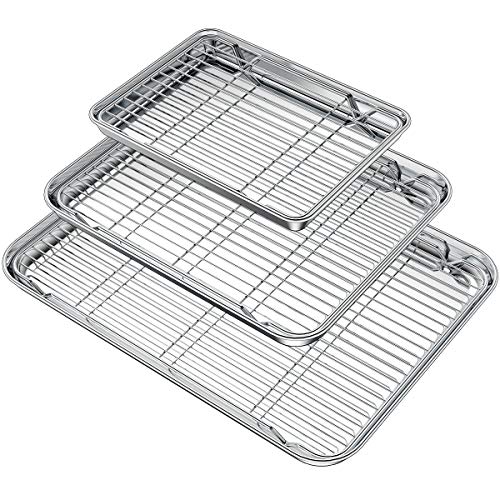
If money is the constraint, and for a lot of households it is, this is the honest starting point. Three sizes of bare stainless steel for the price of one fancy coated pan, with the same core advantage: no coating to fail. I would rather someone buy this today than wait for the "perfect" expensive set and keep using scratched old pans in the meantime. One swap beats no swap.
Pros:
- True uncoated stainless, the same low-tox logic as the top pick
- Three sizes cover most everyday baking and roasting
- Strong value, the easiest low-tox bakeware to justify buying
Cons: Lighter gauge than the rack set, so it is less sturdy under heavy roasting and more prone to flex with weight.
Best Coated Set for Easy Release: Our Place 5-Piece Ceramic Bakeware Set
Sometimes you just want a cake to drop out cleanly. This is where a modern coated set earns its place. Our Place describes its ceramic nonstick as PFAS-free and is open about what the coating is, which is exactly the openness I want before I spend money on a coating. It is a premium set, so buy it for the convenience, not as a forever pan.
Pros:
- PFAS-free ceramic nonstick per the maker, no legacy PTFE chemistry
- Easy food release for cakes, muffins, and sticky bakes
- Well-regarded brand that states clearly what the coating is
Cons: Premium price, and like any coated surface the nonstick will wear over years, so it is not a lifetime pan the way bare stainless is.

Best for Small Kitchens: Pyrex Basics 3-Pack Glass Baking Dishes
In a tight kitchen, storage is a real tax, and three glass dishes that nest inside each other take up the cabinet space of one. Tempered glass has no coating at all, so there is nothing to identify, nothing to wear off and nothing to ask the brand about. The three sizes (2, 3 and 4.8 quarts) cover casseroles, baked pasta, roasted vegetables and brownies. The set comes with BPA-free plastic lids for storing leftovers; take the lid off before the dish goes in the oven, since heat and plastic are a poor pair (here is why).
Pros:
- Uncoated tempered glass, the most inert surface on this list
- Nests to save cabinet space in a small kitchen
- Three sizes cover most everyday baked dinners
Cons: The lids are plastic and are for storage only, not the oven. Glass is heavy and does not like sudden temperature changes, and it will not replace a flat baking sheet for cookies.

How We Chose
I prioritized materials over marketing: bare stainless steel and glass first, then a coated set whose maker states plainly that it is PFAS-free. I looked for brands that disclose what their surface actually is, because a coating you cannot identify is one I will not recommend. I have not lab-tested these pans; this is a vetting of materials, certifications, and manufacturer transparency, with my own stainless-steel kitchen as the reference point for how these materials behave over years of real use.
Don't Forget Glass and Cast Iron
Glass made the product list above, and cast iron did not only because you may already own it. Both are excellent.
Tempered glass (think classic casserole and loaf dishes) is inert, sees what is cooking, and goes from oven to table. The one rule: avoid sudden temperature shocks, like a hot dish onto a cold wet counter, which can crack it. Glass is my pick for lasagna, baked pasta, and anything saucy.
Cast iron is a workhorse for cornbread, skillet cookies, and roasts, and seasoned cast iron develops its own natural nonstick layer with zero coating. It is heavy and needs a little care, but it genuinely lasts for generations. If you already have a Dutch oven or a skillet, you already own non-toxic bakeware.
How to Care for Each Material
The trade-off with the safest materials is that they ask a little more of you. Here is the honest version.
- Stainless steel: Grease it or use parchment, because it is not nonstick. For stuck-on bits, a soak and a non-scratch scrub handle almost everything; baking soda lifts the rest.
- Coated ceramic: Use low-to-medium heat where you can, skip metal utensils (wood or silicone utensils are kinder) and abrasive scrubbers, and hand wash to protect the finish. The gentler you are, the longer the coating lasts.
- Glass: No thermal shock, no broiler unless the maker says it is safe, and let it cool before it hits cold water.
- Cast iron: Dry it fully, wipe a thin layer of oil after washing, and skip long soaks. Reseason when it looks dull.
When to Replace It
This matters because perfectly good pans get tossed over panic, and panic is not a plan. Bare stainless and cast iron essentially do not "expire": they get stained, scratched, and ugly, and they are still fine. Discoloration on stainless is cosmetic.
Coated pans are different. Once a nonstick surface is scratched, flaking, or chalky, it has finished its useful life, and that is the point to replace it. Until then, use what you have. The EPA's guidance on PFAS is about reducing exposure over time, not about throwing out a kitchen in an afternoon. Replacing everything at once is how I started, and it was an expensive mistake; swapping as things wear out is calmer, cheaper, and just as effective, and the free swap priority planner helps you decide what goes first. The deeper argument for that steady approach is in The Toxic Buildup Effect.
Safer Swaps
Start here, easiest and highest impact first, and use up what you have before you buy anything.
- Swap your most-scratched coated pan first. If one old nonstick sheet is flaking, retire that one and replace it with a bare stainless baking sheet. One pan, biggest peace of mind.
- Use parchment on what you keep. It is the cheapest way to get easy release out of stainless or any pan you are not ready to replace, today.
- Default to glass for casseroles. A single tempered glass dish covers most baked dinners and lasts for years. For storage versions of the same material, see Best Glass Food Storage Containers (Plastic-Free).
For the full kitchen picture, cookware deserves its own deep dive in Best Non-Toxic Cookware (Ceramic, Cast Iron & Stainless Compared), and the whole-room plan lives in The Non-Toxic Kitchen. If you bake small batches in a countertop oven, the same material rules apply to its pans and racks: see best non-toxic air fryer toaster ovens. If budget is your real limit, Toxin-Free on a Budget shows how to sequence changes.
The Bottom Line
The safest, simplest non-toxic bakeware is bare stainless steel, backed up by glass and cast iron you may already own. There is no coating to fail and nothing to worry about at oven heat; the only cost is remembering to grease the pan or lay down parchment. If you want effortless release and are honest that the coating will wear in time, a clearly labeled PFAS-free ceramic set earns its spot.
Your one next step: look at your oldest, most-scratched coated pan, and replace just that one with a stainless baking sheet. Use the rest until they wear out. That single swap gets you most of the benefit without upending your kitchen or your budget.