If you want the simplest answer: the safest non-toxic baby bottles are made of borosilicate glass or food-grade silicone. Both keep your baby's milk away from the plastics that can leach chemicals when warmed, and both are easy to find in trusted brands. Glass is the gold standard for cleaning and seeing that a bottle is truly clean; silicone is the one to reach for if you are terrified of a dropped bottle shattering at 3 a.m.
Here is the thing most listicles skip: "BPA-free" on a plastic bottle is not the reassurance it sounds like. BPA is just one chemical, and the substitutes that replaced it are not all proven safe. If you are choosing new bottles anyway, glass and silicone sidestep that whole debate. Below I will explain exactly what makes a bottle genuinely low-tox, then give you honest picks with their real drawbacks, because a con you only discover after buying is the most expensive kind.
What Makes a Baby Bottle Genuinely Non-Toxic
A baby bottle holds warm liquid, in direct contact with your baby's food, many times a day, for months. That is the exact scenario where material choice matters most: heat plus fat (milk has fat) plus repeated use is when some plastics shed chemicals into whatever they hold.
Two materials solve this cleanly:
- Borosilicate glass: the lab-grade glass used because it handles temperature changes without cracking. It is inert, meaning it does not react with or leach into milk, and you can see exactly how clean it is.
- Food-grade silicone: a soft, shatterproof material that tolerates heat well and does not contain BPA or phthalates. The trade-off is you cannot see through it as easily, which matters for confirming it is clean.
What to be skeptical of: a plastic bottle whose only selling point is "BPA-free." The FDA has restricted BPA in baby bottles and sippy cups, but that does not mean every replacement plasticizer is well studied. The National Institute of Environmental Health Sciences notes BPA can leach from plastics especially when heated. My rule for bottles: if it can hold warm milk, I want glass or silicone, not "better plastic."
The nipple is usually silicone either way
Even on glass bottles, the nipple is almost always silicone, which is fine. Silicone nipples are the standard and are considered safe. Latex nipples exist but can trigger allergies and break down faster, so most non-toxic picks use silicone nipples regardless of what the bottle body is made of.
Our Top Picks at a Glance
| Product | Best For | Key Material or Certification | Why It Wins |
|---|---|---|---|
| Philips Avent Natural Glass | Best Overall | Borosilicate glass, BPA-free | Truly plastic-free milk contact plus huge real-world trust |
| Dr. Brown's Options+ Wide-Neck Glass | Best for Gassy or Colicky Babies | Glass body, polypropylene vent parts | Proven venting system in a glass body |
| Boon Nursh Silicone | Best Shatterproof Pick | Food-grade silicone pouch in an outer shell | No glass breakage, milk touches only silicone |
| NUK Simply Natural Glass | Best Budget Pick | Pure glass, BPA-free nipple | Glass safety at the most accessible price |
Best Overall: Philips Avent Natural Glass
This is the one I would hand a new parent who just wants to stop thinking about it. Borosilicate glass means there is genuinely no plastic touching the milk, and the wide, breast-shaped nipple makes it one of the easier bottles for babies who switch between breast and bottle. The broad real-world track record matters here: these are not a niche experiment, they are a bottle a lot of families have lived with.
Pros:
- Genuine borosilicate glass, so no plastic contact with milk
- Broadly trusted with a large body of positive reviews
- Wide nipple shape suits combination feeding
- Easy to see when it is truly clean
Cons: The 4 oz size can be outgrown quickly by older or hungrier babies, so you may need to size up sooner than you would like.

Best for Gassy or Colicky Babies: Dr. Brown's Options+ Wide-Neck Glass
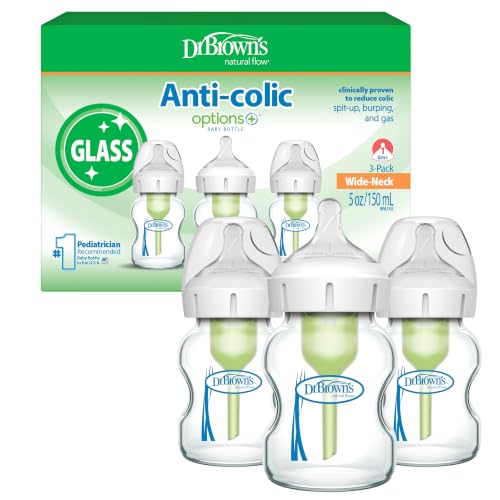
If your baby arches, fusses, or seems gassy after feeds, this is the glass bottle I would try. Dr. Brown's internal venting system is designed to reduce the air a baby swallows, and it is widely recommended by pediatricians for colic. You get that venting in a glass body, but be clear on one detail: the vent insert and reservoir tube that sit inside the bottle are BPA-free polypropylene, so the milk does touch those plastic parts. If gas is the bigger problem in your house, that is a reasonable trade; if fully plastic-free milk contact is your priority, the Philips Avent or NUK is the better fit. The vent is also optional on the Options+ design, so you can leave it out once the colicky phase passes.
Pros:
- Glass body with a proven anti-colic venting system
- Wide neck is easy to fill and clean
- Pediatrician-recommended for gassy babies
Cons: The vent parts are polypropylene and sit in the milk, and they are multiple small pieces, so cleaning takes longer and you'll want to stay on top of it. Honest trade-off: fewer bubbles, more pieces in your drying rack.
Best Shatterproof Pick: Boon Nursh Silicone
Here is where I get opinionated: if the thought of glass shattering on a tile floor at night gives you anxiety, do not fight it, buy silicone. The Boon Nursh holds the milk in a food-grade silicone pouch that sits inside a rigid outer shell, so the milk touches only the silicone pouch and the silicone nipple, and nothing will shatter if (when) it hits the floor. The shell, collar and cap are separate parts that do not touch the milk; Boon does not publish what the shell is made of. The collapsible pouch also helps reduce air intake, which is a nice bonus.
Pros:
- Silicone pouch, no glass breakage risk
- The milk touches only silicone
- Soft, squeezable, and travel-friendly
- Collapsible design helps limit swallowed air
Cons: Silicone can hold onto odors over time, and because it is not clear, it is harder to confirm at a glance that the inside is truly clean. You will want a good bottle brush and a sniff test.

Best Budget Pick: NUK Simply Natural Glass
Non-toxic does not have to mean premium-priced, and this is proof. You get pure glass construction and a BPA-free nipple at a notably accessible price, which makes it a sensible choice if you are building a bottle collection without blowing the budget, or if you just want a few backups.
Pros:
- Pure glass with a BPA-free nipple
- Very accessible price point
- Simple, no-fuss design
Cons: The 3-pack typically comes with one nipple flow option, so you may need to buy faster-flow nipples separately as your baby grows. Factor that small extra cost in.

How We Chose
We prioritized the material that touches the milk: every pick here holds the milk in borosilicate glass or food-grade silicone, with a silicone nipple. The one exception to plastic-free milk contact is the Dr. Brown's vent insert, which is polypropylene, and we say so in that pick. Collars and caps are plastic on every glass bottle; they do not sit in the milk. We looked for transparent material labeling, BPA-free components, and designs that are realistic to clean (a bottle you cannot clean properly is not a safe bottle). We do not do hands-on lab testing; these picks reflect low-tox material criteria plus broad, consistent real-world feedback.
Glass vs Silicone: How to Decide
This is the question that actually trips people up, so here is a simple decision rule.
- Choose glass if you want the easiest cleaning and the clearest way to confirm a bottle is spotless, and you are not worried about drops. Glass is inert and does not hold odors.
- Choose silicone if you have an older baby who throws things, a tile or hardwood floor, or you travel a lot. Shatterproof wins real-world peace of mind.
- A sensible mix: glass for home and silicone for the diaper bag and nighttime is what I would do. You do not have to pick one material forever.
Neither is "more non-toxic" than the other; both avoid the plastic-contact problem. The decision is about your life, not the chemistry.
Caring for Non-Toxic Bottles (So They Stay Safe)
The point of a clean material is lost if the bottle itself is not clean. A few habits:
- Sterilize before first use and follow the brand's guidance after that. The CDC's infant feeding cleaning guidance is the plain, practical reference here.
- Replace silicone nipples when they look discolored, sticky, swollen, or torn. Worn nipples are a choking and bacteria issue regardless of how clean the bottle is.
- For silicone bodies, use a dedicated brush, and if odors build up, a longer sterilize cycle usually helps. The odor is not a safety failure, it is just silicone being silicone.
- For glass, inspect for chips at the rim. A chipped bottle gets retired, no exceptions.
One rule from my own kitchen applies here too: I never heat food in a storage container; it always goes on a plate first. For bottles, the gentle version is a bowl of warm water rather than the microwave, which keeps heating even.
What to Avoid When Buying Baby Bottles
- "BPA-free" plastic as the only reassurance. It tells you one chemical is absent, not that the replacements are proven safe. For a deeper look at why that matters, see Are Plastic Toys Safe? Phthalates & BPA in Kids Products.
- Painted or printed designs on the inside of any bottle (rare, but check).
- Latex nipples if there is any allergy concern in your family; silicone is the safer default.
- Vague "eco" marketing with no material named. If a listing will not tell you plainly what the body is made of, that is a tell. Learning to read labels pays off everywhere; our guide to INCI names is the same skill applied to personal care.
When to Replace Bottles and Nipples
Bottles themselves (glass or silicone) last a long time if undamaged. Nipples are the wear item. Replace nipples every couple of months or sooner if they show any damage, and move up a flow size when your baby seems to be working too hard or getting frustrated at the bottle. Retire any bottle with a chip, crack, or persistent odor you cannot clear.
Safer Swaps
Use what you have until it genuinely needs replacing, then switch in this order:
- Swap the daily feeding bottle first. This is the highest-contact, warm-liquid item, so it is where glass or silicone matters most. Start with a 4-bottle glass set or a silicone set if drops are a worry.
- Swap sippy cups and water bottles next as your baby grows into them. See Best Non-Toxic Sippy Cups & Water Bottles for Kids.
- Work outward through the nursery when budget allows, using the Non-Toxic Nursery Checklist so you tackle the biggest items in a sensible order rather than all at once.
The Bottom Line
For non toxic baby bottles, pick borosilicate glass or food-grade silicone and stop worrying about which plastic is "safe enough," because you have skipped that question entirely. If you want one recommendation to act on today: start with a glass set like the Philips Avent Natural Glass for home, and if your floors and your nerves say otherwise, go silicone with the Boon Nursh. One good bottle swap beats agonizing over the whole nursery. For the rest, the Children & Family hub has you covered.