Mostly yes, new plastic toys sold through normal US stores are safer than the internet usually makes them sound. Federal law already bans the phthalates that caused most of the worry, along with lead, in toys and childcare products. The toys that actually deserve a second look are old hand-me-downs from before the rules tightened, ultra-cheap imports that skip proper testing, and anything your baby is going to gnaw on for an hour.
So no, you do not need to purge the toy bin tonight. What you do need is a simple way to tell a genuinely questionable toy from a perfectly fine one, so you stop paying the "non-toxic" markup on things that were never the problem and spend your attention where it counts. That is what this article is for. For the toys I would actually buy, head to Best Non-Toxic Toys for Toddlers.
What people actually mean by "toxic" plastic toys
Two words do most of the scaring: phthalates and BPA.
Phthalates are the chemicals that make hard plastic soft and bendy. They are why an old rubber duck or a squishy bath book feels pliable. The concern is that certain phthalates are endocrine disruptors, meaning they can interfere with the body's hormone signals, and children are more sensitive to that than adults.
BPA (bisphenol A) is used to make hard, clear polycarbonate plastic and some resins. It is also a hormone disruptor at high enough exposure, which is why it got pushed out of baby bottles years ago.
Here is the part the fear-based posts skip: dose and exposure matter enormously. A toy a child occasionally holds is not the same exposure as something sucked on daily for months. The honest version is "some of these chemicals are associated with hormonal effects, and we limit children's exposure as a precaution," not "plastic toys are poisoning your kids."
What US law already bans (this is the good news)
This is where a lot of the panic is just out of date.
Under the Consumer Product Safety Improvement Act, children's toys and childcare articles in the US cannot contain more than 0.1% of a list of banned phthalates, and lead content is tightly limited too. The Consumer Product Safety Commission enforces this, and compliant toys carry third-party testing behind them. The FDA also removed BPA from baby bottles and sippy cups years ago.
What that means on your living room floor: a mainstream-brand plastic toy bought new in the US has already cleared the bar that most "is this toxic?" searches are worried about. The system is not perfect, but it is real.
Where it does not reach as reliably:
- Toys made before the rules tightened (roughly pre-2009), including hand-me-downs and thrift finds.
- Cheap imports sold through third-party marketplace sellers that may not be properly tested, mislabeled, or counterfeit.
- Non-toy plastic your kid treats like a toy: old kitchen gadgets, promotional giveaways, dollar-store vinyl.
Are plastic toys safe to put in the mouth?
This is the real question for anyone with a baby or toddler, because that is where exposure stops being theoretical.
My honest take: for mouthing-age children, the material and the finish matter more than the word "plastic" on a label. A solid, hard, unpainted plastic teether from a tested brand is a reasonable choice. A soft, heavily scented, bargain-bin squishy of unknown origin is the one I would skip, because soft vinyl is exactly where phthalates live and "mystery supply chain" is exactly where testing gets skipped.
The mouthing years are also when it is genuinely worth leaning on simpler materials for the handful of items that go in constantly. Not because every plastic toy is dangerous, but because it is an easy, low-cost way to cut daily exposure during the most sensitive window. This is the same logic behind choosing glass and silicone baby bottles and picking safer sippy cups: focus on the things that touch saliva all day.
Not all plastics are equal: a quick decoder
The little recycling triangle on a toy or container is a rough guide to what the plastic is made of. It is not a safety rating, but it helps you spot the two worth avoiding for kids.
| Resin code | Common name | For kids' items |
|---|---|---|
| 1 PET/PETE | Water bottle plastic | Fine for single use, not meant to be reused hard |
| 2 HDPE | Milk jug plastic | Generally lower concern |
| 3 PVC/V | Vinyl | The one I avoid: soft PVC is where phthalates hide |
| 4 LDPE | Squeeze bottles, bags | Generally lower concern |
| 5 PP | Polypropylene | One of the better everyday choices |
| 6 PS | Polystyrene | I skip it, especially with food and heat |
| 7 Other | Mixed, includes polycarbonate | Unknown; may be BPA-based, treat with caution |
If you remember nothing else: soft PVC (3) is the one most worth avoiding for toys, and 7 "other" is the mystery category where older BPA plastics can hide. Polypropylene (5) is the plastic I am most relaxed about for everyday kid items.
The greenwashing to ignore
Here is where I get opinionated, because children's products are a goldmine for marketing dressed up as safety.
"BPA-free" is close to meaningless as a selling point now. It is the law for baby bottles and the norm for most kids' products. Paying a premium for a sticker that advertises something already standard is paying for marketing. Worse, some "BPA-free" plastics simply swapped in chemical cousins like BPS, which are not clearly safer. "BPA-free" tells you what is not there, not what is.
"Non-toxic" on a toy is not a regulated term. Any brand can print it. A genuinely well-made toy will point you to its actual testing and materials, not just a reassuring adjective.
"Eco" and "natural" packaging on a toy made of the same plastic as everything else is aesthetics, not safety.
What I actually look for instead: the specific material named plainly (solid maple, food-grade silicone, polypropylene), the brand's compliance and testing information, and ideally a recognized certification. MADE SAFE is one of the more rigorous independent certifications in this space when you want outside verification rather than a brand's own promise.
A simple decision rule for any toy
You do not need to research every single item. Run new or incoming toys through this quick filter, hardest-impact questions first:
- Will it spend real time in the mouth? If yes, prioritize solid, unpainted, simple materials and a tested brand. If no, you can relax a lot.
- Is it soft, bendy vinyl with a strong "plastic" smell? That smell is often off-gassing. This is the category I actually avoid, especially for little ones.
- Do I know where it came from? New from a mainstream US retailer or known brand clears the legal bar. An unbranded marketplace bargain or a pre-2009 hand-me-down earns a second look.
- Is it painted or coated, and is it chipping? Intact finishes are fine; flaking paint on an old toy is worth retiring.
If a toy sails through all four, it is fine. Keep it. This is the whole point: most of your toy bin passes, and you save your energy for the handful that do not.
What I'd do in a real family (not a magazine shoot)
I will be honest about how this works in an actual house, because I learned it the expensive way with my own.
When I first started paying attention to the ingredients and materials around my family, I was shocked, and my instinct was to replace everything at once. It got costly fast, and it collided head-on with family life. You cannot bin a kid's favorite toy because you read a scary post. It is their thing, and free will applies to small people too.
So here is the realistic version. I change what is clearly mine to change: what I bring into the house next. For toys, that means I do not throw out the plastic bin. I just stop buying the mystery soft-vinyl stuff, and when something breaks or is outgrown, the replacement leans toward better materials. The toys already in the house that pass the filter above stay. Use it up, then swap: that applies to toys as much as shampoo.
And the things that matter most for exposure are not usually the toy bin at all. They are the items in daily, repeated contact with your child, which is why a crib mattress or the products you use every single day deserve more attention than a once-a-week toy. One thoughtful swap beats a frantic, expensive purge every time.
Do you have to throw out your existing toys?
Short answer: no.
For a healthy child playing normally with intact toys, occasional handling is low-exposure. The sensible moves are small: retire old, soft, strong-smelling vinyl that gets mouthed; wash hands before snacks (toys collect dust and grime regardless of material); and let worn-out toys become your natural upgrade points instead of a panic-driven trash day.
The idea that you have to live chemical-free is not realistic anyway. The air itself carries some exposure unless you live like a hermit in a forest growing all your own food. The goal is doing the easy, high-impact things and being at peace with the rest. Every move in a healthier direction is a plus, and you get to decide what level is right for your family. That mindset, more than any single product, is the thing worth keeping.
Safer Swaps
In priority order, easiest and highest impact first. Use up what you have, then switch as things break or get outgrown.
- Stop buying soft, scented mystery vinyl. This is free and it is the single best filter. For mouthing-age kids especially, skip the unbranded, strong-smelling squishy stuff and choose solid, tested toys instead. See Best Non-Toxic Toys for Toddlers for what I would actually buy.
- Upgrade the daily-contact items first. Teethers, cups and bottles touch saliva constantly, so they matter more than the toy bin. Choose glass or silicone bottles and safer sippy cups.
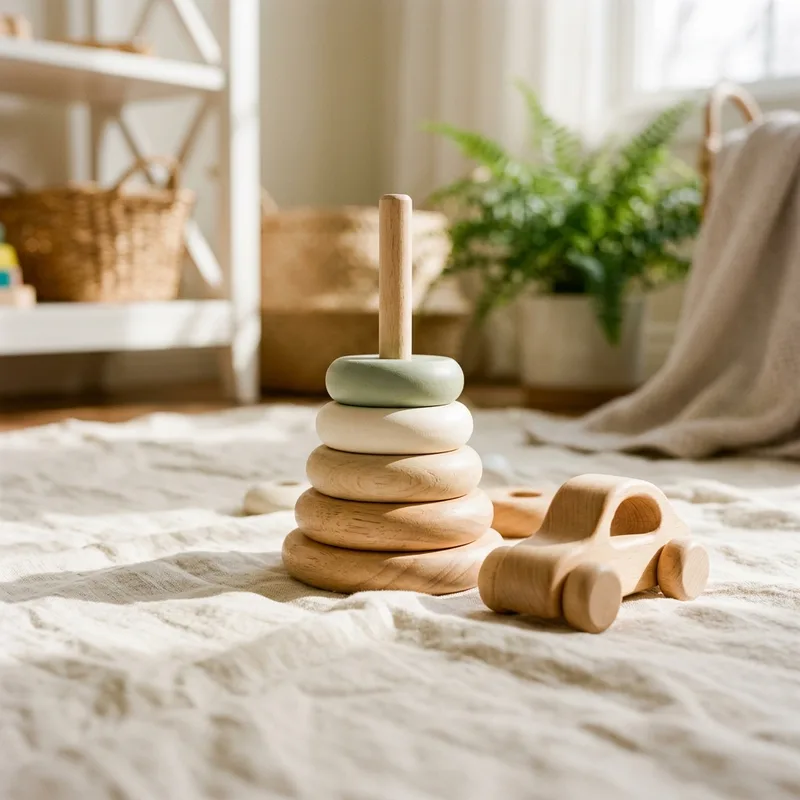
- Lean on simple materials for new purchases. Solid wood and food-grade silicone sidestep the phthalate and BPA questions entirely, and they tend to last long enough to pass down. Build the broader picture with the nursery-to-playroom guide.
The Bottom Line
Are plastic toys safe? For new, mainstream US toys, mostly yes, because the worst offenders are already banned and tested out. The honest watch-list is small: old hand-me-downs, cheap untested imports, and anything soft, smelly and headed for your baby's mouth.
Your one next step: next time you are about to buy a toy, run it through the four-question filter above, and when something finally breaks, replace it with wood or food-grade silicone. That is the whole job. No purge, no panic, no premium for a "BPA-free" sticker on something that was fine already.