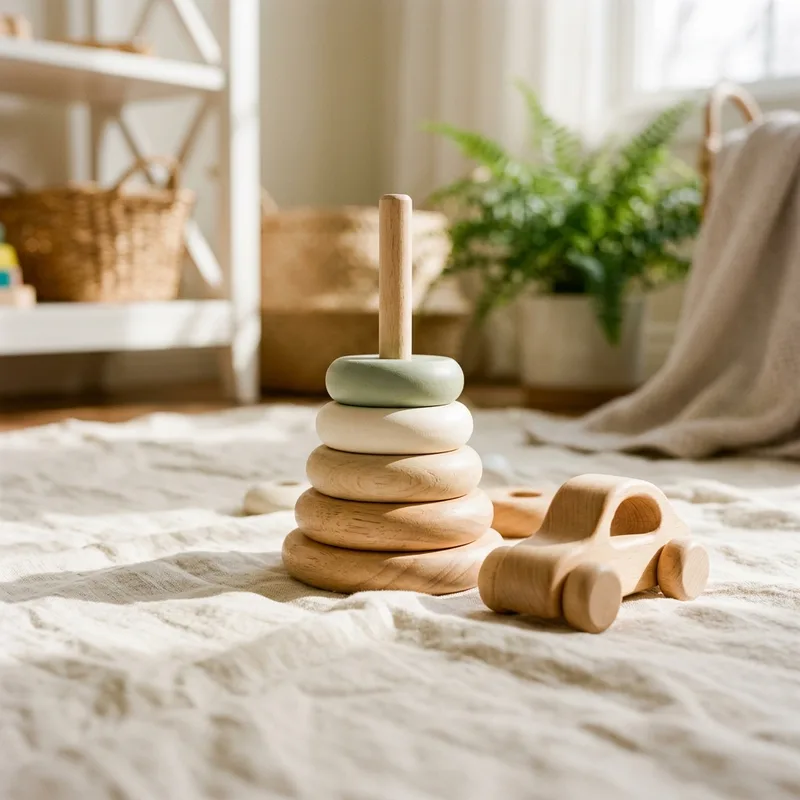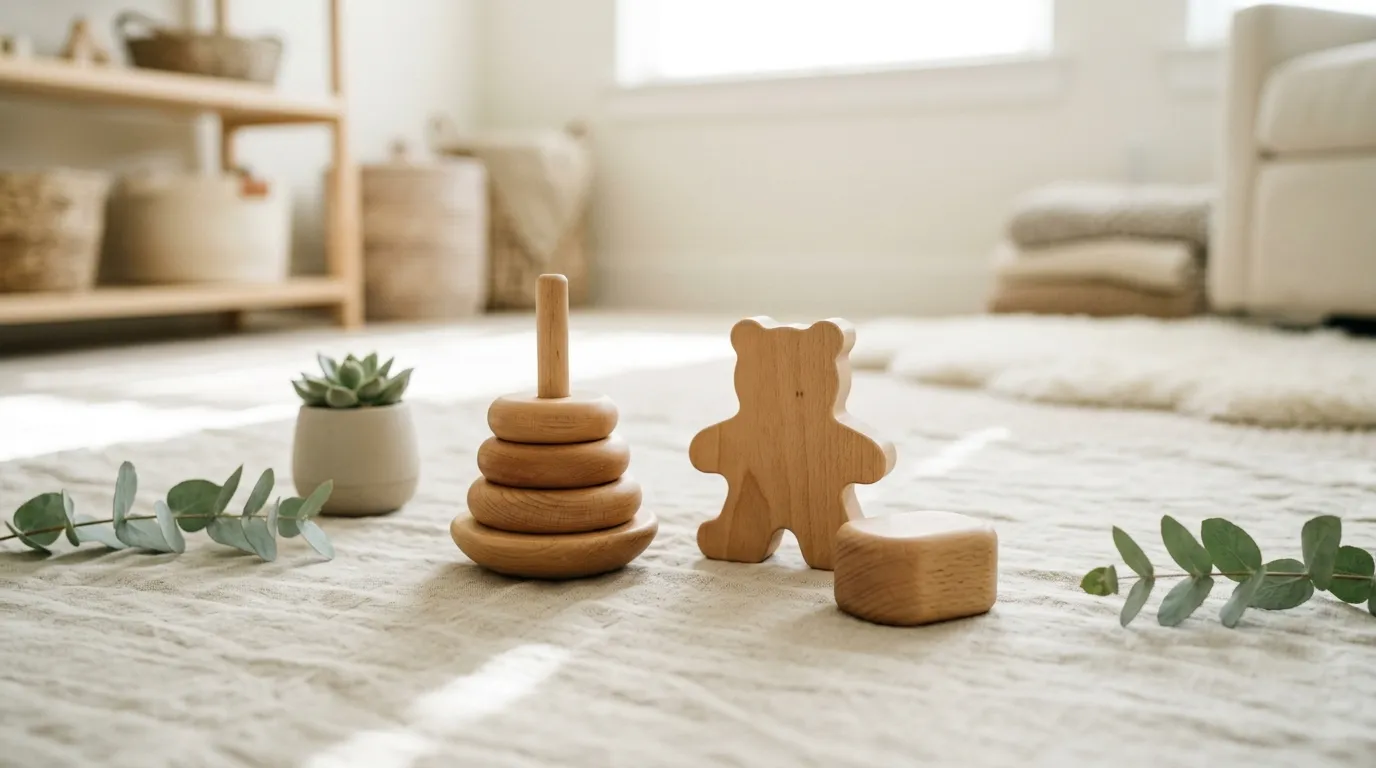
The safest toddler toys are made from solid, untreated or water-based-finished wood, or from plastic that clearly states it is free of phthalates (the chemicals that make plastic soft and can leach out) and BPA. Look for a toy that lists a recognized safety standard and names its materials plainly. If you want one reliable all-rounder, a classic wooden block set is hard to beat: it has no painted coating to chew off, it lasts for years, and it grows with your child.
Here is the thing I wish someone had told me earlier: toddlers put everything in their mouths, so the toys they handle most and chew most are the ones worth getting right first. You do not need to replace the whole toy bin. You'll want to know what to look for, which few things genuinely matter, and which "eco" labels are just nice packaging. That is what this guide is for.
What Actually Makes a Toddler Toy Low-Tox
Three things matter, in this order: the material, the finish, and the standard it is made to.
Material. Solid wood and food-grade silicone are the easy wins because they do not need softeners to work. Plastic is not automatically bad, but soft, flexible plastic is where phthalates historically showed up, so with plastic you want it clearly labeled. The US has actually regulated this: children's toys cannot legally contain more than trace amounts of several phthalates under the Consumer Product Safety Commission's rules. That is real protection, which is why I am calm about plastic toys from reputable brands and not calm about mystery imports sold with no safety information.
Finish. A raw wooden block is inert. A wooden toy coated in a glossy paint or lacquer is only as safe as that coating. Look for "water-based, non-toxic finish" or no finish at all. Toddlers gnaw on edges, so the coating is the part that ends up in their mouth.
Standard. In the US, toys should meet ASTM F963, the toy safety standard, and lead limits are capped by the CPSC. Reputable brands say so. Vague "eco" or "natural" wording with no standard listed is marketing, not a guarantee.
The labels worth trusting, and the ones that are just vibes
"Non-toxic" on a toy box is not a regulated term on its own, so it means little without backup. What I actually look for: a named material (solid rubberwood, recycled HDPE), a stated finish (water-based), and a safety standard (ASTM F963). If a listing gives me all three, I relax. If it gives me a leaf icon and the word "natural," I keep reading. For a deeper look at why soft plastics got a bad name, see Are Plastic Toys Safe? (Phthalates & BPA in Kids Products).
Our Top Picks at a Glance
| Product | Best For | Key Material or Certification | Why It Wins |
|---|---|---|---|
| Melissa & Doug 100 Wooden Building Blocks | Best Overall | Solid wood, no toxic coatings | Open-ended, finish-free, lasts for years |
| Zeoddler Magnetic Wooden Animal Train | Best Montessori Pick | Wood, Montessori-style design | Hands-on learning at an accessible price |
| Green Toys Airplane | Best Plastic Pick | Recycled plastic, BPA/phthalate free | Proof that safe plastic exists |
Best Overall: Melissa & Doug 100 Wooden Building Blocks
If I could only recommend one toddler toy, it would be a plain wooden block set, and this is the one I point people to. Solid wood, no glossy coating to chew off, and a storage box so the blocks do not colonize your living room floor forever. Blocks are the rare toy that works at 18 months (stacking two, knocking them down, shrieking with joy) and still works at five (building a whole town). That longevity is the real low-tox argument: one good thing that lasts beats five cheap things you replace.
Pros:
- Solid wood construction with no toxic coatings to flake or leach
- Genuinely open-ended play that grows with your child for years
- Storage box included, which matters more than you think
- Enormous, long-standing track record from a trusted brand
Cons: The plain natural finish is less visually flashy than a brightly painted set, so a toddler used to loud colors may need a minute to warm up to it.

Best Montessori Pick: Zeoddler Magnetic Wooden Animal Train
This one lands right in the sweet spot I look for: wood, hands-on, and Montessori-leaning without the Montessori price tag. Toddlers connect the magnetic animal cars, pull the train around, sort the pieces, and quietly build fine motor skills while they think they are just playing. It is one of the more affordable ways to get a wooden, skill-building toy into your home, which matters when toddler attention spans are, let us be honest, a moving target.
Pros:
- Wooden pieces with a Montessori-style, learning-through-play design
- Magnetic connections build fine motor coordination
- Very accessible price for a natural-material toy
- Compact set that stores easily
Cons: Magnetic pieces mean you'll want to supervise younger toddlers; check the age rating and keep an eye on the smallest parts.

Best Plastic Pick: Green Toys Airplane
I include this deliberately, because "non-toxic" does not have to mean "wood only." This airplane is made from recycled plastic and is clearly labeled BPA-free and phthalate-free, which is exactly the transparency I want from a plastic toy. It is a single piece, so there is nothing small to lose and nothing to swallow, which makes it a sturdy, grab-and-go option for the car or the stroller bag. If your toddler loves things that zoom, this is the honest answer to "is there a safe plastic toy?"
Pros:
- BPA-free and phthalate-free, stated plainly
- Made from recycled plastic
- One solid piece, nothing small to lose or choke on
- Easy to rinse clean, holds up to rough toddler handling
Cons: A single airplane offers less play variety than a set, so it is more of a companion toy than a main event.

How We Chose
I vetted these on the three things that actually matter for a toddler: named materials, a safe finish (or no finish), and clear safety labeling. I favored toys that state what they are made of instead of hiding behind "eco" buzzwords, and I leaned toward open-ended toys that last, because a toy you keep for years is both lower-tox and lower-cost than a stream of replacements. I have not tested these in my own home, so I am recommending on materials, transparency, and reputation, not on a staged playdate.
The Trade-Off Nobody Mentions: One Great Toy vs. a Full Bin
Here is a decision rule I use for almost everything in low-tox living, and it applies perfectly to toys: start with what gets handled and mouthed the most. A teether, a toy your toddler sleeps with, the thing that never leaves their hand, those are worth getting right first. The novelty toy that gets played with twice? Lower priority.
When I first went down the low-tox rabbit hole, I was shocked by how many questionable ingredients were in ordinary products, and my instinct was to replace everything at once. It got expensive fast, and in a family you cannot just throw out your kids' favorite things. My kids have opinions. The toy they love is theirs, not a decision I get to override. What I actually do now is swap thoughtfully as things wear out or as gifts come in, and I let the beloved plastic dinosaur stay. Free will applies to toddlers too, apparently.
What to Avoid, Calmly
You do not need to panic about your current toy bin. But when you are buying new, these are the things I steer around:
- Soft, strong-smelling plastic with no safety info. A chemical smell out of the package is a reason to pass. Phthalates are regulated in US toys, but unlabeled imports are the gap.
- Painted or lacquered wood with no finish stated. The coating is the part that ends up in a mouth.
- Old or hand-me-down painted toys. Lead in paint was common in older toys; the CDC has guidance on lead in children's products. Lovely to reuse toys, but check the vintage painted ones.
- "Natural" with no material named. It is a word, not a standard.
For the bigger picture on which chemicals are worth your attention across the whole house, see our guide to the top chemicals to eliminate from your home, and why small repeated exposures add up in the toxic buildup effect.
Keeping Toys Clean Without Adding New Chemicals
Wooden toys do not love being soaked, so I wipe them with a damp cloth and a drop of mild soap, then dry them. Skip soaking and skip the dishwasher for wood; it cracks and raises the grain. Plastic toys like the Green Toys airplane rinse clean easily. And please do not spray scented "toy sanitizer" on things your toddler chews; a simple wipe-down does the job without adding fragrance back onto the one surface you were trying to keep clean. If you want to see how I handle cleaning products generally, that lives in our home and household guide.
When to Replace a Toddler Toy
Replace when it is genuinely worn, not when a better one appears. Wood that is splintering, cracked, or has a flaking finish should go. Plastic that is cracked (sharp edges, trapped grime) or any toy with loose small parts near a young toddler is a safety issue, not just a tidiness one. Otherwise, use it up. A perfectly good toy is not improved by being thrown out for a slightly greener one.
Safer Swaps
Swap in priority order, easiest and highest impact first, and use up what still works before replacing it.
- The most-mouthed toy first. Whatever your toddler chews and never puts down is the one swap worth making now. Reach for solid wood or clearly labeled BPA/phthalate-free plastic.
- Add one open-ended wooden set instead of three single-use plastic toys. A block set does more and lasts longer than a bin of novelties.
- Check new toys the way I check cosmetics. It takes seconds: look for a named material, a stated finish, and a safety standard before you add to cart. If you want to get comfortable reading ingredient and material labels, start with INCI names decoded. For the full nursery-to-playroom picture, see non-toxic living for kids and family.
The Bottom Line
The best non-toxic toys for toddlers are the ones made of named, honest materials: solid wood or clearly labeled phthalate-free, BPA-free plastic, built to a real safety standard. You do not need to overhaul the toy bin this weekend. Pick the single toy your child handles most, make that one solid wood or clearly safe plastic, and let the rest ride until it wears out. If you want one buy to start with, a wooden block set is the easiest, longest-lasting choice you will make.