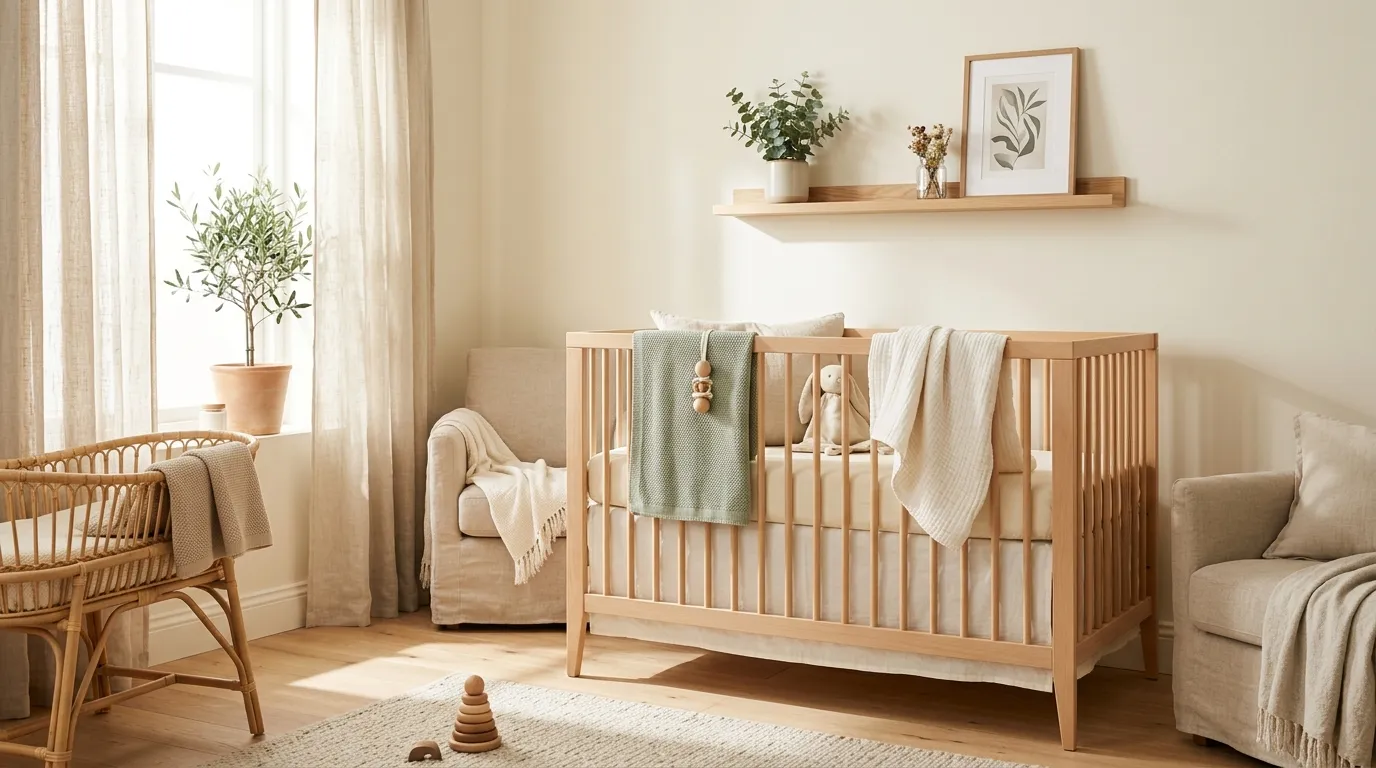
Build your non-toxic nursery in order of exposure, not in order of which Pinterest board you saw first. Swap the things your baby lies on and breathes near for ten to sixteen hours a day before you touch the cute wooden toys on the shelf. That means the crib mattress, the bedding, and the room's air come first. Skin products and feeding gear come next. Decor and toys come last, because they matter far less than the internet implies.
I know the pull to fix everything at once, because I did exactly that with my own home in 2018, and it got expensive fast. A nursery is the easiest place in the house to repeat that mistake: you are emotional, you are tired, and the marketing is relentless. So this is a checklist built around one rule. Spend your money where your baby spends their time. Everything else can wait until the budget recovers.
The one rule that decides your order
Before you buy anything, ask two questions about each item:
- How many hours a day does it touch my baby, or sit in the air they breathe?
- Does it stay on, or does it rinse off and leave?
Something a baby sleeps on all night ranks higher than something they hold for ten minutes. A lotion that stays on the skin ranks higher than a wash that rinses down the drain. This is the same method I use for my own products, and it is the honest reason skin-contact items and the sleeping area win almost every time.
Apply that rule and the nursery sorts itself into a priority order. Here it is.
The priority order (swap this first)
| Priority | What to swap | Why it ranks here |
|---|---|---|
| 1 | Crib mattress | 10-16 hrs of skin contact daily, up close to the breathing zone |
| 2 | Bedding and sleep sack | Direct skin contact all night, washed and re-worn constantly |
| 3 | Room air (paint, no air fresheners/candles, ventilation) | Baby breathes it every hour, nothing rinses it off |
| 4 | Leave-on skin products (lotion, balm, diaper cream) | Stay on the skin, applied to a large area |
| 5 | Feeding gear (bottles, later sippy cups) | Daily contact, heat involved |
| 6 | Rinse-off wash, wipes | Contact is real but brief, washes away |
| 7 | Toys | Brief handling, mostly mouthing in older babies |
| 8 | Decor, rugs, nursery "extras" | Low contact, high marketing |
You do not have to buy top to bottom in one shopping trip. You buy top to bottom as money allows, and you stop worrying about item 8 until items 1 through 4 are handled.
1. The crib mattress comes first
If you change one thing in the nursery, change this. A baby sleeps most of the day, their face is inches from the surface, and conventional mattresses can be treated with added flame retardants and made with materials that off-gas. This is the single highest-contact, highest-hours item in the room, which is exactly why it sits at the top.
I am not going to re-explain the chemistry here, because it deserves its own page. Read Is Your Crib Mattress Toxic? (Flame Retardants Explained) for what the flame-retardant labeling actually means, and Best Non-Toxic Crib Mattress when you are ready to choose one. The short version: look for a clear description of materials, certifications you can verify, and a mattress that meets flammability rules without added chemical retardants.
One honest budget note. A good crib mattress is a one-time cost that lasts through more than one child. In my experience the expensive swaps are the long-lasting ones, and they are worth prioritizing precisely because you buy them once.
2. Bedding and sleep sacks
Next comes everything the mattress is wrapped in: the fitted sheet, the sleep sack, the mattress protector. These touch skin all night and get washed constantly, so you want materials that stay simple after fifty washes.
My pick is organic cotton in plain, undyed or low-dye versions. Skip the "stay-fresh" and anti-odor finishes, which are added chemistry you do not need on a newborn. For specifics on fibers, certifications and what is worth paying for, see Best Organic Kids Bedding.
Here is a scent opinion I will stand behind: do not use scented fabric softener or dryer sheets on baby bedding. Giving up the "freshly washed" smell was genuinely the hardest adjustment for me when I went low-tox, and I missed it for months. But fragrance that clings to fabric is one of the easiest exposures to remove, and on a baby's bedding it is simply not worth it. The laundry is just as clean. It just smells like nothing, which is better for a scent-sensitive baby anyway.
3. The air in the room
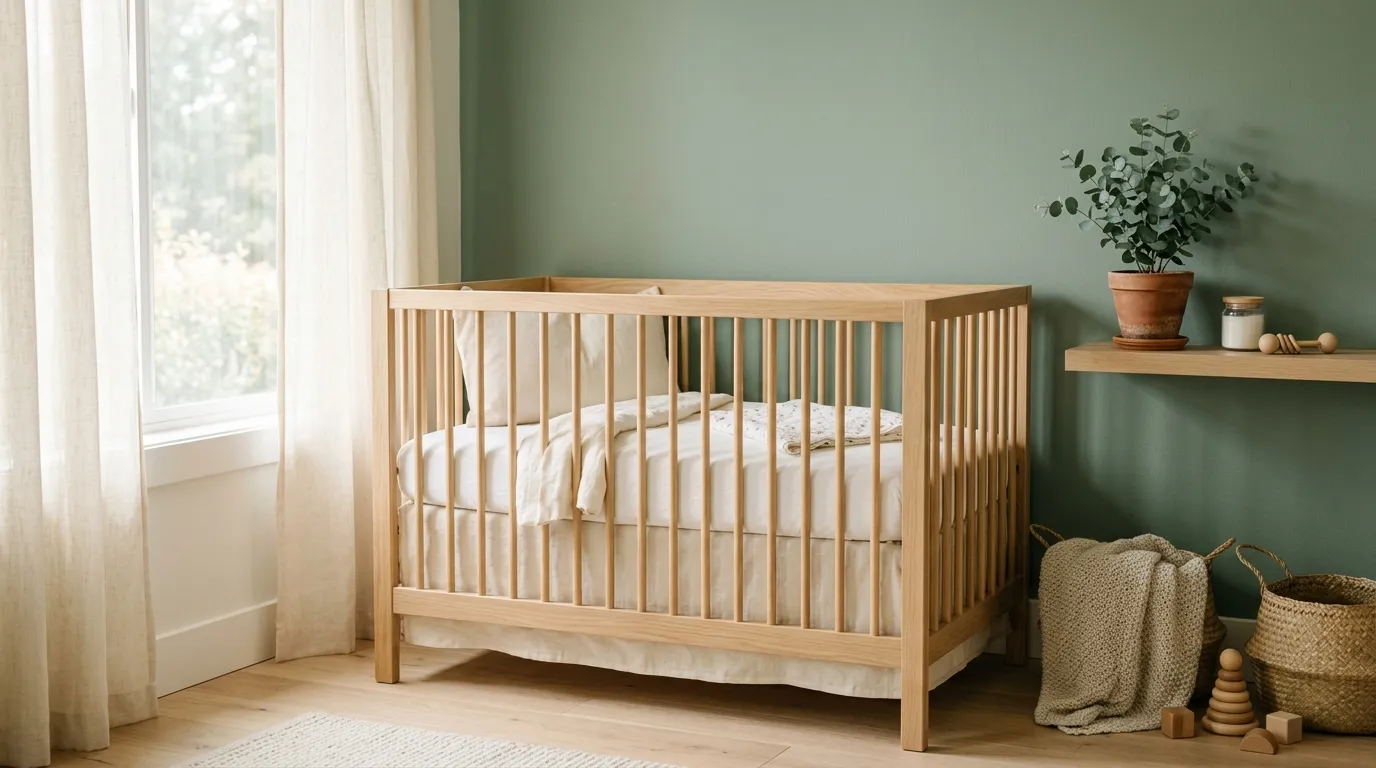
Air is the exposure you cannot rinse off, and it is the one people skip because it is invisible. You do not need an expensive gadget. You need three sensible moves.
- Paint early, air it out. If you are painting, use a low-VOC or zero-VOC paint and finish the room weeks before the baby arrives so it fully off-gasses. VOCs are the solvents that evaporate off fresh paint and give you that "new paint" smell. The EPA's guidance on indoor air quality explains why ventilation during and after painting matters.
- No air fresheners, plug-ins or candles in the nursery. This is a firm no from me. "Fragrance" on a label can hide dozens of undisclosed ingredients, and a baby's room is the last place you want a slow-release scent machine running all day. If you want a little scent in the house, use a small amount of essential oil elsewhere, well away from the crib.
- Ventilate. Open a window when weather allows. Fresh air is free and it dilutes whatever is in the room.
For the bigger picture on fragrance and household air, see Home & Household.
4. Leave-on skin products
Now the products. A baby's skin is more permeable than an adult's, and leave-on items (lotion, balm, diaper cream) stay put, so they rank above anything that rinses away. This is where my thirty-second habit pays off: before I buy any new skincare, I look it up on INCIdecoder to read the full ingredient list in plain terms. It takes half a minute and it is the single most useful habit I have.
What to favor: short ingredient lists, no added fragrance, simple plant oils and mineral-based diaper creams (zinc oxide is a workhorse). In my own routine I lean on simple natural salves, and a plain zinc salve is one of them. What to skip: anything marketed as "baby fresh scent," which is fragrance you are paying extra for.
Rinse-off wash and shampoo matter less because they leave with the water, so if the budget is tight, finish the bottle you have and upgrade the leave-on products first.
5. Feeding gear
Bottles involve heat, and heat plus plastic is where I pay attention. Glass and food-grade silicone are my default, and the choice between them comes down to how clumsy you are feeling and how much weight you want to hold at 3 a.m. The full comparison lives in Best Non-Toxic Baby Bottles (Glass & Silicone), and when your baby graduates, Best Non-Toxic Sippy Cups & Water Bottles for Kids.
One rule I follow in my own kitchen that applies perfectly here: never heat food in a storage container. I always put it on a plate first, and only then warm it. And for the record, "BPA-free" on a label tells you one chemical is absent, not that the whole item is clean. Treat it as a starting point, not a gold star.
6. Wipes and the fast-contact items
Wipes touch skin many times a day but briefly, so they land in the middle of the list, not the top. Still, "many times a day" adds up, which is why I would read the label rather than grab whatever is on sale. The ingredients to watch and the swaps that work are covered in Are Baby Wipes Toxic? (Ingredients to Avoid). Short version: skip fragrance and harsh preservatives; plain water wipes or a damp cloth are hard to beat for a newborn.
7. Toys (lower priority than you think)
Here is where I push back on the common nursery-prep panic. Toys for a newborn are low-contact. A two-month-old is not chewing a pile of plastic blocks. Toys climb the list later, when the baby starts mouthing everything, and even then the research is calmer than the headlines.
The real concerns are phthalates (the chemicals that make plastic soft and flexible) and older painted or vintage items. US rules already limit certain phthalates in children's toys, which the CPSC explains here. For the full nuance, see Are Plastic Toys Safe? (Phthalates & BPA in Kids Products) and, when your baby is older, Best Non-Toxic Toys for Toddlers.
My blunt opinion: do not blow your nursery budget on a shelf of artisan wooden toys for a baby who cannot yet sit up. Spend that money on the mattress. The toys can come later, one at a time.
8. Decor and the "extras"
Rugs, wall hangings, that adorable themed everything. Lowest priority, because contact is minimal and the marketing is maximal. A soft new rug can off-gas, so if you add one, air it out before the baby arrives, same as paint. Otherwise, buy less. A calm, mostly-empty nursery is not a failure. It is a feature.
A note on family, free will and the budget
You will not reach a "perfect" nursery, and chasing one is how people end up overwhelmed and spending money they do not have. When I first saw how many questionable ingredients were in ordinary products, I tried to replace everything at once, and it collided hard with real family life and a real budget. What I learned: change what is clearly yours to change, do the high-impact swaps first, and let the rest come as products improve and money allows. Every swap in a healthier direction is a plus. One swap beats no swap.
For the bigger family picture beyond the nursery, Non-Toxic Living for Kids & Family and Where to Start With Low-Tox Living on a Budget are your next reads.
Safer Swaps
In priority order, easiest and highest impact first. Use up what you have where it makes sense, then switch.
- Crib mattress → a verified no-added-flame-retardant mattress. The biggest hours-of-contact item in the room, and a one-time cost that lasts through more than one child. Start at Best Non-Toxic Crib Mattress.
- Bedding and laundry routine → organic cotton sheets and sleep sacks, and drop the scented detergent and dryer sheets for the nursery. Details in Best Organic Kids Bedding.
- The air → no plug-ins or candles in the room, ventilate, and if you paint, use low-VOC paint weeks ahead. Free or nearly free, and it fixes the exposure you cannot rinse off.
The Bottom Line
Do not build the whole nursery in one anxious weekend. This week, handle the air: no air fresheners or candles in the room, open a window, and if you are still painting, choose low-VOC and give it time to clear. It costs almost nothing and it fixes the one exposure your baby cannot avoid. Then save for the mattress, work down the list, and let the toys and decor wait their turn.