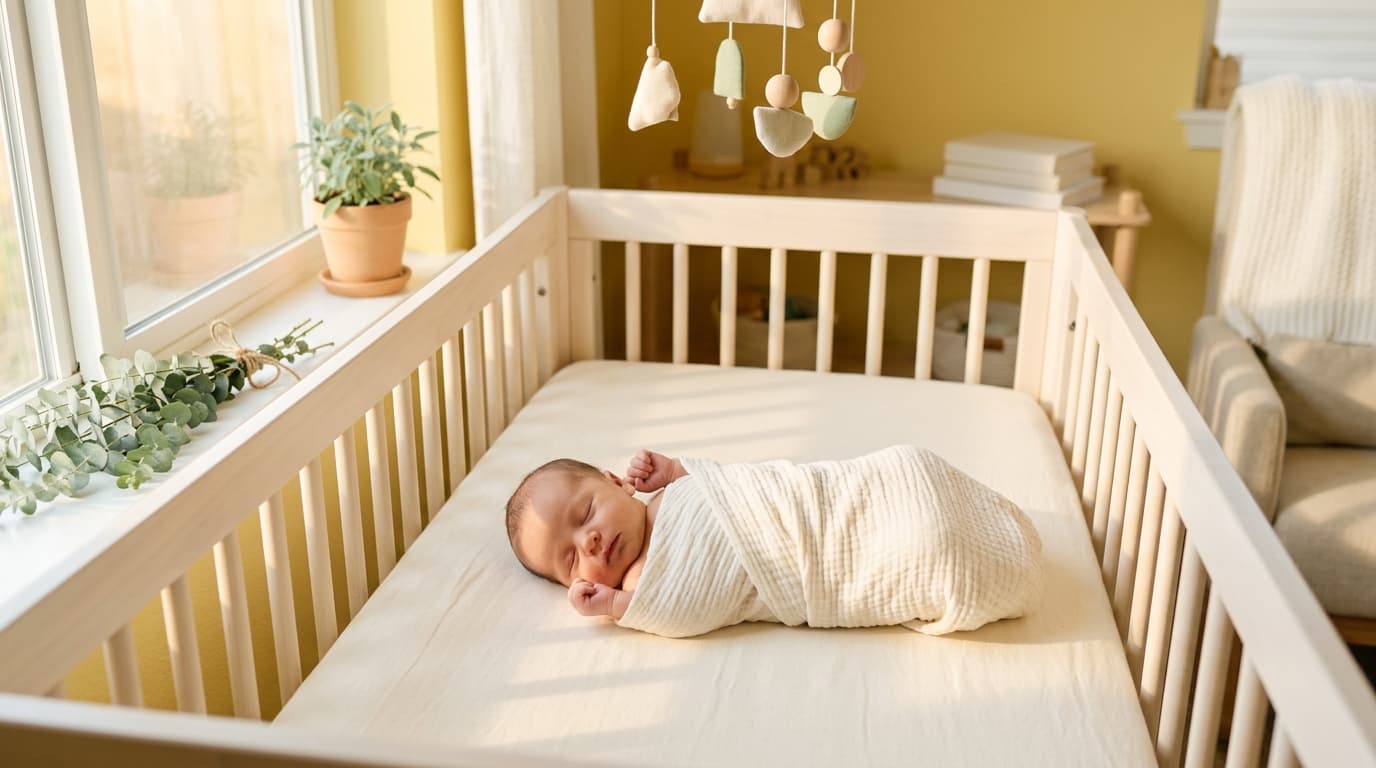
A genuinely non-toxic crib mattress is one that carries a real third-party certification, not just a green leaf printed on the box. The names that actually mean something are GOTS (certified organic materials), MADE SAFE (screened against a long list of harmful chemicals), GREENGUARD Gold (tested for low chemical emissions into the air), and OEKO-TEX Standard 100 (materials tested for a list of known problem substances). Pick a mattress with one of these, a firm flat surface, and a breathable waterproof cover, and you have done the important part.
Here is the honest context: a crib mattress sits a few inches from your baby's face for roughly twelve hours a day, for years. It is one of the highest-contact, longest-exposure items in the whole nursery, which is exactly why it is worth getting right even when the rest of your swaps can wait. The flame retardant question gets its own deep dive, because it deserves one: see Is Your Crib Mattress Toxic? (Flame Retardants Explained). This page is about choosing the mattress itself.
What Makes a Crib Mattress Genuinely Low-Tox
Three things matter, in roughly this order.
Firmness and fit come first, always. Before any chemistry conversation, a crib mattress has to be firm and flat and fit the crib with no gap. This is a safe-sleep rule, not a low-tox preference. A soft or ill-fitting mattress is a real risk; a slightly-less-perfect certification is not. Get this right before anything else.
Then the materials. The usual cores are organic cotton or wool, food-grade polyethylene, natural latex, polyurethane foam, or a fiber core made from recycled or plant-based material. None of these is automatically "toxic" or "clean." What matters is what has been added to them, which is where certifications come in.
Then what was added. The things you are trying to avoid are added flame retardant chemicals, high VOC emissions (the off-gassing new-mattress smell), and softening chemicals like phthalates in vinyl covers. For more on why small daily exposures add up on a high-contact item like this, see The Toxic Buildup Effect.
The Certifications That Actually Mean Something
This is the part worth slowing down for, because "non-toxic" and "natural" on a mattress listing are marketing words with no legal definition. Certifications are the opposite: a third party checked.
| Certification | What it actually verifies | What it does NOT verify |
|---|---|---|
| GOTS | Organic fiber content and processing, strict chemical limits | Air emissions testing |
| MADE SAFE | Screened against a large banned-chemicals list | Organic status unless also GOTS |
| GREENGUARD Gold | Low chemical emissions into the air (VOCs) | Organic or natural materials |
| OEKO-TEX Standard 100 | Materials tested free of a list of harmful substances | Organic status, emissions |
My blunt take: ignore any listing whose only claim is "non-toxic" or "eco" with no certification named. If they had one, they would print it. For how to read the ingredient and material language in general, INCI Names Decoded is a useful companion even though it is aimed at personal care, because the skill is the same: trust the standard, not the adjective.
The federal flammability rule for mattresses is real and mandatory. The question is how a mattress meets it: with added chemical flame retardants, or with an inherently flame-resistant barrier like wool or a tightly woven fabric. The Consumer Product Safety Commission sets the standard; the certifications above tell you which route the maker took.
Our Top Picks at a Glance
| Product | Best For | Key Material or Certification | Why It Wins |
|---|---|---|---|
| Newton Baby Breathable | Best for breathability | Washable breathable core | Fully washable, strong safety reputation |
| Naturepedic Organic 2-Stage | Best organic | MADE SAFE certified organic | Rigorous non-toxic standard, dual-stage |
| Serta Perfect Slumber | Best certified value | GREENGUARD Gold, Made in USA | Low-emission certified, dual-sided |
| Graco Premium Foam | Best budget pick | OEKO-TEX Standard 100 | Tested materials at an accessible price |
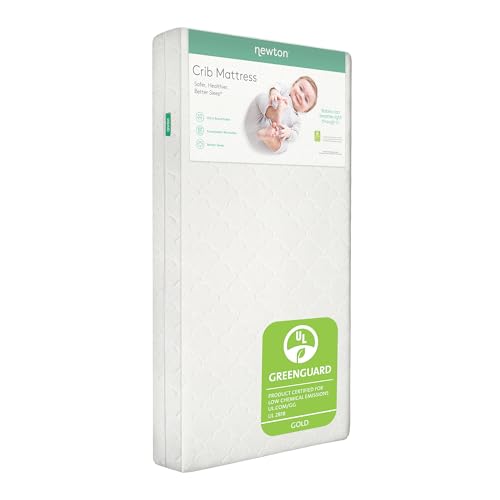
Best for Breathability: Newton Baby Breathable & Washable
The Newton's selling point is its breathable, washable core: the whole thing is designed so air moves through it, and the core can be rinsed and dried if there is an accident or an illness. That washability is genuinely useful for the realities of a nursery, and parents give it a strong safety reputation. It leans on its construction and breathability rather than an organic-fiber story, so match it to what you care about most.
Pros:
- Fully breathable and washable core, practical for messes and sick days
- Converts to a toddler-bed size, extending its useful life
- Strong safety reputation among parents
Cons: Premium price, around $300, which will not suit every budget.
Best Organic: Naturepedic Organic 2-Stage
If organic materials are your priority, this is the one I would point you to. It is MADE SAFE certified, which is one of the more rigorous non-toxic screening programs out there, and the two-stage design has a firmer infant side and a slightly different toddler side so it grows with the child. The waterproof breathable cover handles the practical mess problem without resorting to a vinyl you would rather avoid.
Pros:
- MADE SAFE certified organic, a genuinely strict standard
- Dual-sided 2-stage design for infant then toddler
- Waterproof, breathable cover and included protector pad
Cons: It is the most expensive pick here, around $370, and has a smaller review history than the mainstream options.

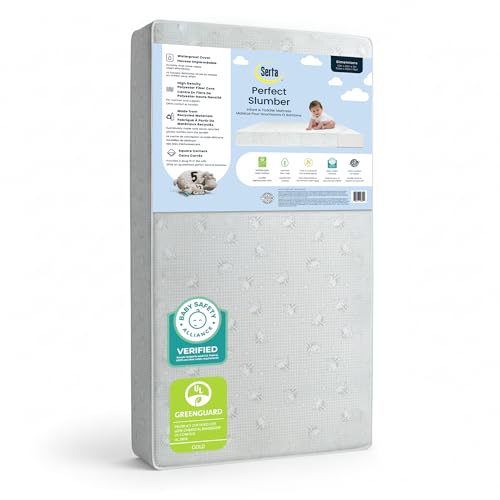
Best Certified Value: Serta Perfect Slumber
This is my pick for parents who want a named certification without the organic-premium price. It is GREENGUARD Gold certified, meaning it is tested for low chemical emissions into the air, which is exactly the reassurance you want for something your baby breathes over all night. It is dual-sided for infant and toddler use, made in the USA, and backed by a long warranty. The fiber core is sustainably sourced rather than organic cotton or latex.
Pros:
- GREENGUARD Gold certified for low air emissions
- Dual-sided infant and toddler firmness
- Made in USA with a 7-year warranty
Cons: The fiber core will not appeal to parents who specifically want foam or certified-organic materials.
Best Budget Pick: Graco Premium Foam
If budget is the real constraint, and for a lot of families it is, this is the honest answer. It carries OEKO-TEX Standard 100 certification, which means the materials have been tested against a list of known problem substances, and it is a foam core at an accessible price. It does not carry the organic certifications of the pricier picks, but a certified, tested budget mattress beats an uncertified "natural" one every time.
Pros:
- OEKO-TEX Standard 100 certified materials
- The most accessible price of this group
- Lightweight and easy to handle for sheet changes
Cons: Foam-only construction, with no organic material certification.

How We Chose
I vetted these on the things that are actually verifiable: a named third-party certification (GOTS, MADE SAFE, GREENGUARD Gold or OEKO-TEX), honest material disclosure, and a cover that handles real nursery messes without relying on soft vinyl. I did not test these in my own home, and I will not pretend otherwise. The judgment here is on certifications and transparency, which is what you can check too.
A Quick Decision Rule
When the choice feels overwhelming, use this order:
- Firm, flat, fits the crib with no gap. Non-negotiable, every one of these qualifies.
- At least one real certification you can name. If you cannot find the certification, skip it.
- A practical waterproof or washable layer, because you will be cleaning this thing more than you expect.
- Then, and only then, budget and material preference. Organic is lovely; a certified budget mattress is also a completely legitimate choice. One good swap beats no swap because the "perfect" one cost too much.
The early mistake I made in my own low-tox years was trying to replace everything at once and watching the bill balloon. With a nursery it is tempting to do the same. Do not. Pick the mattress carefully, then pace the rest.
Caring For It (So It Stays Low-Tox)
A good mattress can still cause problems if you handle it badly. When it is new, let it air out in a well-ventilated room for a day or two before the baby sleeps on it; this lets any initial emissions dissipate, even on low-VOC models. Use a breathable, washable protector rather than a crinkly plastic sheet, and wash bedding in fragrance-free detergent. On that note, the "freshly washed" scent most people love comes from synthetic fragrance; I gave mine up and genuinely missed it at first, so I use a drop of essential oil instead. For the sheets and blankets that go on top, see Best Organic Kids Bedding.
When to Replace It
Replace a crib mattress if it sags, if the cover tears and exposes the core, or if it has been through a serious mold or contamination event you cannot fully clean. Secondhand mattresses are the one place I would hesitate: you cannot verify how a used mattress was stored or cleaned, and the firmness may have degraded. For a new baby, a new mattress is the cautious call. For a full walk-through of everything else in the room, use the Non-Toxic Nursery Checklist.
Safer Swaps
In priority order, easiest and highest impact first:
- Swap the mystery mattress for a certified one. If what you have now is uncertified and you are still shopping, this is the single swap worth making before the baby arrives. Choose any pick above that matches your budget.
- Add a washable, breathable protector instead of a plastic sheet. Cheap, easy, and it keeps the mattress itself usable for years.
- Then move outward to bedding and the rest of the room, using up what still works first. The full nursery plan lives in Non-Toxic Living for Kids & Family.
The Bottom Line
The best non-toxic crib mattress is the certified one you can actually afford, that is firm, flat, and fits the crib. Do not get paralyzed chasing organic perfection: a GREENGUARD Gold or OEKO-TEX certified mattress is a real, verifiable choice, and so is an organic MADE SAFE one if the budget stretches. Your one concrete next step: decide whether certification type or price is your deciding factor, pick the matching option above, and let it air out before the first night. For the wider picture, start at Children & Family.