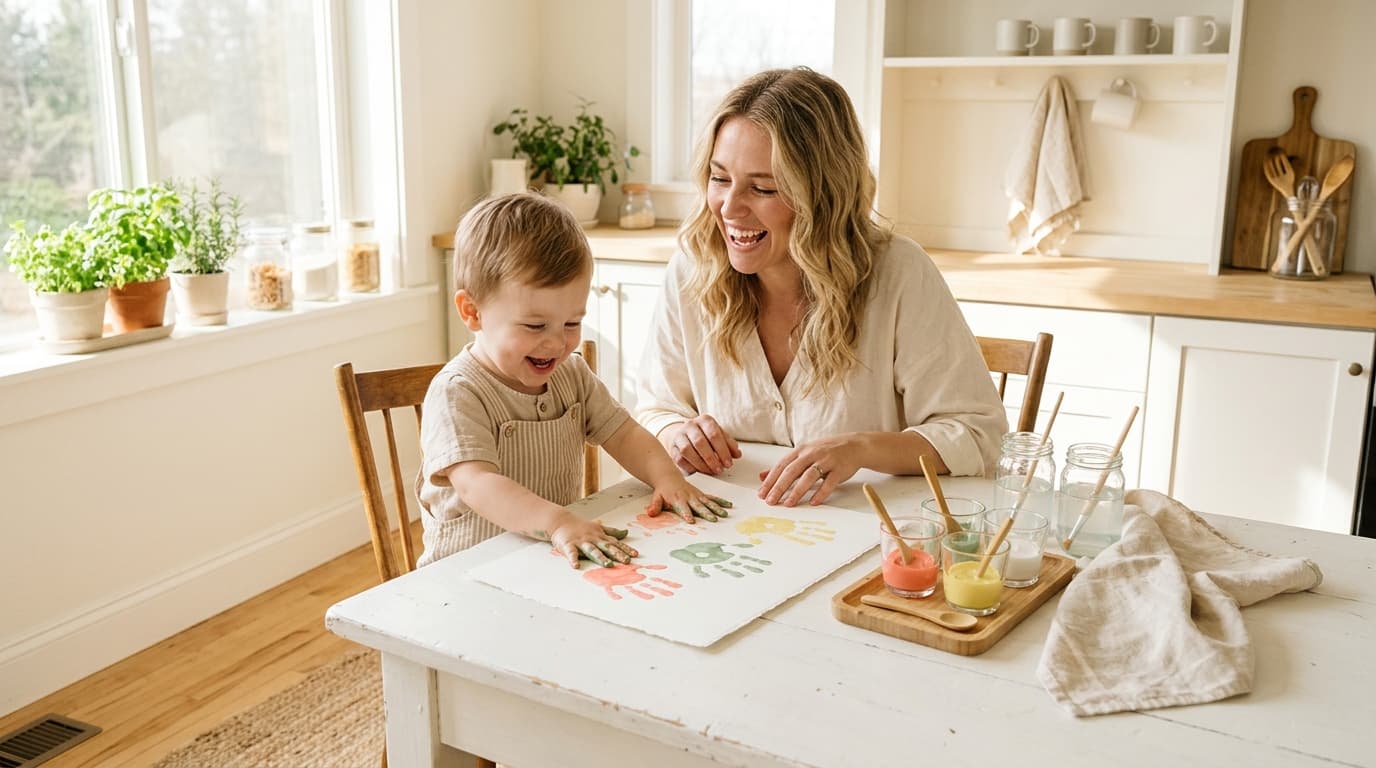
The short answer: it depends on your child's age and what they do with the paint. An acrylic or finger paint that carries the ACMI AP seal, or states that it conforms to ASTM D-4236 with no hazard warning, is safe for a supervised craft session where paint ends up on paper and hands, then gets washed off. It is not food, it is not meant to be eaten, and that little "non-toxic" seal does not change that. For a toddler who still puts fingers in their mouth, reach for a washable finger paint and stay in the room.
Here is where parents get tripped up, and it is not their fault: the word "non-toxic" on a paint tube means something very specific, and it is narrower than most people assume. It tells you the paint will not acutely poison a child who gets a normal amount on their skin. It does not tell you the paint is food-safe, skin-safe for a child with eczema, or fine to leave within reach of a one-year-old. Let me untangle what the certifications actually promise, so you can pick a genuinely non toxic finger paint with confidence. If you already know what you want and just need a shortlist, our acrylic paint picks for kids' crafts compare sets by their labeling.
What "AP Non-Toxic" Actually Certifies
The AP (Approved Product) seal comes from the Art & Creative Materials Institute (ACMI), whose products are certified through a toxicological evaluation. When you see it, it means the product, in normal expected use, contains no materials in quantities high enough to cause acute or chronic harm to humans, including children.
That is genuinely reassuring. It is also narrower than it sounds.
AP certification assumes normal use: painting on paper, getting some on your hands, washing it off. It does not certify the paint as food. A child who eats a mouthful is not expected to be poisoned, but "will not poison you" is a long way from "is safe to eat." No reputable paint is designed to be swallowed.
So AP non-toxic means: safe for supervised craft use. It does not mean food-safe, and it does not automatically mean gentle on sensitive or broken skin. Those are different questions with different answers.
ASTM D-4236 and the CL seal
Many good kids' paints do not carry an ACMI seal at all, because the seal is voluntary. What every art material sold in the US must carry, under the Labeling of Hazardous Art Materials Act, is a statement that it conforms to ASTM D-4236: a toxicologist has reviewed the formula, and any chronic hazard has to be printed on the label. The Consumer Product Safety Commission (CPSC) explains the rule in its art materials guidance.
So read the line together with what is around it. "Conforms to ASTM D-4236" with no warning text means the review found nothing that needed a hazard label, and that clears the bar for supervised kids' crafts. "Conforms to ASTM D-4236" followed by a warning, or ACMI's CL (Cautionary Labeling) seal, means the opposite: there is a hazard, labeled for safe adult use. ACMI says CL products should never be given to children in grade 6 or lower.
Finger Paint vs. Acrylic Craft Paint: Where They Overlap
For the toddler and preschool crowd, these two categories blur together, so let me draw the line clearly.
Finger paint is formulated to be used directly with hands. It is thicker, usually water-based, and designed to wash off skin easily. Good ones carry the AP seal and the word "washable."
Acrylic craft paint is a pigment suspended in an acrylic polymer. Once it dries, it is essentially a thin layer of plastic, which is why it is permanent on fabric and tough to scrub off skin. Plenty of acrylic craft paints are AP-certified and fine for supervised projects with older preschoolers, but they are not meant for the fingers-in-mouth stage.
The honest rule: if your child still mouths things, use a washable finger paint made for that age. Save acrylic craft paint for the child who can follow "paint stays on the paper." Acrylic paint for crafts deserves its own detailed look at which brands verify what they claim, and we cover that in the best non-toxic acrylic paint for kids' crafts guide.
What "Washable" Really Means (It's Not About Toxins)
This is the label that confuses people most. "Washable" is a performance claim, not a safety claim.
"Washable" tells you the paint is formulated to release from skin and most fabrics with water and soap. It says nothing directly about the ingredients being safer, though in practice washable finger paints are usually water-based and simpler in formula, which is a plus.
What washable does not mean:
- It does not mean food-safe or edible.
- It does not mean it will not stain every surface (dried on the wrong fabric, "washable" can still leave a mark).
- It does not mean zero preservatives or zero fragrance.
So "washable AP non-toxic" is the combination you want for little hands: it washes off easily and it will not acutely harm a child in normal use. That is a strong starting point. It is still not a license to let a toddler snack on it.
Age-By-Age: What's Appropriate When
Exposure and dose matter more than the scary word "chemical." A one-year-old who tastes everything has a very different risk profile than a four-year-old who paints and then washes up. Here is how I would think about it.
| Age | What's appropriate | Supervision |
|---|---|---|
| Under 1 | Skip paint. Edible sensory play (yogurt, mashed fruit) if you want color play | Constant, hands-on |
| 1-2 | Washable AP finger paint only, short sessions, expect mouthing | Constant, within arm's reach |
| 3-4 | Washable finger paint; AP acrylic craft paint for brush work | Active, in the room |
| 5+ | AP acrylic craft paint fine; teach "wash hands before snacks" | Light, check in |
The pattern is simple: the younger the child, the more they will mouth the paint, so the more it matters that it is washable and the closer you'll want to be. As mouthing fades, you can move to tougher acrylic craft paints.
How to Spot a Genuinely Safe Formula vs. Marketing
"Non-toxic" with no certification behind it is just a word a marketing team chose. I do not trust it on its own, and neither should you. Here is what actually tells you something.
Look for the AP seal, not just the claim
The AP seal means an independent toxicologist evaluated the formula. The phrase "non-toxic" printed in a nice font means nothing was verified. Favor the seal, or an ASTM D-4236 statement with no warning next to it. A product that needs no hazard warning after a toxicologist's review is a meaningful signal; a product that says nothing at all is not.
Read the ingredient list like you read a shampoo label
Water-based is better than solvent-based for kids. Watch for added fragrance and strong preservatives, which are the usual culprits for a rash on sensitive skin. If you want a refresher on decoding ingredient names, we keep one here: INCI names decoded.
My own habit for any new personal-care product is a thirty-second check on an ingredient database before buying. It takes half a minute and it has saved me from more than one "clean"-labeled dud. Craft paint is not skincare, but the same instinct applies: the label on the front is marketing, the list on the back is information.
Match the product to the actual skin contact
This is the one people miss. Finger paint touches hands and gets washed off. Face paint sits on skin for hours, often near eyes and lips, so it plays by stricter rules entirely. Never use craft or finger paint on a child's face. If a party or Halloween is coming, that is a different product with different standards, covered in what makes face paint safe.
Tempera, Watercolor or Acrylic: Which Paint for Which Child
The three paints you will find in most craft drawers behave very differently, and that matters more for safety than the brand.
| Paint | What it is | Washes off skin and clothes? | Best age |
|---|---|---|---|
| Washable finger paint or tempera | Water-based pigment, often with a starch or chalk base | Yes, easily, especially before it dries | Toddlers and up, supervised |
| Watercolor (pan or liquid) | Pigment in a water-soluble binder, used thin | Yes | Preschool and up |
| Acrylic craft paint | Pigment in an acrylic polymer that dries to a plastic film | Off skin with soap if fresh; not out of fabric once dry | About 3 to 4 and up for brush work |
All three should carry the AP seal or an ASTM D-4236 statement with no warning. Beyond that, the softer the paint, the more forgiving it is for small children: tempera and watercolor wash away, acrylic stays. If you want a project that survives the laundry, that is a fabric paint job, covered in our fabric paint safety guide. And if the next project is a pet's paw print, paw-print keepsakes covers what is actually pet-safe, because craft paint is rated for people, not animals.
The Mouthing Problem (and the One Rule That Matters Most)
Let's be honest about toddlers. They will taste the paint. Not because you failed to watch them, but because that is how a one-year-old learns about the world.
This is why the single most important rule is not about the brand you buy, it is about supervision. A washable AP finger paint means a taste will not acutely harm your child. It does not mean you should let them eat it, and it does not mean you can leave the room. Keep sessions short, keep the paint within your reach and not theirs, and wash hands before any snack.
If you genuinely cannot supervise closely, the safer move for the very youngest is edible sensory play: colored yogurt, a little mashed berry, plain cornstarch goop. It is messy, it is fun, and if it ends up in their mouth, it is literally food. Save the real paint for a session you can watch.
If your child swallows some paint
Stay calm. A taste of an AP-sealed, water-based paint is very unlikely to cause harm. Wipe out their mouth, give a drink of water, and keep the bottle so you can read the label. If they swallowed more than a taste, if the paint had a warning label or CL seal, or if they seem unwell, call the Poison Help line at 1-800-222-1222, which is free and open around the clock in the US.
What About the Mess, Skin and Clothes
Dried acrylic is plastic, which is why it bonds to fabric and does not come out. That is not a toxicity issue, it is a laundry issue, and it is exactly why acrylic is not what you want on a toddler who is going to wipe their hands on their shirt.
For clothing projects where you actually want color to stay, that is a specific product category with its own safety considerations. We cover the genuinely safer options in non-toxic fabric paint that's safe for kids' clothes and crafts, with sets to buy in the fabric paint picks.
For skin, the fix is boring and effective: warm water and soap, right after the session, before the paint dries. The longer dried acrylic sits, the harder it clings. Washable finger paints are the forgiving choice here, which is the whole point of buying them for small children.
Safer Swaps
Use up what you already have if it is AP-certified and washable; there is no reason to toss a working tube. When you restock, swap in this order:
- Switch unlabeled "non-toxic" paint for AP-certified washable finger paint. This is the highest-impact, lowest-effort change for the 1-4 crowd: verified safety plus easy cleanup. See our best non-toxic acrylic paint for kids' crafts for AP-certified picks that work for brush projects too.
- For babies and the very young, swap paint for edible sensory play. Colored yogurt or mashed fruit gives you the mess and the fun with none of the mouthing worry.
- Keep a separate, stricter product for faces. Do not let craft paint migrate to cheeks; get a proper skin-contact face paint made for kids when you need it.
For the bigger picture on safer choices from nursery to playroom, our children and family hub ties it all together, and are plastic toys safe? covers the rest of the toy box. If you are painting more than paper (walls, furniture, a crib), start with our guide to non-toxic paint for every use.
The Bottom Line
Acrylic and finger paints carrying the AP seal, or an ASTM D-4236 statement with no hazard warning, are safe for supervised craft use with kids. That seal certifies acutely non-toxic in normal use; it does not mean food-safe, skin-safe for every child, or safe to leave within a toddler's reach. For the mouthing years, choose a washable AP finger paint and stay in the room.
Your one next step: before your next craft session, check that the paint in your drawer actually carries the AP seal or an ASTM D-4236 statement with no warning. If it just says "non-toxic" in a nice font with nothing behind it, put it on the list to replace with a certified washable version, and save the real acrylics for the child who paints the paper, not their fingers.