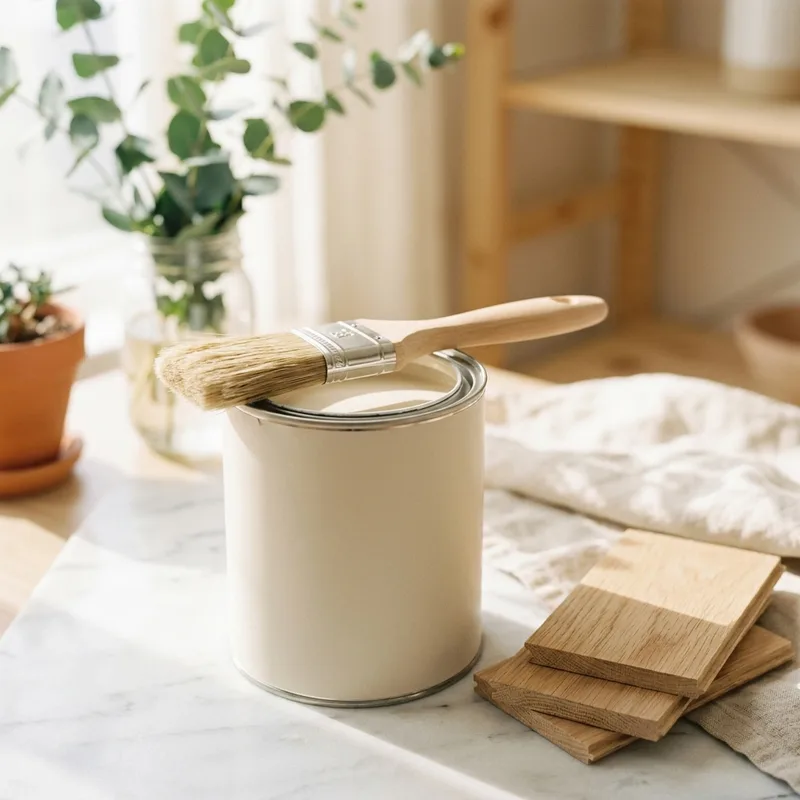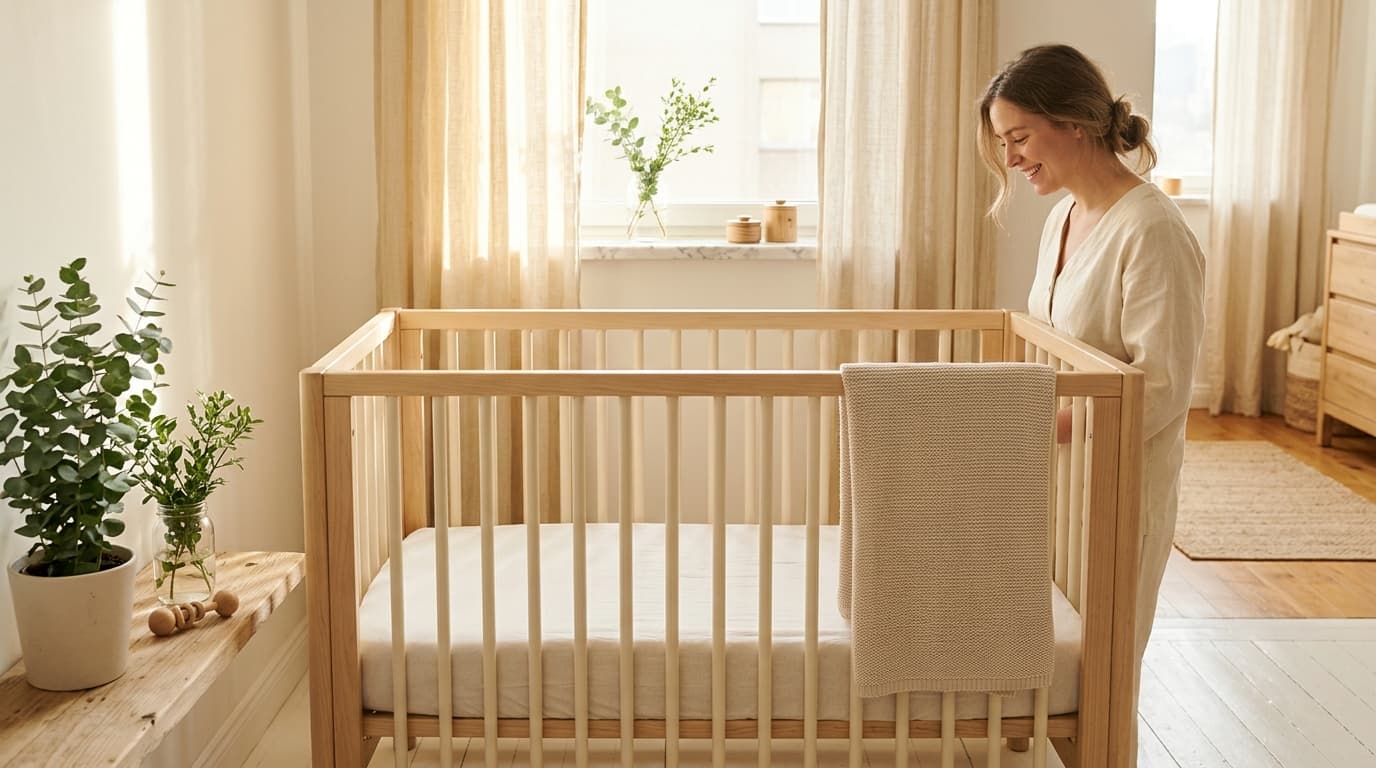
Here is the short version: the safest non toxic paint for cribs is often no paint at all, meaning a crib with a factory finish the manufacturer documents. If you are finishing or refreshing one yourself, choose one of three simple routes: a milk paint whose maker states it is suitable for children's furniture and toys, a pure polymerized linseed oil with no metallic driers, or a water-based paint that is GREENGUARD Gold certified in a pre-mixed low-VOC color. Then let it fully cure. "Zero-VOC" on the can is a good start, but it is not the finish line, and I will explain the gap that catches most parents off guard.
If you are repainting a crib or buying an unfinished one, you are rightly cautious. A crib is the one piece of furniture your baby spends ten-plus hours a day touching, gnawing and breathing right next to. That raises the bar above what you would accept for a nursery wall. The good news: the right finish plus a little patience makes this a low-stress job. The confusing part is the labeling, so let's clear it up.
Crib paint is a different question than nursery wall paint
People tend to lump "non-toxic paint for infants" into one bucket, but a crib and a wall are not the same risk.
A wall is a large surface your baby breathes near but does not chew. The main concern there is off-gassing: volatile organic compounds (VOCs), the solvents that evaporate out of wet paint and keep releasing into the air for days or weeks. That is an inhalation question, and the fix is low-emission paint plus ventilation and cure time.
A crib rail is different. It is a smaller surface, but it goes straight into a teething baby's mouth. Now you care about two things: what off-gasses into the air AND whether the dried film is safe if it flakes or gets chewed. That second part is where a toy-safety standard earns its keep. For the walls themselves, our infant-safe nursery paint guide covers that side in full, and its two furniture picks (milk paint and a pure linseed oil) are the same two simple finishes I would consider for a crib. Its wall paint is for walls, not rails.
The three finishes that make sense on a crib
| Finish | What it is | Why it suits a crib | The trade-off |
|---|---|---|---|
| Milk paint | Milk protein, lime, clay and earth pigments, mixed from powder | Short, published ingredient list; matte, hard once cured | Takes practice to mix; needs a bonding additive over old finishes; best sealed or oiled on a rail |
| Pure polymerized linseed oil | One ingredient, no solvents or metallic driers | Keeps the wood grain; food-contact safe once cured per the maker | Cures slowly over days; less water-resistant than lacquer |
| GREENGUARD Gold water-based paint | Conventional acrylic paint, emissions-tested | Durable, wide color range, verifiable in UL's directory | Tints can add VOCs; check a toy-safety claim for chewed parts |
Two of these are covered with specific products in the nursery paint picks. On the rails a baby actually chews, I find a food-contact-safe oil finish easier to trust than a film of paint, because there is nothing to flake off. A painted crib with oiled teething rails is a sensible compromise.
The zero-VOC trap: what tinting actually does
This is the single most useful thing to understand, and almost no label tells you.
When a paint is marketed as "zero-VOC," that number usually refers to the base paint, before any color is added. The colorants squirted in at the store can contain VOCs of their own. Add a deep, saturated color and you can push a genuinely low-VOC base back up into ordinary territory. The U.S. EPA explains what VOCs are and why indoor concentrations matter in its overview of volatile organic compounds.
So "zero-VOC" can be technically true for the can on the shelf and misleading for the color in your cart. My rule for a crib:
- Prefer paints sold in pre-mixed, low-VOC colors where the manufacturer states the VOC level of the finished tinted product, not just the base.
- If you must tint, ask for zero- or low-VOC colorants specifically. Many premium lines offer them.
- Treat a pale, low-pigment shade as the safer bet over a deep jewel tone when you are tinting at the counter.
This is not fearmongering. Dose and ventilation matter enormously, and a well-cured surface in a well-aired room is a minor exposure. But on a crib, where you have both inhalation and mouthing, I would not hand the choice of colorant over to the store computer without asking.
The certifications that actually matter
Labels on paint are a mix of real standards and marketing words. Here is how I sort them for a crib.
| Certification / mark | What it actually tells you | Worth it for a crib? |
|---|---|---|
| GREENGUARD Gold | Independently tested for low chemical emissions, with limits strict enough for children's spaces | Yes, the headline one for paint |
| ASTM F963 / EN 71-3 ("toy safe") | Toy-safety standards; EN 71-3 limits heavy metals that can migrate if a child mouths the surface | Yes for crib-contact surfaces |
| ASTM D-4236 | An art-material labeling standard: toxicologist-reviewed, chronic hazards labeled | A signal on craft paint, not a toy-safety standard |
| "Non-toxic" / "eco" / "natural" (no cert) | Marketing words with no legal definition | No. Ignore unless backed by a real standard |
The honest take: GREENGUARD Gold is the one I would not skip on a paint, because it tests the finished product's emissions against limits set with kids in mind. You can verify a specific product in UL's GREENGUARD certification directory rather than trusting the can. For a surface a baby will mouth, a stated toy-safety standard on top is belt and suspenders, and worth it here.
One legal floor applies to everyone: the Consumer Product Safety Commission (CPSC) limits lead in paint on children's furniture and toys to 0.009 percent (90 ppm). Any crib sold new in the US has to meet that. A crib repainted in someone's garage decades ago does not come with that guarantee.
What I would skip: anything leaning entirely on the words "non-toxic," "natural" or "eco" with no certification behind them. Those words are not regulated. If you want the fuller story on how paint labels work, our guide to what to look for in non-toxic paint walks through every line of the can.
What to actively avoid on a crib
A few things are worth a firm no:
- Oil-based (alkyd) paints and anything requiring mineral-spirit cleanup. High-solvent, long off-gassing, not for a crib. Choose a water-based paint, a milk paint or a pure oil instead. (A pure polymerized linseed oil is a different thing from an alkyd paint: it has no added solvent.)
- Old or vintage painted cribs of unknown age. Lead-based paint was banned for consumer use in the U.S. in 1978, but a repainted heirloom is a real gamble. The CDC explains that lead paint and lead dust are major sources of exposure for children. Older cribs may also fall short of current federal crib requirements, and the CPSC advises using sleep products that meet federal requirements. If a crib predates the late 1970s or you cannot confirm its finish history, I would not sand or repaint it near a baby.
- Craft acrylics and "kids' paints" used as a furniture finish. They are formulated for paper and projects, not for a durable, chew-resistant surface. For actual art supplies, is acrylic paint safe for kids is the right read, not this one.
- Fragranced or "odor-eliminating" paints. Added fragrance in a crib paint is a step backward.
How to finish a crib, step by step
If you are working on raw wood or a sound, modern factory finish (not an old crib of unknown history):
- Work outside the nursery. A garage or a well-aired spare room, away from where the baby sleeps now.
- Prep gently. A light hand-sanding gives the finish something to grip. Wear a dust mask, vacuum with a HEPA vacuum, and wipe down with a damp cloth. Never sand a finish that could contain lead.
- Thin coats, full dry time. Two thin coats cure harder and faster than one thick one. Follow the label's recoat window.
- Oil the teething rails if you painted the rest, or choose an oil finish for the whole crib.
- Cure, then air. Follow the manufacturer's full cure time, then let the crib sit in a ventilated room for a while longer before it goes into the nursery.
Many parents simply plan this weeks before the due date, which takes the time pressure off entirely.
Ventilation and cure time: the step people rush
Even a perfect low-emission paint is still wet when you finish. VOC release is highest while the film dries and keeps tapering off as it cures. Drying (touch-dry) and curing (fully hardened) are not the same thing, and a crib finish needs the full cure before a baby is sleeping against it.
I will not hand you a made-up number of days, because it varies by product, humidity and how many coats you applied. Follow the manufacturer's stated cure time, and when in doubt, give it longer. A sensible approach:
- Paint with windows open and a fan moving air out, and keep ventilating for days after, not just during painting.
- Let the crib cure in a well-aired room away from where the baby currently sleeps.
- Trust your nose as a backup, not a substitute: if you still smell paint, it is still releasing. Little to no smell plus the manufacturer's full cure window elapsed is your green light.
- A carbon air purifier can help clear residual VOCs faster while the room airs out; our air purifier for VOCs guide explains what carbon actually removes.
This patience step is free and it is the one most parents cut short. Do not.
A simple decision rule
If you want to skip the overwhelm, here is the order I would follow for a crib:
- Buy a crib with a factory finish you can verify (the manufacturer states a low-emission and/or toy-safety certification). The easiest win is not painting at all.
- If you are finishing raw wood, choose milk paint, a pure polymerized linseed oil, or a GREENGUARD Gold water-based paint in a pre-mixed low-VOC color.
- For the rails a baby chews, prefer an oil finish or a paint that also states a toy-safety standard (ASTM F963 or EN 71-3).
- Ventilate, then wait for full cure per the label before baby sleeps against it.
- Never sand or repaint a crib of unknown age without confirming it is lead-free. If you plan to strip one, read removing paint safely first.
Honestly, option 1 is my favorite. The crib is a one-time, long-lasting purchase, so buying a safely finished one upfront saves you the painting project entirely.
How this fits the bigger nursery picture
Paint is one piece. The surface your baby actually lies on matters just as much, and a crib mattress is its own topic of flame retardants and foams: see is your crib mattress toxic, and when you are ready to buy, our best non-toxic crib mattress picks. If you are setting up the whole room, the non-toxic nursery checklist walks you through what to prioritize first, and the broader kids and family hub collects the rest.
One thing I have learned living low-tox with my own family: you do not have to do everything at once, and trying to is how people burn out and give up. Pick the swap that touches your baby most, get it right, and move on. A single well-chosen crib finish beats repainting three times chasing perfection.
Safer Swaps
In priority order, easiest and highest impact first. Use up or finish what you already have where it still works, then switch:
- Not painting at all. Choose or keep a crib with a verified low-emission factory finish. No cure time, no colorant guesswork. If you are buying new, this is the swap.
- A short-ingredient finish for DIY. Milk paint or a pure linseed oil keeps the chemistry readable; see our infant-safe paint picks. If you prefer conventional paint, choose GREENGUARD Gold in a pre-mixed low-VOC color.
- Full ventilation plus cure time. Costs nothing, catches the exposure that paint choice alone does not. Air the room out, wait the full manufacturer cure window, and let your nose confirm before baby moves in.
The Bottom Line
For a baby's crib, do not stop at "zero-VOC." The easiest answer is a documented factory finish. If you finish it yourself, keep the chemistry short (milk paint or a pure linseed oil) or pick a GREENGUARD Gold water-based paint in a pre-mixed low-VOC color, oil the teething rails, and let everything fully cure before your baby sleeps against it.
Your one next step: before you buy anything, look up the exact product in the GREENGUARD directory or on the maker's ingredient page and confirm the claim yourself. Thirty seconds of checking beats trusting a word on a can.