Here is the short version: for nursery walls, you want an interior paint that is zero-VOC in both the base AND the tints, from a maker that either publishes its ingredients or carries GREENGUARD Gold, and then you give the room days of airflow before the baby sleeps in it. For nursery furniture like a dresser or shelves, the simplest answer is a finish with a short, published ingredient list, such as milk paint or a pure plant-oil finish. A crib is a third job with its own rules, and the biggest mistake I see is treating all three as one.
Most "non toxic paint for infants" searches mix these up. So this guide splits them cleanly. First, how to read a wall-paint label so you are not fooled by greenwashing. Then three products whose makers actually tell you what is in the can. Crib surfaces have their own rules, which I link out to below so I am not repeating a whole article here. If you want the label basics for every kind of paint first, start with non-toxic paint for every use.
This article contains affiliate links. If you buy through them we may earn a small commission at no extra cost to you. It never changes which products we recommend.
What "Non-Toxic Paint" Actually Means (Walls)
The marketing is slippery here, so let me be blunt about the two words that matter.
VOCs are volatile organic compounds: the chemicals that evaporate off wet paint and give you that "new paint" smell. The EPA notes indoor VOC levels can run several times higher indoors than out, and freshly painted rooms are a classic source. For a baby who will sleep ten-plus hours in that room, lower is better. Look for zero-VOC, not just "low-VOC."
Here is the trap: a "zero-VOC base" can stop being zero-VOC the moment the store adds color. The tint, the colorant, can carry its own VOCs and still be sold under a zero-VOC banner. So the real question is always: zero-VOC base AND zero-VOC tints? If the label or the staff cannot confirm the tints, treat the claim as marketing.
The certification worth trusting
GREENGUARD Gold is the one I look for on wall paint. It is third-party emissions testing, run by UL, against stricter limits chosen with children and sensitive people in mind, and you can check a specific product in UL's directory. It is not a magic word, but it is a real standard with a lab behind it, which is more than "eco," "natural" or "green" can say. Those three are not standards. They mean nothing on their own.
My honest take on wall paint brands: the well-known zero-VOC interior lines sold in both GREENGUARD Gold base and certified tints are worth the small premium for a nursery. Skip anything that advertises "low odor" but stays vague about VOCs, and skip "natural" paint that will not show you a test. Low odor is a comfort feature, not a safety certificate.
Walls, Cribs and Furniture Are Three Different Jobs
Quick map before the picks, because the rules change by surface:
- Walls and ceiling: zero-VOC interior latex, GREENGUARD Gold, scrubbable finish (eggshell or satin wipes clean better than flat).
- Crib and anything a baby can mouth: this is its own category with its own safety rules. I will not cram it in here. Read Non-Toxic Paint for a Baby's Crib: What's Safe and What to Avoid before you touch a crib.
- Trim and small furniture: a zero-VOC trim or cabinet paint, cured fully before the piece goes near the baby.
For everything that follows, remember the single most underrated step is time: let painted surfaces cure and the room air out. Even a certified paint benefits from open windows and a few days. The air alone always brings some exposure; you are lowering it, not erasing it.
Our Top Picks at a Glance
Most zero-VOC wall paint is mixed to order at a paint counter, so the honest online options are the ones that publish their formula. These three do. For craft paint for little hands, which is a different product entirely, see Best Non-Toxic Acrylic Paint for Kids.
| Product | Best For | Key Material or Certification | Why It Wins |
|---|---|---|---|
| AFM Safecoat Zero VOC Flat Paint | Best for nursery walls | Zero VOC per the maker, published ingredient list | Made for chemically sensitive homes, no formaldehyde or ammonia |
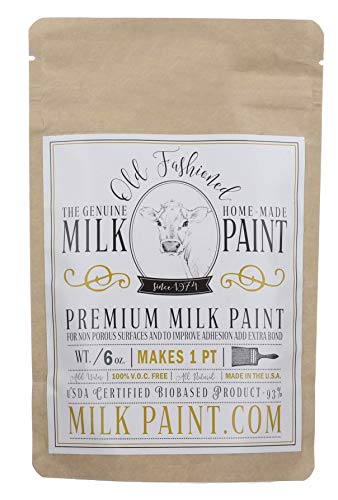
| Old Fashioned Milk Paint (Light Cream) | Best for nursery furniture | Milk protein, lime, clay, earth pigments | A four-ingredient paint you mix yourself |
| Tried & True Danish Oil | Best clear wood finish | 100% polymerized linseed oil, no metallic driers | One ingredient, food-contact safe once cured per the maker |
Each of these asks a little more of you than a can of grocery-store latex: a flat finish, a powder to mix, a slow cure. That is the trade-off for knowing exactly what is in it, and for a baby's room I think it is worth it.
Best for Nursery Walls: AFM Safecoat Zero VOC Flat Paint
AFM Safecoat is one of the few wall paint brands that publishes what goes into the can. Its ingredient list for the zero-VOC flat names water, an acrylic copolymer binder, titanium dioxide, limestone and kaolin clay, and the maker states the line is free of formaldehyde, ammonia and aromatic solvents. AFM has made paint for people with chemical sensitivities for decades, which is exactly the standard I want for a room a baby sleeps in. This is the pastel base in white; it can be used as is for a soft white or tinted with AFM's zero-VOC colorants.
Pros:
- Zero VOC per the maker, with a published ingredient list rather than a vague "green" claim
- Free of formaldehyde and ammonia per the maker
- Long track record with chemically sensitive households
Cons: It is a flat finish, so it does not scrub as well as eggshell or satin, and a gallon costs noticeably more than mainstream paint. It is not GREENGUARD Gold listed; the case for it is full disclosure, not an emissions certificate.

Best for Nursery Furniture: Old Fashioned Milk Paint
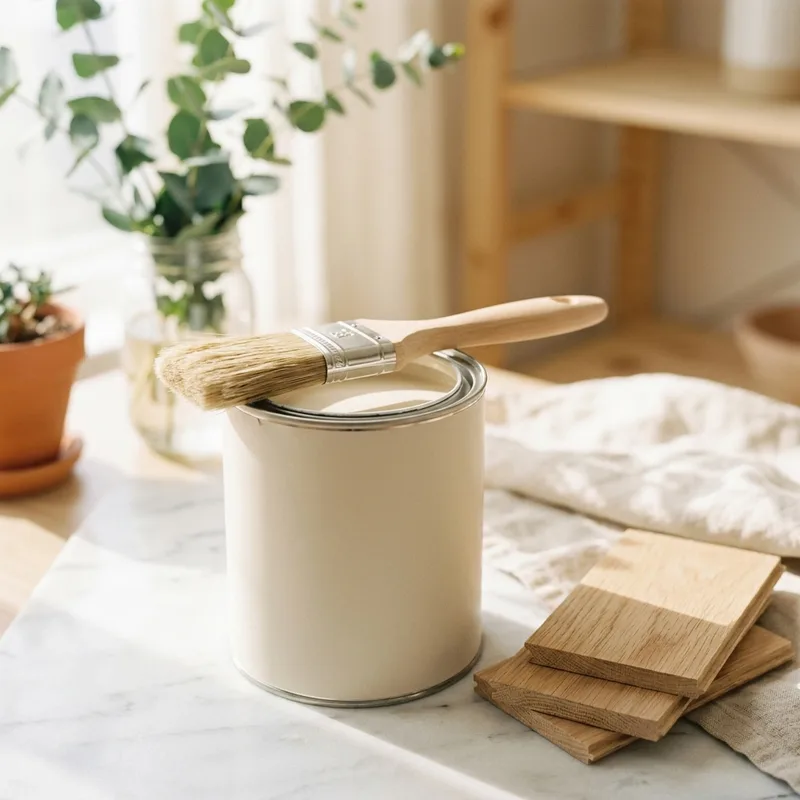
For a dresser, a bookshelf or a changing table, milk paint is the simplest chemistry you can get. The maker lists milk protein, lime, clay and earth pigments, and states it uses no lead, chemical preservatives or fungicides, and that the dry paint is non-toxic and suitable for children's furniture and toys. It comes as a powder you mix with water, which is why it needs no preservatives: you only mix what you use that day. The finish is matte and slightly chalky, with a soft, old-fashioned look.
Pros:
- A short, published ingredient list: milk protein, lime, clay, earth pigments
- No lead, chemical preservatives or fungicides per the maker
- Odorless once dry
Cons: Mixing takes practice, and on previously finished or glossy furniture it needs a bonding additive to stick. Lime is caustic while wet, so wear gloves when mixing. It is a furniture paint, not a wall paint for a whole room.
Best Clear Wood Finish: Tried & True Danish Oil
If you would rather keep the wood grain of a dresser, shelf or wooden toy, a clear oil finish is the gentlest option. Tried & True Danish Oil is one ingredient: polymerized linseed oil, with no solvents and no metallic driers, which are the additives most conventional oil finishes use to cure faster. Once cured, the maker describes it as safe for food-contact surfaces such as cutting boards, which is a useful benchmark for anything little hands will touch.
Pros:
- One ingredient, polymerized linseed oil, with no solvents or metallic driers
- Food-contact safe once cured per the maker
- Easy to reapply and touch up
Cons: It cures slowly; allow several days between coats and a full cure before the piece goes into the nursery. It is an oil finish, so it is less water-resistant than a hard lacquer. Linseed-oil rags can self-heat, so lay them flat to dry outdoors before throwing them away.

How We Chose
We prioritized products whose makers publish what is in them (a full ingredient or material list), zero-VOC formulas for anything on the walls, and finishes that keep added chemistry to a minimum for furniture near a baby. Where a product rests on the maker's own statement rather than an independent certificate, we say so. We did not test these in our home; we evaluated ingredient disclosure, formulation claims and brand track record.
Non-Toxic Paint for Cribs: The Short Version
I get the "non toxic paint for cribs" question constantly, and it deserves its own treatment because a crib is different: a baby chews it. Wall paint is not automatically crib-safe, and even a gentle furniture finish needs to be fully cured before a teething baby gets near it. The rules there are about cured, hard, chew-safe finishes and avoiding anything with lead, which has no place on anything a baby mouths. Of the three picks above, the milk paint and the pure linseed oil are the two that the crib guide also points to for a chewable surface, because their makers publish a short ingredient list and describe the cured finish as suitable for children's furniture and toys (milk paint) or food contact (the oil). The AFM wall paint is for walls, not crib rails. Read the full breakdown in Non-Toxic Paint for a Baby's Crib before you buy or refinish. Do not guess with a crib.
Painting the Nursery: A Simple Timeline
Here is the order I would follow, because the paint you choose matters less if you rush the air out of the room.
- Pick the finish, not just the color. For walls, eggshell or satin is scrubbable; little hands and wipeable walls are a real quality-of-life upgrade over flat.
- Confirm base AND tint are zero-VOC. Ask at the counter. If they cannot say, pick a color from a line that certifies both.
- Paint with windows open and a fan running. Ventilation is free and it works.
- Wait, then wait more. Let it cure for several days with airflow before the room becomes a sleeping space. Trust your nose, but do not rely on it alone: not every emission smells.
If you are pregnant, many parents simply hand the roller to someone else and stay out of the room until it has aired, which costs nothing and removes the question entirely. A carbon air purifier for VOCs can help during the cure if the nursery is a small room with one window.
Painting a nursery in an older home
If the house was built before 1978, the existing paint matters more than the new can. Lead-based paint was banned for residential use that year, and the CDC notes that lead paint and lead dust are major sources of exposure for children in older homes. Sanding old walls to prep them is exactly how lead becomes dust. Test before you sand. If lead is present, hire a firm certified under the EPA's Renovation, Repair and Painting program for the prep, or paint over sound, intact walls without sanding them. Removing paint safely covers the details.
Scent, by the way, is the hardest adjustment in low-tox living. When I gave up scented products, "neutral" took getting used to. With paint, neutral is the goal. A nursery should not smell like anything.
What to Skip
- "Low odor" sold as "safe." Odor and VOC level are not the same thing. Some low-odor paints still off-gas.
- "Natural" or "eco" paint with no test behind it. If there is no GREENGUARD Gold or comparable third-party emissions data, the word is decoration. See INCI Names Decoded for how label language works generally.
- Craft and acrylic paints used on walls or cribs. Those are a different category with different rules; start with Is Acrylic Paint Safe for Kids? if that is your plan.
- Repainting a room that is already fine. Use it up, finish what you started, and only repaint when you have a real reason. Perfection chasing helps no one.
Safer Swaps
Easiest and highest impact first, and you do not need to redo anything that is already done.
- Swap your next can, not your current wall. If the nursery is already painted and the air is clear, leave it. When you next repaint, choose zero-VOC base plus zero-VOC tints, GREENGUARD Gold if you can get it.
- Swap the furniture finish for a disclosed one. When you refresh a dresser or shelf, a milk paint or a pure linseed oil finish keeps the chemistry short and readable.
- Swap the crib plan for a researched one. Before refinishing a crib, read Non-Toxic Paint for a Baby's Crib. Then build out the rest of the room with the Non-Toxic Nursery Checklist.
The Bottom Line
Separate the two jobs and the choice gets easy. For walls, buy a zero-VOC paint that is certified in base and tints, paint with the windows open, and give the room days to clear before baby sleeps there. For furniture, pick a finish with a short, published ingredient list and let it cure fully before it goes into the room.
Your one next step: if you are painting the nursery, call your paint store today and ask one question, "Are both the base and the tints zero-VOC?" The answer tells you everything. For the whole room, not just the walls, start with the Children & Family hub, and if you are mid-renovation, the non-toxic flooring guide covers the other big surface in the room.