If you want the short version: for kids' brush and sponge crafts, choose a water-based acrylic paint that carries the ACMI AP (Approved Product) seal or states that it conforms to ASTM D-4236 with no hazard warning, skip anything with a CL (Cautionary Labeling) seal, and favor sets that wash off skin and most surfaces with soap and water. Our overall pick is the Shuttle Art 36-color set because it is water-based, the maker states ASTM D-4236 conformance, and it comes with brushes and a palette so you are ready to go. If budget is tight or your kids paint a lot, the Apple Barrel Essentials set, AP-sealed per its maker, gives you larger bottles for less.
Here is the honest context most "best paint" lists skip: "non-toxic" on an acrylic bottle only means something when it is tied to a review you can name, either ACMI's seal or the ASTM D-4236 labeling standard. None of the four sets below claims an ACMI AP seal on its listing, and I say so on each one. Once you know what to look for, picking a safe set takes about a minute. This page is for parents and teachers shopping for home or classroom craft paint for ages 3 and up, where kids are using brushes and sponges, not smearing it with their hands. If your little one is still at the hand-smearing stage, washable finger paint is the better fit, and our guide to whether acrylic paint is safe for kids covers finger paint and the age-by-age rules. For how paint labels work across every use, see non-toxic paint for every use.
This article contains affiliate links. If you buy through them we may earn a small commission at no extra cost to you. It never changes which products we recommend.
What "Non-Toxic Acrylic Paint" Actually Means
Under the federal Labeling of Hazardous Art Materials Act (LHAMA), every art material sold in the US must be reviewed by a toxicologist, carry a statement that it conforms to ASTM D-4236, and print any chronic hazard on the label, as the Consumer Product Safety Commission (CPSC) explains in its art materials guidance. On top of that, makers can choose to certify through the Art & Creative Materials Institute (ACMI). Its AP (Approved Product) seal means a toxicological evaluation found no materials in quantities harmful to humans, including children, per ACMI's safety page. So the practical bar for kids is an AP seal, or an ASTM D-4236 statement with no hazard warning next to it.
The seal to avoid for kids is CL (Cautionary Labeling), which means the product has a known hazard and is labeled for safe use; ACMI says CL products should never be given to children in grade 6 or lower. Some artist-grade acrylics carry CL because they use pigments like cadmium or cobalt.
Three things separate a genuinely kid-safe acrylic from a risky one:
- Water-based formula. This means soap-and-water cleanup and no solvent fumes. Every paint on this page is water-based. Avoid solvent-based or oil paints for children entirely.
- No heavy-metal pigments. Cheap or professional paints sometimes use cadmium, cobalt, or lead-based colors. A toxicologist's review under ASTM D-4236 would require a warning for these, so "no warning" is the signal.
- Washability. Acrylic is a plastic that dries permanent, so even "washable" acrylic washes off skin and fresh spills, not dried paint on a shirt. More on that below.
My Rule for Reading the Label in 30 Seconds
Before I buy any product that touches my family, I check it. For skincare I use an ingredient database; for art supplies the check is even faster. Flip the bottle or scroll the listing and look for the AP seal or the words "conforms to ASTM D-4236" with no warning text. If either is there and the paint is water-based, it clears the bar for brush crafts at age 3+. If you only see the word "non-toxic" with neither, treat it as marketing until proven otherwise. For more on why vague label claims deserve skepticism, see our take on greenwashing and ingredient language.
One honest limit: acrylic is still a plastic polymer. Non-toxic means safe for normal craft use, not edible. Kids should wash hands after painting and not eat it. That is the whole caution. Acrylic is also not made for skin or fur: for faces, see what makes face paint safe, and for a pet's paw, paw-print keepsakes explains why craft paint is not pet-safe.
Our Top Picks at a Glance
| Product | Best For | Key Material or Certification | Why It Wins |
|---|---|---|---|
| Shuttle Art 36-Color Set | Best Overall | Water-based, ASTM D-4236 per the maker | Big color range plus brushes and palette included |
| Apple Barrel Essentials Acrylic Set (12) | Best Value | ACMI AP seal per the maker (Plaid) | Larger 2 oz bottles that last a classroom term |
| Acrylic Paint Set of 12 | Best Budget Starter | Water-based, ASTM D-4236 per the maker | Low-cost way to try acrylics first |
| Shuttle Art 15 Tubes | Best for Occasional Crafters | Water-based tubes, ASTM D-4236 per the maker | Lowest entry price, tube format |
Best Overall: Shuttle Art Acrylic Paint, 36 Colors
This is the set I would point most families and classrooms to. It is water-based, and the maker states it conforms to ASTM D-4236, the color range is generous enough to keep kids experimenting for months, and the included brushes and palette mean you do not need a second order to get started. The 2oz bottles hold plenty, which is great for a busy craft table or a group of kids sharing.
Pros:
- Water-based, ASTM D-4236 conformance per the maker
- 36 colors plus brushes and a palette included
- Generous 60ml bottles good for group or repeat use
- Works on canvas, rocks, wood, and ceramic for varied projects
Cons: The 60ml bottles may be more paint than a single casual kid crafter uses before it ages. No ACMI AP seal is claimed; the case for it rests on the maker's ASTM D-4236 statement.

Best Value: Apple Barrel Essentials Acrylic Paint Set, 12 Colors
When kids paint a lot, bottle size matters more than color count. This Apple Barrel set comes as twelve 2 oz bottles, which goes much further on poster board, rocks and cardboard crafts than the small tubes in big multi-color sets. Apple Barrel is made by Plaid, and Plaid states that its paints are certified non-toxic by the Art & Creative Materials Institute (ACMI) and carry the AP seal, labeled in line with ASTM D-4236. That is exactly the bar this guide uses, and it is a seal you can check on the bottle itself.
Pros:
- ACMI AP seal per the maker, the clearest safety label for kids' art paint
- Larger 2 oz bottles, good value for frequent or group painting
- Water-based, cleans up with soap and water while wet
- Widely sold, easy to restock the colors that run out first
Cons: Twelve colors is a smaller palette than the 36-color sets, so plan on mixing shades. Like all acrylics, it is hard to wash out of clothes once dry, so use a smock.

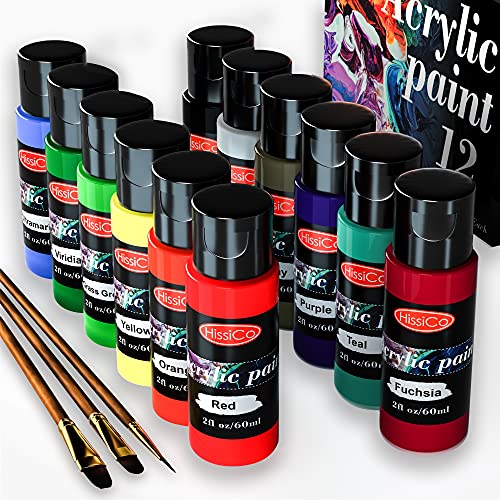
Best Budget Starter: Acrylic Paint Set of 12 Colors
Not sure your kid will stick with acrylics? Start here. This water-based 12-color set, which the maker states conforms to ASTM D-4236, in 60ml bottles gives you the core rainbow at a low price, so you can test the waters before committing to a big kit. It is a sensible, no-regret buy for a first craft set or a rainy-afternoon project.
Pros:
- Budget-friendly, low-commitment entry point
- Non-toxic, water-based formula
- Generous 60ml bottles despite the small set
- Covers the essential colors for most kid projects
Cons: Only 12 colors, so creative kids will want to mix or upgrade to a bigger set eventually.
Best for Occasional Crafters: Shuttle Art 15 x 12ml Tubes
For the family that paints now and then rather than every week, these small water-based tubes (ASTM D-4236 per the maker) are the lowest-cost way in. The tube format squeezes out exactly what you need, which cuts waste for infrequent use. The trade-off is obvious: 12ml tubes empty fast if you have a prolific young artist.
Pros:
- Lowest entry price of our picks
- Non-toxic, water-based, artist-quality pigment
- Tube format reduces waste for light use
- Works across canvas, wood, clay, fabric, and ceramic
Cons: Small 12ml tubes run out quickly for kids who paint a lot.

How We Chose
We screened for the things that actually matter in kids' craft paint: a water-based formula, an AP seal or a stated ASTM D-4236 conformance with no hazard warning, the absence of heavy-metal pigments, and realistic washability. Where a claim rests on the maker's own statement, we say so. We prioritized sets that are transparent about their formulation and suitable for brush and sponge use at ages 3 and up. We do not claim hands-on lab testing; these picks are vetted on certifications, formulation, and documented buyer experience.
A Word on "Washable" (Set Expectations Here)
This is where parents get frustrated, so let me be blunt. Acrylic dries into a flexible plastic film, which is exactly why it is permanent and great on canvas and rocks. "Washable" acrylic washes off skin, smocks, and fresh spills with soap and water. It does not reliably come out of fabric once it dries.
So protect the surfaces: an old shirt or a smock, a vinyl tablecloth, and a bowl of warm soapy water within reach. If you specifically want paint that survives the laundry on clothing, that is a different product. See our fabric paint guide for that job.
What to Avoid
Keep it simple. For children's crafts, skip:
- Any paint with a CL (Cautionary Labeling) seal or a printed hazard warning. CL often signals heavy-metal pigments like cadmium or cobalt.
- Solvent-based or oil paints. The fumes and cleanup solvents are not worth it for kids.
- Paints with no AP seal and no ASTM D-4236 statement, where "non-toxic" is just a word on the front.
- Scented or glitter-heavy novelty paints of unclear origin. Fragrance adds nothing and glitter is microplastic you do not need on a kid's project.
Heavy-metal pigments matter because they build up and offer no benefit in a kid's paint. Lead, for example, is a pigment with no safe exposure level for children, which is exactly why the CDC treats it as something to keep out of a child's environment entirely. If you want the bigger picture on cumulative exposure, we cover it in why a little isn't so little and the top chemicals to cut from your home.
When to Replace Your Paint
Acrylic does not last forever. Toss a bottle when it has dried out, separated and won't remix, or smells sour or musty, which signals microbial growth. Keeping lids tight and bottles out of direct sun extends their life. For a shared classroom, label the open date so you are not guessing months later. This is also why the smaller sets can make sense for light users: finishing paint before it ages beats throwing away half a big bottle.
Safer Swaps
Working through your supplies? Here is the priority order, easiest and highest impact first. Use up what you have, then switch.
- Swap the one paint without a label you can check first. If a bottle on your shelf has neither an AP seal nor an ASTM D-4236 statement, replace it next time with a labeled set like Shuttle Art's. This is the single biggest, cheapest upgrade.
- Match the paint to the project. Keep acrylic for canvas, rock, and wood crafts, and move clothing projects to proper non-toxic fabric paint so you are not fighting permanent stains, and walls or furniture in a child's room to nursery-safe paint.
- Set up the surfaces, not just the paint. A washable smock and a vinyl mat do more for a low-stress craft session than any brand swap. For the rest of the kids' supply list, our Children & Family hub walks through what to swap room by room.
The Bottom Line
For kids' brush and sponge crafts ages 3+, the decision is simple: pick a water-based acrylic with the AP seal or an ASTM D-4236 statement and no warning, and you have cleared the real safety bar. If you want one answer, the Shuttle Art 36-color set is the easy top pick because it is labeled and ready to paint out of the box; the Apple Barrel Essentials set is the budget alternative with the AP seal.
Your one next step: check whatever paint is already on your craft shelf for the AP seal or the ASTM D-4236 line. If it is there with no warning, you are set. If it is not, put one of these on your next order and finish the old bottle on scrap paper in the meantime.