Here is the honest answer: it depends on the product and how often you run it, but most conventional air fresheners, the plug-ins, aerosol sprays, gels and scented oils, release VOCs (volatile organic compounds, the chemicals that evaporate into the air you breathe) along with fragrance ingredients the label never names. A few of those, like formaldehyde and some phthalates, are genuinely worth avoiding. Calling all of them "toxic" is too blunt, but "harmless" is marketing, not fact.
The part most people miss is that an air freshener does not remove odor. It covers it, usually by pumping more stuff into a room you are already not ventilating enough. That is the real issue. A home that smells "fresh" because a plug-in has been running for three weeks straight is not cleaner air, it is more loaded air. Below is what the chemistry actually is, what the evidence shows, and the way I think about fragrance in my own house.
What VOCs actually are (in plain words)
VOCs are carbon-based chemicals that evaporate easily at room temperature. That is the whole definition. Some are harmless, some irritate your eyes and airways, and a handful are linked to more serious effects at high or long exposure. They come from paint, new furniture, cleaning sprays, candles, and yes, air fresheners.
The EPA notes that indoor VOC levels are routinely two to five times higher than outdoors, and spike much higher during activities like spraying scented products. Your home is a sealed box, and a plug-in is a tiny machine designed to release chemicals into that box around the clock. That is the design, not a malfunction.
The short-term effects are the familiar ones: headaches, a scratchy throat, watery eyes, that "this room is too strong" feeling. For people with asthma or fragrance sensitivity, it is more than annoyance.
The ingredients worth knowing about
Three categories come up again and again in air fresheners.
Phthalates. These help fragrance last longer. Several are endocrine disruptors, meaning they can interfere with hormones, and they rarely appear on the label because "fragrance" legally hides a whole recipe. The NIEHS has a clear overview of what phthalates are and why researchers study them. This is the one I pay the most attention to.
Formaldehyde and other carcinogens. Some air fresheners release formaldehyde directly or form it through reactions in the air. It is a known human carcinogen at sufficient exposure, which is why it earns a spot on our top 12 chemicals to eliminate from your home.
Secondary pollutants. Here is the sneaky one. Many fragrances contain terpenes (the compounds behind pine and citrus scents). When terpenes meet ozone in your air, they can react to form formaldehyde and ultrafine particles. So a product can be "clean" in the bottle and still produce irritants once it is doing its job in the room.
None of this means a single spray will harm you. Dose and exposure matter, always. The concern is the constant, low-level, year-round version: the plug-in that never turns off. That cumulative load is exactly what we cover in the toxic buildup effect.
So are air fresheners toxic, or is this fearmongering?
Both answers are partly true, so let me be precise.
A quick spray in a bathroom you then ventilate is a minor exposure. I am not going to pretend it is a crisis. But a plug-in running continuously in a closed bedroom, or an aerosol used daily in a home with a baby or someone with asthma, is a real, ongoing source of indoor air pollution that you can simply remove. The EPA lists air fresheners among common indoor sources of VOCs for a reason.
My blunt opinion: continuous-release plug-ins and heavy aerosol sprays are the ones I would drop first. They are the highest exposure for the least benefit, because they are masking a smell instead of solving it. If a room smells bad, the air freshener is treating the symptom.
The honest hierarchy of fragrance products
Not all scented products are equal. Here is how I rank them from most to least worth avoiding, based on how much you breathe in and for how long.
| Product type | Exposure level | My take |
|---|---|---|
| Plug-in / continuous diffuser (synthetic) | High (runs 24/7) | Drop first. Constant release, masks instead of fixing. |
| Aerosol sprays | High in bursts | Fine occasionally with ventilation, bad as a daily habit. |
| Gel cones and solid blocks | Medium | Slow constant release, same masking problem. |
| Scented candles | Medium | Depends heavily on the wax and wick. See the candle guides. |
| Essential oil diffuser (water-based, intermittent) | Low to medium | Better, but still adds VOCs. Use in short bursts, ventilate. |
| Simmering herbs / citrus peel | Low | Pleasant, cheap, genuinely low-tox. |
| Opening a window + an air purifier | Lowest | The actual fix. Removes the odor source. |
Candles are their own rabbit hole, so I will not repeat it here. If you love them, read are scented candles toxic and our best non-toxic candles roundup instead.
What I do in my own home
I gave up perfume and scented products years ago, and I will be honest, scent was the single hardest adjustment of my whole low-tox switch. Clean products smell like almost nothing, which is wonderful if you are sensitive, but I genuinely missed the "freshly washed" smell I grew up with. That nostalgia is real, and I am not going to pretend it is silly.
What I use now instead: a little essential oil for scent when I want it, and mostly, fresh air. For the laundry smell specifically, the fix lives in our best non-toxic laundry detergent guide, not in an air freshener.
I do not run plug-ins. The trade-off I made my peace with: a home that smells neutral most of the time, scented only when I choose to scent it, rather than a background haze I stopped noticing but was still breathing. For me that was worth it. You might decide differently, and that is your call. Free will applies to scent too.
The real fix: find and remove the smell
An air freshener is almost always covering something. The low-tox move is to find the "something."
- Ventilate. Open windows for a few minutes a day, even in winter. It is free and it is the most effective single thing you can do for indoor air. The EPA ranks ventilation as a core strategy for improving indoor air quality.
- Chase the source. Trash, drains, the fridge, damp towels, litter boxes, the dishwasher. Clean the source and the smell goes with it. If the smell is new paint or new flooring, masking it only adds more VOCs; ventilate hard and choose lower-emitting products next time, as covered in non-toxic paint for every use and non-toxic flooring options.
- Run an air purifier. A good one with activated carbon actually captures VOCs and odors rather than masking them. This is the piece that replaces the plug-in in a low-tox home. We cover which ones work in best air purifier for VOCs and chemicals.
That combination, ventilation plus source removal plus a carbon purifier, does what an air freshener pretends to do, without adding anything to the air.
Reading an air freshener label
Here is the practical skill, because labels are deliberately vague.
- "Fragrance" or "parfum" on its own tells you nothing. It legally covers dozens of undisclosed ingredients, potentially including phthalates. This is the single biggest red flag. If a brand is proud of its scent chemistry, it discloses it.
- "Natural" and "essential oils" are not regulated claims. A product can say "natural" and still contain synthetic fragrance. Essential oils are also VOCs, so "natural" does not mean "zero emissions," it means a different set of compounds.
- "Eliminates odors" usually means "masks odors." Very few consumer sprays actually neutralize.
The same vagueness shows up across the cleaning aisle, which is why I keep a short list of what to skip in hidden toxins in cleaning products. And if you want to decode the ingredient names themselves, our guide to INCI names is the reference I actually use.
Safer Swaps
Use up what you have if it is nearly gone and you are not sensitive to it, then switch. No need to bin a working product on principle. If you have asthma or a baby in the house, I would swap sooner.
- Retire the continuous plug-ins and daily aerosols first. This is the highest-exposure, lowest-benefit product in the category. Replace the "job" it was doing with ventilation: a window cracked for a few minutes, a bathroom fan that actually runs. Easiest, highest-impact swap.
- Add a carbon air purifier for the rooms that need it. This is the real odor fix and it keeps working on cooking smells, off-gassing furniture and general VOCs, not just the one scent you were covering. Start with our best air purifier for VOCs and chemicals guide.
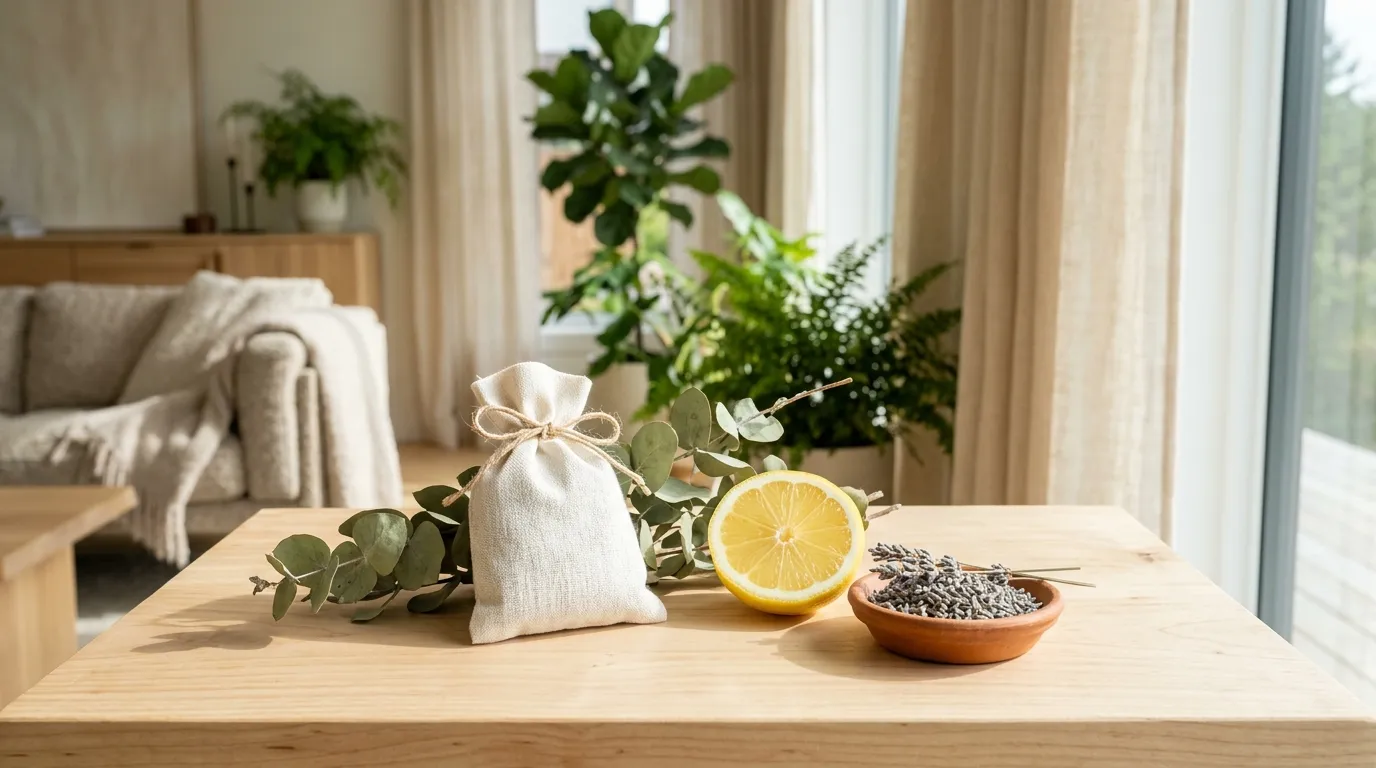
- If you want scent, choose intermittent and simple. A water-based essential oil diffuser used in short bursts, or simmered citrus peel and herbs on the stove. Ventilate after. Scent on purpose beats scent on autopilot.
The Bottom Line
Air fresheners are not a five-alarm emergency, but most of them solve a problem they do not actually solve: they mask odor by adding VOCs and undisclosed fragrance chemicals to a room you are probably not ventilating enough. The continuous plug-ins and daily sprays are the ones I would drop first, because they are the most exposure for the least real benefit.
Your one next step: unplug the plug-ins today, open a window for five minutes, and go find what actually smells. That single habit does more for your air than any scent on the shelf. When you are ready for the upgrade, a carbon air purifier is the piece that quietly does the rest. For the bigger picture of where fragrance fits into a low-tox home, start at our Home & Household hub.