The short version: the cleanest candles are made from 100% beeswax or pure soy or coconut wax, with a cotton or wood wick, and either no added fragrance or a scent that comes from essential oils. If a label just says "fragrance" and nothing else, that is the one I would be cautious about. The wax matters, but the wick and the scent source matter just as much.
Now the honest part. Candles are not the biggest exposure in your home. Not even close. Scent was the hardest thing for me to give up when I started living low-tox, and I am not going to pretend a candle is going to make or break your health. But if you love a little fragrance in the house, and most of us do, you may as well pick a better version. This guide covers what makes a candle genuinely low-tox, which ones are worth your money, and which claims are just marketing.
What Actually Makes a Candle Low-Tox
Three things: the wax, the wick, and the scent. Get those right and you have a clean candle. Miss any one of them and the "natural" label on the front stops meaning much.
The wax. Most cheap candles are paraffin, a petroleum byproduct. Paraffin can release more soot and volatile organic compounds (VOCs) when it burns, which is the same family of airborne chemicals I wrote about in Is Your Air Freshener Toxic?. Beeswax, soy and coconut wax burn cleaner. Beeswax is my personal favorite because it is a single natural material with nothing blended in.
The wick. You want cotton or wood. Avoid any wick with a metal core. Decades ago some wicks contained lead; the Consumer Product Safety Commission banned lead wicks in the US in 2003, so this is mostly a non-issue on reputable candles now, but on cheap imports it is still worth a glance.
The scent. This is where most "natural" candles fall apart. A candle can be 100% soy wax and still be scented with synthetic fragrance that includes phthalates, the chemicals that make a scent last longer and are on our top 12 to eliminate. The fix is simple: look for candles scented with essential oils, or buy unscented and add your own scent another way.
The Label Trick That Catches Everyone
Here is the one I want you to remember. "Soy candle" tells you about the wax. It tells you nothing about the fragrance. A brand can shout "natural soy wax" on the jar and still scent it with an undisclosed synthetic blend, because fragrance formulas are treated as trade secrets and do not have to be broken down on the label.
So read it like this: find the wax (good), then look for how it is scented. If the listing says "essential oils" or "phthalate-free fragrance," better. If it just says "fragrance" with no explanation, you simply do not know. That is not fearmongering, it is just honesty about what the label does and does not tell you. For the full breakdown of why candle smoke matters and when it does not, see Are Scented Candles Toxic?.
Our Top Picks at a Glance
| Product | Best For | Key Material or Certification | Why It Wins |
|---|---|---|---|
| 100% Beeswax Candles, Unscented 6-Pack | Cleanest overall | 100% beeswax, cotton wicks | Single natural material, no fragrance question |
| Fontana Beeswax Candle, Lavender | Scent with a clean label | Beeswax + coconut oil, essential oils, wood wick | Scent from essential oils only, no fragrance oils |
| Bluecorn Beeswax Tea Lights, 48-Pack | Best value | 100% beeswax, unscented, metal cups | Pure beeswax at the lowest cost per hour |
| Fontana Beeswax Candle, Cinnamon Orange Clove | Seasonal scent gift | Beeswax + coconut oil, essential oils, wood wick | Cozy autumn scent without synthetic fragrance |
Best Overall: 100% Beeswax Unscented 6-Pack
If you want the cleanest candle with zero guesswork, this is it. The set is 100% beeswax with no paraffin blended in, burns on cotton wicks, and has no added fragrance to wonder about. You get a long total burn time across six candles. Beeswax also has a faint, naturally sweet honey note when it burns, so "unscented" does not mean cold and clinical. One note: the listing repeats the old claim that beeswax candles "clean the air" with negative ions. There is no good evidence for that, and you do not need it; the reason to choose beeswax is simply that it is one clean material.
Pros:
- 100% pure beeswax, no paraffin and no added fragrance
- Cotton wicks, no metal core
- Long total burn time across six candles, strong value per hour
Cons: Unscented, so if your whole reason for buying is home fragrance, this is not the one. It is the cleanest, not the most aromatic. It also carries no third-party certification, so you are relying on the material claims in the listing.

Best for Scent With a Clean Label: Fontana Beeswax Candle, Lavender
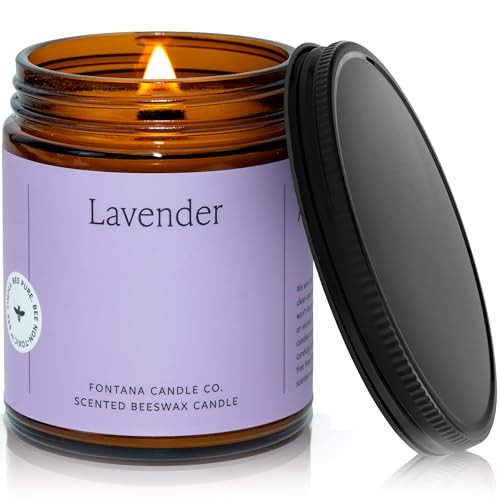
This is the one I would reach for if I wanted actual fragrance without the mystery. Fontana makes its candles from beeswax and coconut oil, scents them only with pure essential oils, and uses an untreated wooden wick. There is no paraffin, no stabilizers and no fragrance oil, so the label tells you exactly where the lavender comes from. The jar is rated for more than 35 hours of burn time, and the wood wick gives a soft crackle.
Pros:
- Beeswax and coconut oil base, no paraffin
- Scented only with essential oils, no fragrance oil
- Untreated wooden wick, no metal core
- 35+ hour burn time
Cons: Essential-oil candles have a lighter scent throw than synthetic ones, so it fills a bedroom or reading corner rather than a large open-plan room. Without stabilizers, it also does not like being stored somewhere hot.
Best Value: Bluecorn Beeswax Tea Lights, 48-Pack
Tea lights are the most affordable way to burn beeswax, and Bluecorn's are 100% pure beeswax with no paraffin or soy blended in, poured in Colorado, unscented, and burning around five hours each on a cotton wick. This set comes in metal cups rather than plastic ones. Forty-eight tea lights cover a lot of evenings, which makes the cost per hour the lowest on this list, and they work in any tea-light holder or warmer you already own.
Pros:
- 100% pure beeswax, no paraffin or soy
- Unscented, cotton wick, made in the USA
- Metal cups, no plastic
- Lowest cost per burning hour here
Cons: Tea lights are small, so you trade the look of a big jar candle for value. Unscented, so pair them with a diffuser if you want fragrance.

Best Seasonal Gift: Fontana Beeswax Candle, Cinnamon Orange Clove
If you want a cozy autumn scent for yourself or as a gift, this is the cleaner way to get it. It is the same Fontana formula as the lavender candle above: beeswax and coconut oil, a wooden wick, and a scent made only from essential oils, here cinnamon, orange and clove. You get the warm seasonal smell people buy fall candles for, without an undisclosed fragrance blend behind it.
Pros:
- Beeswax and coconut oil base, essential-oil scent only
- Wooden wick, 35+ hour burn time
- Makes a thoughtful gift that matches what this guide recommends
Cons: Spice essential oils can be strong for scent-sensitive people, and the throw is gentler than a synthetic "apple pie" candle. If you want a gift set with several scents, you will need to buy more than one jar.

How We Chose
We prioritized the three things that actually matter: a clean single-source or clearly named wax (beeswax, soy or coconut), a cotton or wood wick, and transparency about how the candle is scented. We left out candles whose listing only says "fragrance", and checked materials against the brands' own pages where they exist. We have not burned these in our own home, so these picks are based on materials and label transparency, not on hands-on trials.
My Honest Take on Candles and Scent
Scent was the single hardest adjustment in my low-tox years. I gave up perfume and scented laundry products, and for a while my house just smelled of nothing, which I quietly missed. So I understand completely if the idea of an unscented beeswax candle feels joyless.
Here is where I landed. The cleanest option by a mile is a plain beeswax candle, and if you want more scent in a room, essential oils are my go-to, either a few drops in a diffuser or near the candle rather than baked into a synthetic fragrance load. If you want a genuinely scented candle, pick one that tells you what the scent is. That is the whole game. For scent-sensitive households, unscented beeswax plus a diffuser you control is honestly the calmest setup.
How to Burn a Candle Cleaner
The candle you own already burns better with a little technique, and it cuts down on soot regardless of the wax.
- Trim the wick to about a quarter inch before every burn. Long wicks are the main cause of visible soot.
- Keep it away from drafts, which make the flame flicker and smoke.
- Let the wax melt all the way to the edge on the first burn so it does not tunnel.
- Burn in a ventilated room, and do not run several candles in one small closed space.
None of this is about panic. A candle in a ventilated room is a small, occasional exposure, not a crisis. It belongs in the same calm bucket as everything else in the toxic buildup picture: worth improving, not worth losing sleep over.
What to Avoid
Skip these and you have covered the real risks:
- Paraffin-only candles, especially unbranded cheap ones, which burn dirtier per the general guidance from the EPA on indoor air.
- Undisclosed "fragrance" with no essential-oil or phthalate-free claim. You simply cannot verify what is in it.
- Metal-core wicks. Cotton or wood only.
- "Natural" with nothing to back it. The word is not a standard. Look for the wax type and a certification, not a vibe.
Safer Swaps
Change what you use most first, and use up what you already own before you toss it.
- Swap your most-burned candle for beeswax or named-scent wax. The candle you light every evening is the one worth upgrading first. Start with the beeswax 6-pack for the cleanest option or the Fontana lavender if you want essential-oil scent.
- Add essential oils instead of synthetic fragrance for scent you control. This is what I use at home now.
- If air quality is your real concern, a candle is not your fix. Look at ventilation and, if needed, the best air purifier for VOCs, and tackle air fresheners first since they run far more often than a candle.
The Bottom Line
Non toxic candles come down to wax, wick and scent source. If you want the cleanest possible pick with no fragrance question, buy a 100% beeswax candle. If you want actual scent, choose one that names where the scent comes from rather than hiding behind the word "fragrance."
Your one next step: look at the candle you burn most often. If it is unbranded paraffin with a mystery scent, let it finish, then replace just that one with a beeswax or clearly-scented option. One swap, the one you use most. That is how all of this gets easier. For the rest of the house, start with where to begin on a budget or browse the full Home & Household guides.