Mostly no, not in the frightening way your feed makes it sound. A scented candle burned now and then in a room with some airflow is a low risk for most healthy people. The parts worth paying attention to are the fragrance and the soot from a cheap wick, not the wax by itself. If you are pregnant, asthmatic, scent-sensitive, or you burn candles for hours every single day, that is when it is worth being choosier.
Here is the honest version, because the candle debate online swings between "they are fine, relax" and "you are poisoning your family." Both are exaggerations. The research shows real but modest concerns, and most of them are fixable with how you burn and what you buy. Scent, as it happens, was the hardest thing for me to give up on my own low-tox path, so I have a soft spot for this topic and zero interest in scaring you out of a candle you love.
The short answer: are scented candles toxic?
A candle is a wick, a wax, and usually a fragrance. When it burns it releases combustion byproducts (the same category you get from any small open flame), plus whatever was in the fragrance. The dose is small. In a normal home, burned occasionally, the exposure from one candle is far lower than the exposure you get from cooking on a gas stove or from traffic near an open window.
So the blunt verdict: a candle is not going to "detox" your life away, and it is also not a chemical weapon. The sensible move is to treat it like what it is, a small intermittent source of indoor air pollution that you can easily manage. If you want the version with none of the combustion at all, I will get to that.
What is actually in a scented candle
Three ingredients, three different conversations.
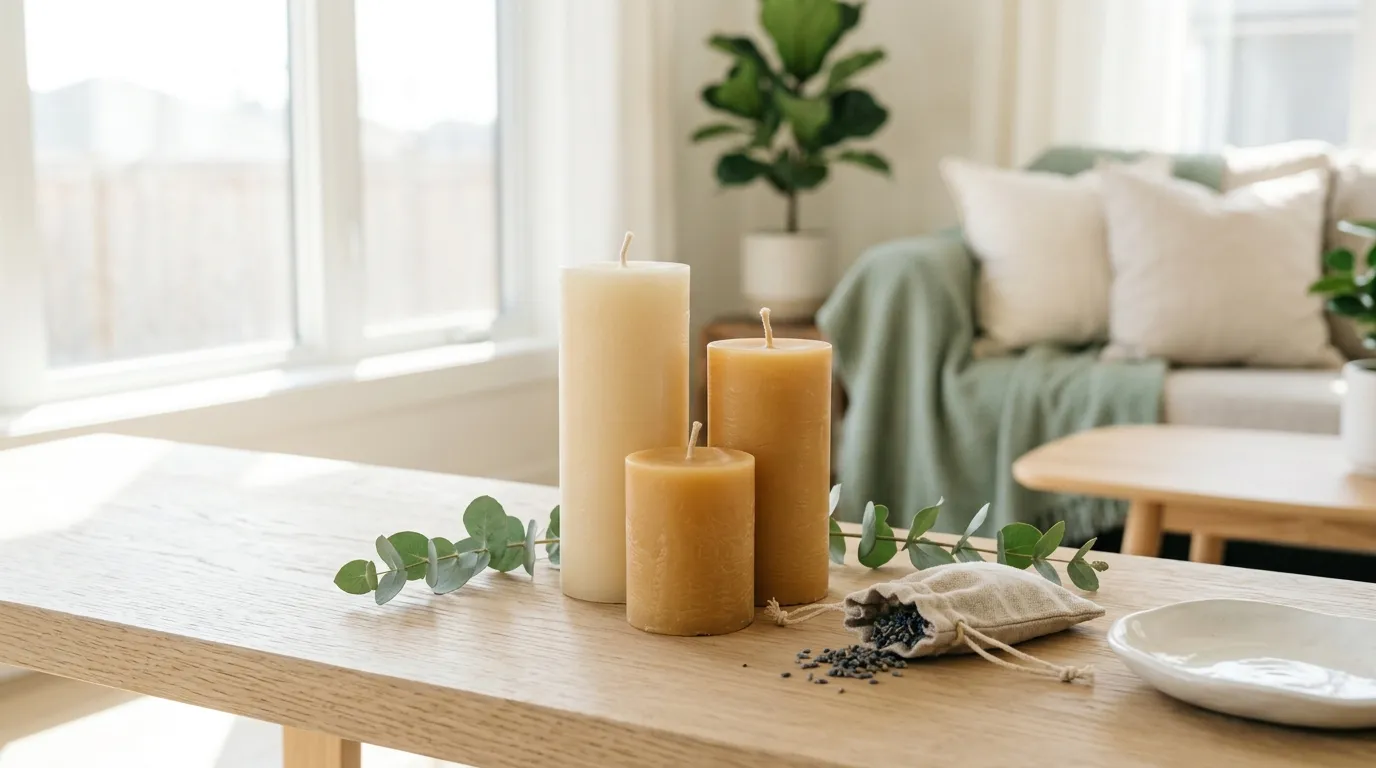
The wax. Paraffin is made from petroleum. Soy, coconut and beeswax are the plant and bee alternatives. You will read everywhere that paraffin is the villain. In practice less tidy: studies comparing waxes have not found that paraffin releases dangerous levels of toxins in normal use. Wax type matters less than marketing wants you to believe. Beeswax and soy burn a little cleaner and longer, which is a real plus, but "paraffin equals poison" is an overstatement.
The wick. This one genuinely matters. Older candles sometimes used lead-core wicks, which released lead into the air. Lead wicks have been banned in the US since 2003 by the Consumer Product Safety Commission. So the scary lead headlines you still see are describing a product that is largely gone from reputable shelves. A poorly made wick that produces heavy black soot is still worth avoiding, because soot is fine particulate matter and you do not want to breathe much of it.
The fragrance. This is the part I actually care about. "Fragrance" or "parfum" on a label can legally hide dozens of undisclosed ingredients, sometimes including phthalates, the chemicals that help scent linger. This is the same issue I dig into for sprays in Is Your Air Freshener Toxic? The wax is a sideshow. The fragrance is the headline.
Soot, particulates and VOCs, calmly explained
When anything burns it releases volatile organic compounds, VOCs, which are carbon-based gases that evaporate into the air. Candles release some. So do your oven, your fireplace, your scented plug-ins and, yes, your frying pan. The question is never "zero or not" (nothing in a real home is zero), it is "how much, how often, how ventilated."
The particulate matter from candle soot is the more concrete concern, especially if a wick smokes. Fine particles are small enough to get deep into your lungs, and the EPA treats indoor particulate matter as a real air-quality factor worth reducing. The good news is that this is almost entirely controllable: a trimmed wick, a clean candle, and a cracked window do most of the work.
Who should actually be careful
Risk is not the same for everyone, and this is where I part ways with both the panic crowd and the "it's totally fine" crowd.
| Situation | How cautious to be | Why |
|---|---|---|
| Healthy adult, occasional candle, ventilated room | Relax | Exposure is low and intermittent |
| Daily multi-hour burning in a closed room | Be choosier | Dose adds up, ventilation is the fix |
| Asthma, allergies or scent sensitivity | Caution | Fragrance and particles can trigger symptoms |
| Pregnancy or small children in the room | Lean cautious | Prefer fragrance-free or skip during heavy exposure |
| Birds in the home | Avoid heavy soot | Birds' lungs are extremely sensitive to airborne particles |
The point of a low-tox life is not fear, it is matching your effort to your actual situation. A single candle on a Friday night is not the thing to lose sleep over. Burning six fragrance candles daily in a sealed apartment is worth rethinking. And the way small exposures quietly stack up is exactly what I mean in The Toxic Buildup Effect: one candle is nothing, but your candle plus your plug-in plus your laundry scent plus your spray is a pattern.
The scent problem, and why I get it
Scent was the single hardest adjustment I made. I gave up perfume and scented laundry products, and honestly, I missed that "freshly washed" smell more than I expected. My laundry was just as clean, it simply smelled of nothing, and nothing took some getting used to. I switched to a little essential oil instead, and that is the same logic I apply to home fragrance now.
I tell you this because I understand why you want the candle. A home that smells good feels cared for. You do not have to choose between a nice-smelling room and a sensible one. You just have to be a bit pickier about where the smell comes from, and willing to let a room sometimes simply smell like a clean room.
How to burn a candle more safely
If you keep candles, and I am not telling you to toss the ones you love, these small habits cut almost all of the real risk at zero cost.
Trim the wick
Keep the wick trimmed to about a quarter inch before each burn. A long or mushrooming wick is what produces most of the black soot. This one habit does more than switching wax.
Ventilate
Crack a window or run your range hood nearby. Airflow is the cheapest VOC and particulate reducer that exists. If you care about indoor air generally, a good air purifier for VOCs helps with the whole room, not just the candle.
Burn less, not never
Use it up, then decide. You do not need to throw out candles that still burn fine. Just burn them intentionally for the mood, then put them out, rather than leaving one going all day as background scent.
Avoid the black smoke
If a candle smokes heavily, snuff it, trim the wick and relight, or stop using that candle. Soot on your walls is soot in your lungs.
Wax by wax: what I would actually buy
Since everyone asks: if I am choosing a candle, I look at the wick and the fragrance first, and the wax last.
- Beeswax: burns clean and long, naturally subtle honey scent. My favorite for the "I want a flame" occasions. More expensive.
- Coconut and soy blends: burn clean, hold fragrance well, widely available. A good middle ground.
- Paraffin: fine in a well-made candle, but it is usually the budget tier where cheap fragrance and bad wicks also live, so it tends to correlate with the stuff I actually want to avoid.
What I skip: anything that says only "fragrance" with no further information, candles that smoke, and the heavily perfumed seasonal kind that scents a whole floor. If a candle can perfume three rooms, that is a lot of fragrance compound in your air. For the specific brands and types I think are worth your money, I keep a running list in Best Non-Toxic Candles.
Safer alternatives that still make a home smell good
Here is the part nobody mentions: the best "non-toxic candle" is often not a candle at all. If you want scent without combustion, you have options that skip the flame entirely.
- Essential oil diffuser: water-based, no flame, no soot. This is my main swap, the same move I made with laundry. A few drops, and you control the strength.
- Simmer pot: citrus peel, cinnamon and cloves in a little water on the stove. Costs pennies, smells like the holidays, completely controllable.
- Open the windows: unglamorous and genuinely the most effective. Fresh air beats masking air.
- Beeswax candle for ambiance: when you want the actual flame, this is the cleanest flame option.
Fragrance is also worth decoding when you shop, the same way I check skincare. Learning to read past the word "parfum" is covered in INCI Names Decoded, and fragrance sits on the watch-list in Toxic Offenders.
Safer Swaps
Easiest and highest-impact first. Use up what you have, then switch.
- Change how you burn before you change what you buy. Trim the wick, ventilate, and burn intentionally instead of all day. Free, and it removes most of the real risk from the candles already on your shelf.
- Swap your everyday background scent to a flameless option. An essential oil diffuser or a simmer pot gives you smell with no combustion and no soot. Keep candles for the occasional cozy evening.
- When you do buy a candle, buy a clean one. Prioritize a well-made wick and disclosed fragrance over wax type, and see Best Non-Toxic Candles for the ones worth it. Pair the whole effort with the rest of your home in Home & Household.
The Bottom Line
Scented candles are not the toxic emergency the internet makes them out to be, and they are not completely free of concern either. The sensible read: the wax barely matters, the wick and the undisclosed fragrance matter more, and how you burn matters most of all. Your one concrete next step today costs nothing. Trim the wick on the candle you already own, crack a window, and burn it for the mood rather than as all-day background scent. Then, when it is used up, decide whether your next source of a good-smelling home should have a flame at all.
If you want the full budget-friendly roadmap for which low-tox swaps to make first, start with Where to Start With Low-Tox Living.