Here is the short version: the ingredients in cleaning products most worth avoiding are synthetic "fragrance" (which can legally hide a long list of undeclared chemicals, including phthalates), quaternary ammonium compounds called quats, chlorine bleach used carelessly near other cleaners, and strong ammonia. None of these will doom you from a single spray. They are mostly respiratory and skin irritants at the doses you meet at home, so the smart move is to deal with what you breathe and what lingers first, not to panic-buy a whole new cabinet.
I want to be honest about why this matters and why it does not need to ruin your week. When I first read the ingredient lists on my own cleaning sprays, I was genuinely shocked, and my instinct was to throw everything out and replace it all at once. That was expensive and, frankly, a bit silly. What actually helped was learning which few ingredients are red flags, which labels are just marketing, and which swaps are cheap and easy. That is the guide I wish I had.
Why cleaning products are a different kind of exposure
Cleaning products are not like skincare. You do not leave them on your skin for hours. Most get rinsed, wiped, or evaporate. That is genuinely good news, and anyone telling you your all-purpose spray is as big a concern as the lotion you wear all day is overselling it.
The catch is the air. Sprays and fragranced products release volatile compounds you breathe while you clean, and they can hang around afterward. The EPA notes that indoor air can carry higher concentrations of some pollutants than outdoor air, partly because of the products we use inside. So the exposure that actually matters with cleaning products is usually inhalation, not a drop on your hand.
That single fact changes your priority list. Deal with what you spray and breathe first.
The ingredients actually worth avoiding
Here are the real red flags, in plain language, with an honest note on how worried to be.
Synthetic "fragrance" (the biggest one)
On a label, "fragrance" or "parfum" can legally stand in for dozens of undisclosed ingredients. That is the problem: you cannot see what is in it. Some fragrance blends contain phthalates, the chemicals that help scent last longer, and the CDC reports that phthalate exposure is widespread in the US population. Fragrance is also a leading cause of skin and airway irritation.
This is my number-one skip. Not because one scented spray is dangerous, but because "fragrance" means "trust me" and I would rather know what I am breathing. Air fresheners are the worst offenders here, and they get their own full treatment in Is Your Air Freshener Toxic? (VOCs Explained).
Quats (quaternary ammonium compounds)
These are the disinfecting agents in many antibacterial sprays and wipes, listed as things ending in "-onium chloride." They are respiratory irritants and are being studied for links to asthma in people exposed often, like cleaning staff. For a household that wipes a counter now and then, the risk is modest. If someone in your home has asthma, these are worth avoiding.
Chlorine bleach and ammonia
Both are effective and both are harsh. The real danger is not routine use, it is mixing. Bleach plus ammonia (or certain other cleaners) creates toxic gases. The CDC warns never to mix cleaning products containing bleach and ammonia. My take: keep bleach out of your regular rotation, so you never have to think about what it is sitting next to.
The rest of the usual suspects
2-butoxyethanol (a glycol ether solvent in some degreasers), formaldehyde-releasing preservatives, and strong "surfactant" blends round out the list. These are covered across our Toxic Offenders: Top 12 Chemicals to Eliminate From Your Home, so I will not repeat the chemistry here.
| Ingredient / label term | Why it is flagged | How worried to be |
|---|---|---|
| "Fragrance" / "parfum" | Hides undisclosed chemicals, can include phthalates | High: skip when you can |
| Quats ("-onium chloride") | Respiratory irritant, asthma concern with frequent use | Medium, higher if asthma at home |
| Chlorine bleach | Harsh, dangerous if mixed | Low if careful, never mix |
| Ammonia | Irritant, dangerous if mixed with bleach | Low if careful, never mix |
| 2-butoxyethanol | Solvent, irritant | Medium, mostly in degreasers |
The labels that are just marketing
Here is where I get opinionated, because the greenwashing in this aisle is thick.
"Natural," "green," "eco," "non-toxic," and "plant-based" are not regulated terms on cleaning products. A bottle can say all of them and still hide its fragrance blend. "Plant-derived surfactants" sounds lovely and tells you almost nothing about irritation.
What I actually trust is a full ingredient list. Not a marketing claim, a list. Brands confident in their formula tend to print every ingredient, including what is in their fragrance. Third-party certifications like EPA Safer Choice or MADE SAFE carry more weight than a leaf drawn on the label, because someone other than the brand checked. You can look up EPA Safer Choice certified products directly.
So: ignore the front of the bottle. Read the back. If the fragrance is undisclosed and the brand hides behind "proprietary blend," I move on.
The 30-second habit that does the work
I check every new personal-care product on an ingredient database before I buy, and the same habit works for cleaning products (the free ingredient label checker flags fragrance for you). Pull up the ingredient list, scan for "fragrance," scan for quats, and see whether the brand discloses everything. It takes less time than deciding between two brands at the store.
If a product will not tell you what is in it, that is your answer. You do not need to memorize chemistry. You'll want to notice who is hiding something.
For a deeper read on decoding ingredient names, our guide INCI Names Decoded breaks down the language.
Why "just a little" adds up, calmly
You will hear two extremes: "it is one spray, relax" and "every chemical is poisoning you." Both are wrong.
The honest middle is this: individual exposures from cleaning products are usually small. But you use these products daily, for years, often in the same rooms. That is why reducing the easy, constant exposures (the daily fragranced spray, the plug-in freshener) matters more than obsessing over the bleach you touch twice a year. We unpack this properly in The Toxic Buildup Effect.
No fear, just arithmetic. Lower the exposures you repeat most.
Where cleaning products sit on your priority list
I will say something that might surprise you for a low-tox site: cleaning products are usually not where I would start.
If you are deciding what to change first, look at what touches your skin and stays there (leave-on products) and what you eat. Those are bigger, more constant exposures for most people. Cleaning products come next, and among cleaning products, the airborne and fragranced ones come before the ones you rinse away. For the full method, see Where to Start With Low-Tox Living (On a Budget).
In my own home, cleaning is about 90% switched over, and I am fine with that number. A couple of swaps simply have not worked yet, and I would rather be honest than pretend.
The swaps that are still unsolved in my house
Two things still defeat me. Dishwasher tablets: the clean ones I tried left dishes cloudy or plain dirty, and my family sometimes goes back to a conventional tablet. It annoys me, and I am waiting for better options. And a toilet cleaner that actually gets the toilet properly clean has eluded me so far. I tell you this because anyone who claims every clean swap works perfectly is selling you something. Products keep improving, so I swap when a genuinely good version shows up.
Do you have to make your own cleaners?
Short answer: no, unless you want to. DIY cleaners (vinegar, baking soda, castile soap) are cheaper and effective for most everyday jobs, and plenty of people love them.
I mostly buy. In a busy household with kids, grabbing a bottle that works is easier than mixing my own, and I made my peace with that trade-off. If you want to do both, our Non-Toxic Cleaning Kit (DIY + Buy) walks through exactly what to make and what to purchase. One honest warning: do not combine DIY ingredients randomly, and never mix anything with bleach.
Safer Swaps
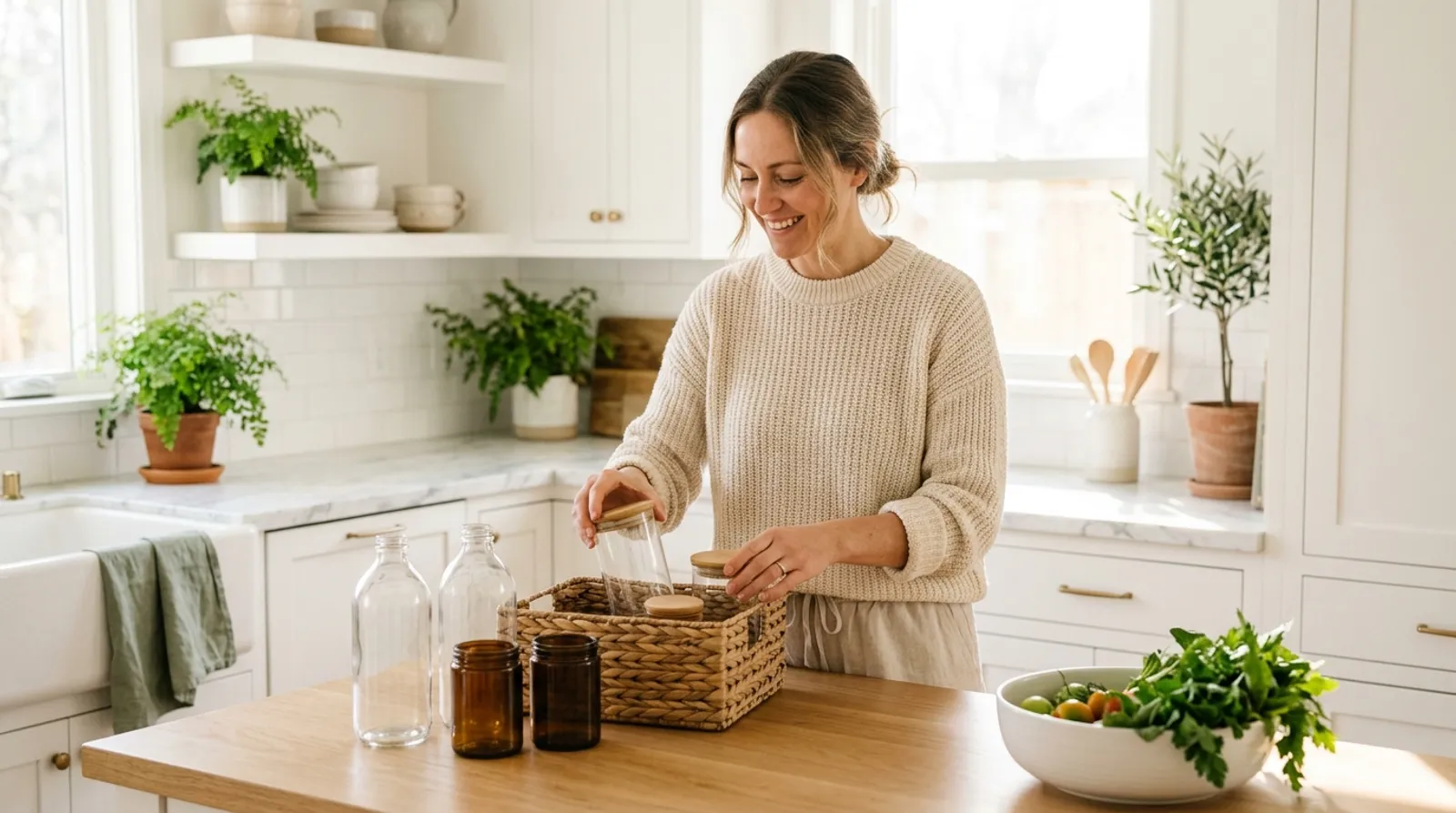
Use up what you have first, then switch. Throwing out a working bottle helps no one and costs money.
-
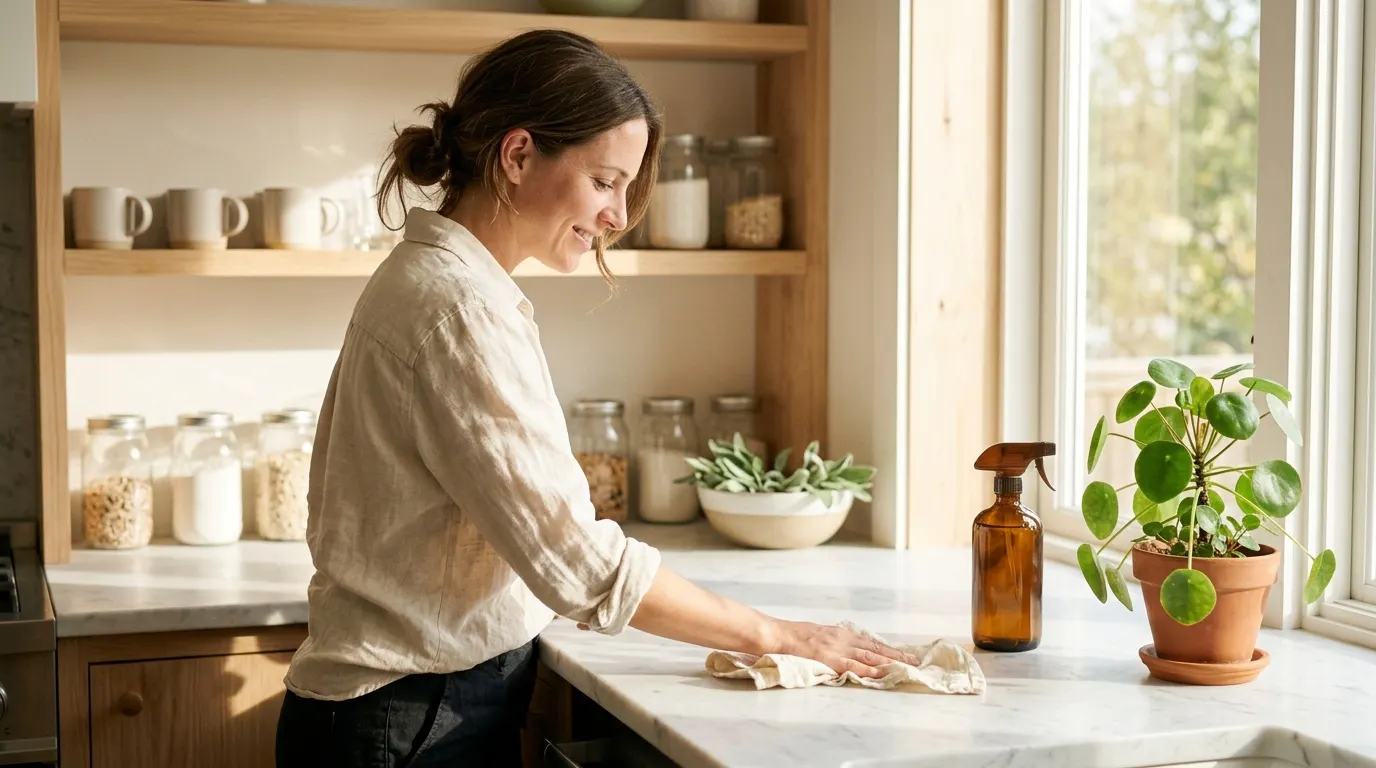
Swap your fragranced all-purpose spray for an unscented or disclosed-fragrance one. This is the highest-impact, lowest-effort change, because it is what you spray and breathe most. If you miss scent, a few drops of essential oil can do the job. I gave up scented products and genuinely missed that "freshly washed" smell, so I understand the attachment. Start with the certified picks in Best Non-Toxic Cleaning Products.
-
Retire plug-in air fresheners and heavily fragranced sprays. These are constant airborne exposure for little benefit. Open a window, use a simmer pot, or read Are Scented Candles Toxic? for cleaner ways to make a room smell nice.
-
Replace antibacterial everything with a simpler cleaner plus a good microfiber cloth. Most surfaces do not need disinfecting daily, and microfiber plus a basic cleaner handles ordinary dirt. I use microfiber cloths constantly. Reserve real disinfectant for when someone is actually sick.
The Bottom Line
You do not need a toxin-free cleaning cabinet by Friday. You need one calm habit: read the back of the bottle, skip undisclosed "fragrance," and change the product you spray and breathe most often first. Everything else can wait until your current bottle runs out.
If you want a done-for-you starting point instead of reading labels in the aisle, start with Best Non-Toxic Cleaning Products, and browse the rest of the Home & Household guides when you are ready for the next room.