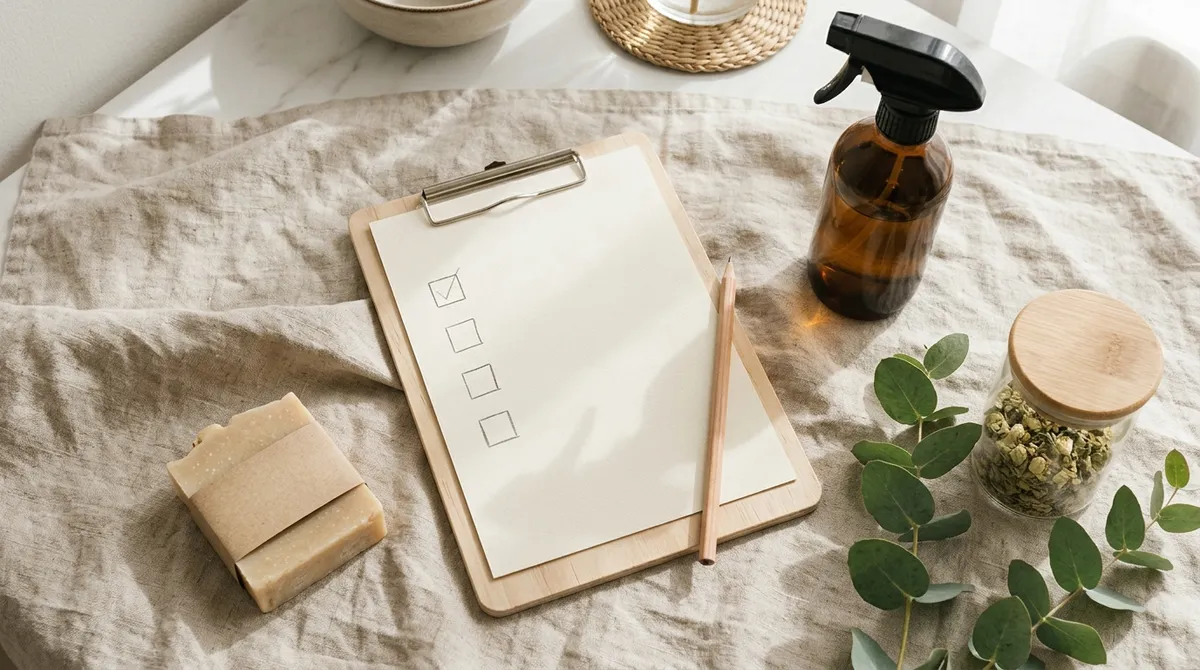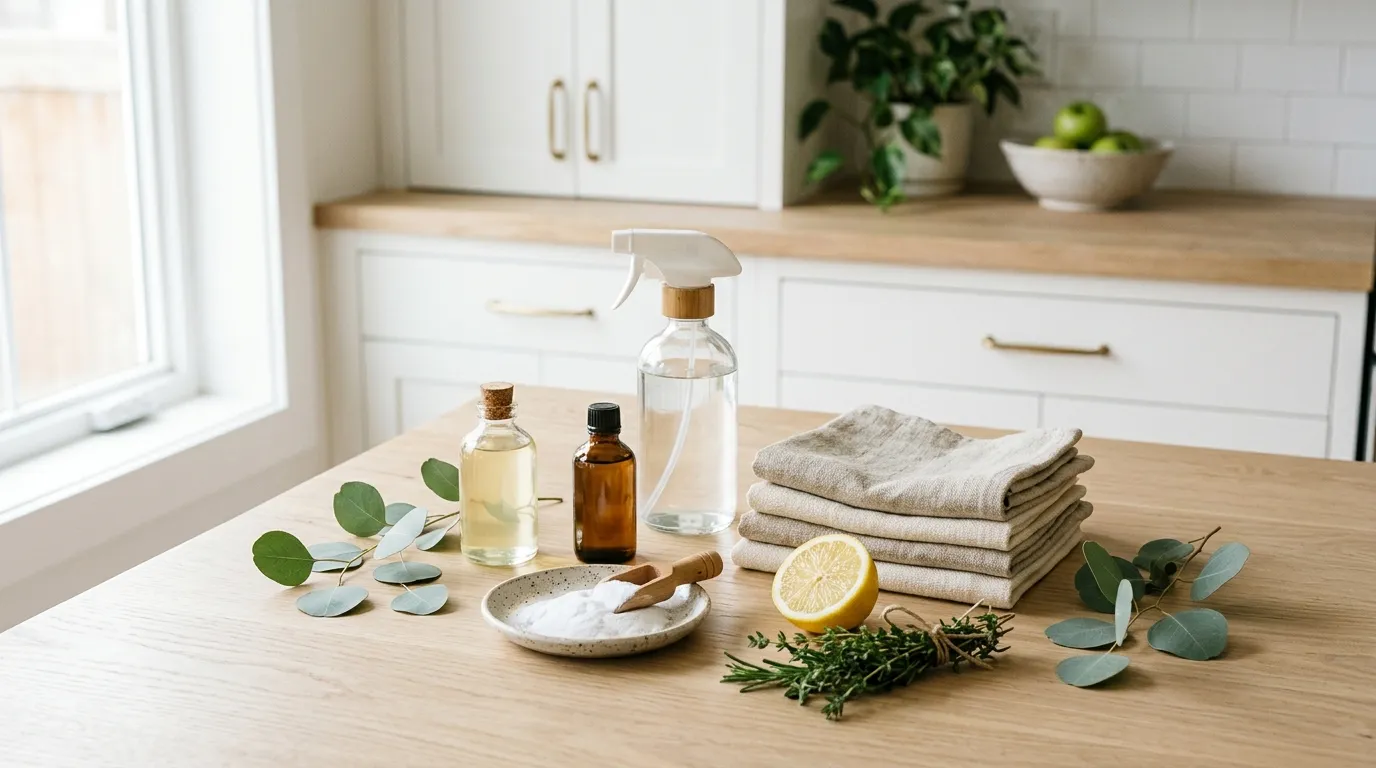
You can clean almost your whole home with five things: an all-purpose spray made from water, white vinegar and a drop of castile soap, a box of baking soda for scrubbing, a stack of microfiber cloths, a clean dish soap, and a clean glass cleaner. DIY the simple sprays, because they are cheap and genuinely work, and buy the few jobs where DIY falls flat. That is the entire non toxic cleaning kit, and it costs less than the bottles it replaces.
I will be honest with you up front: I have not made my own cleaners much. DIY is probably cheaper and works well for simple jobs, but in a busy family, grabbing a clean bottle that is already made is easier, and that is what I mostly do. So this is a split kit: the simple sprays are easy to make if you want to save money, and a few jobs are better bought. Here is where that line sits.
What "non-toxic" actually means here
Let me set the bar, because "non-toxic" gets slapped on a lot of greenwashed bottles. For cleaning, I care about a short, readable ingredient list, no synthetic fragrance (the single biggest hidden-ingredient problem in cleaning products), and no corrosive mystery chemicals I would not want on my kids' hands or in the air we breathe all day. If you want the full offender list, I keep it in Hidden Toxins in Cleaning Products and the broader Toxic Offenders guide.
"Fragrance" on a label can legally hide dozens of undisclosed ingredients, including phthalates, the chemicals that help scent linger. The EPA notes that many common household cleaners release volatile organic compounds (VOCs), gases that drift into your indoor air. That is reason enough to prefer simple ingredients, not panic. Dose and ventilation matter. Open a window and you have already done something useful.
The 5-piece core kit
Everything else is optional. Start here.
- All-purpose spray (DIY): counters, appliances, bathroom surfaces.
- Baking soda (buy, it is already clean): scrubbing sinks, tubs, stovetops, deodorizing.
- Microfiber cloths (buy): they lift dirt and grease with far less product, sometimes with just water.
- A clean dish soap (buy): dishes and spot-cleaning.
- A clean glass cleaner (DIY or buy): windows, mirrors, glass.
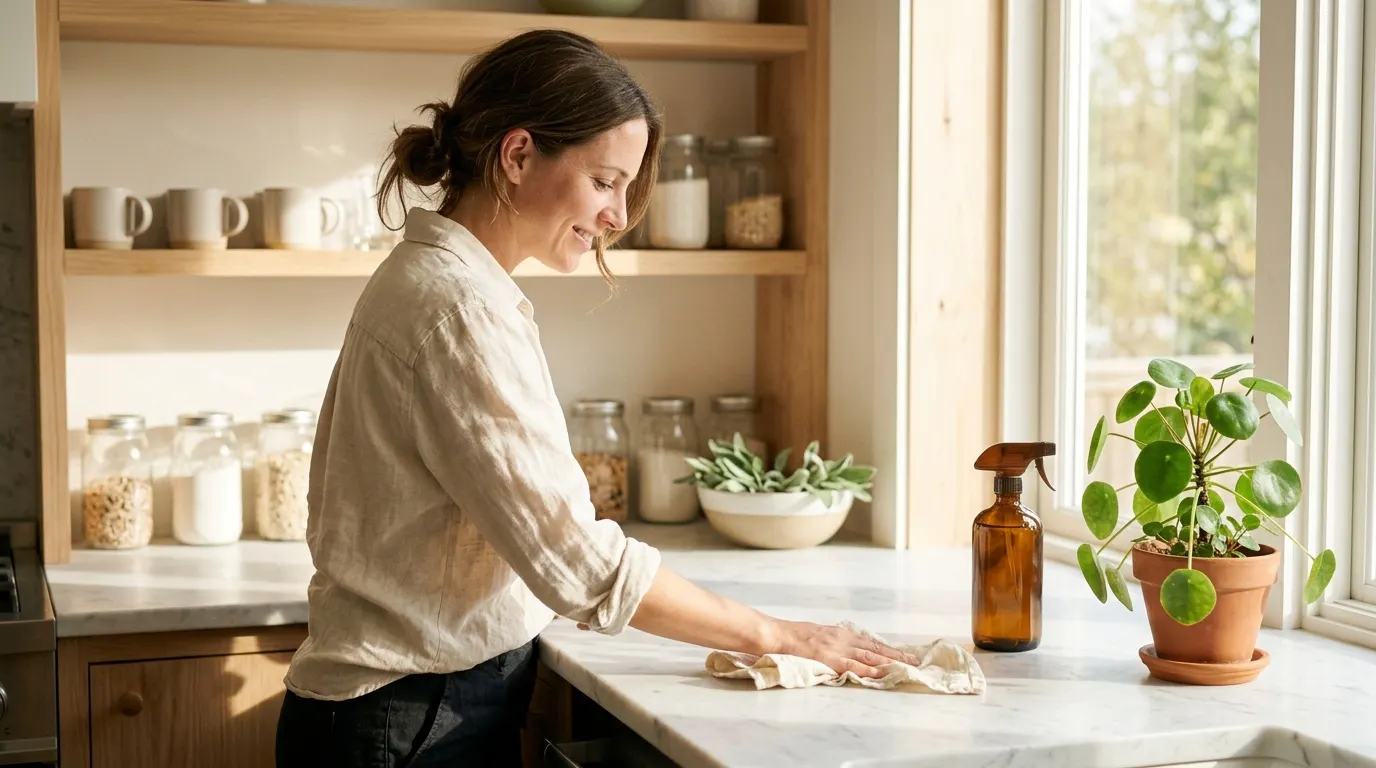
Microfiber cloths quietly do half the work, and I use them constantly. A damp microfiber cloth cleans a mirror streak-free with no spray at all, which saves product and saves money. If you buy nothing else new, buy a pack of these.
The DIY recipes worth making
These are the simple, well-established ones. Keep them deliberately boring, because the more exotic a DIY recipe gets, the less reliable it is.
All-purpose vinegar spray
Mix in a glass or sturdy spray bottle:
- 1 cup water
- 1 cup white vinegar
- 1 small drop of castile soap (optional, for greasier jobs)
White vinegar is a mild acid that cuts grease, soap scum and hard-water film. It is cheap and effective. Two hard rules: never use vinegar on natural stone (marble, granite, travertine), because the acid etches it, and never mix vinegar with bleach or any chlorine product, which releases toxic gas. For stone, use a drop of dish soap in plain water instead.
Soft scrub
Make a paste of baking soda and a little water for sinks, tubs and stovetops. Baking soda is a gentle abrasive that will not scratch most surfaces. For a stuck-on mess, sprinkle baking soda, spray your vinegar on top, let it fizz for a few minutes, then scrub. That fizz is just carbon dioxide, not a cleaning superpower, so do not expect miracles, but it loosens grime nicely.
Glass and mirror spray
Half water, half white vinegar in a spray bottle, wiped with a dry microfiber cloth. This genuinely beats most blue glass cleaners, and it costs pennies.
A note on essential oils
A few drops of essential oil (tea tree, lemon) add scent (essential oils are how I add scent at home), but let's be clear: they are mostly for smell, not disinfection at the dilutions you will use. Do not rely on a DIY spray to disinfect. For true disinfection (after raw chicken, during illness), use a product with an EPA registration number and follow the contact time on the label.
What to buy instead of DIY
This is where I part ways with the "just make everything yourself" crowd. Some jobs DIY simply does badly, and chasing the perfect homemade version wastes more of your life than it is worth.
Here is the honest split:
| Job | DIY or buy | Why |
|---|---|---|
| All-purpose surfaces | DIY | Vinegar spray works and costs almost nothing |
| Scrubbing / deodorizing | DIY | Baking soda is the whole recipe |
| Glass and mirrors | DIY | Beats commercial glass cleaner |
| Dish soap | Buy | A good clean formula lasts and performs; see our guide |
| Dishwasher tablets | Buy | Homemade versions are unreliable; even clean store-bought ones can leave dishes cloudy |
| Toilet cleaner | Buy | DIY rarely gets a toilet truly clean |
| Disinfecting | Buy | You need an EPA-registered product, not vinegar |
My dishwasher is the honest sore spot. The clean dishwasher tablets I have tried left dishes cloudy or plain dirty, and more than once the family quietly went back to a conventional one. It annoys me. I have accepted it as my unsolved swap and I keep an eye out for new options as they appear, because clean cleaning products genuinely keep improving. My toilet cleaner is the same story: I buy a clean one rather than mix my own, and I am still hunting for one that gets the toilet truly clean.
For store-bought picks, our Best Non-Toxic Cleaning Products and Best Natural Dish Soap guides do that work for you.
Why I mostly buy, even though DIY is cheaper
I should admit something, because this site is not here to pretend I am more virtuous than I am. DIY cleaners are almost certainly cheaper and often just as effective, and still I buy most of my cleaning products. Why? Busy family life. Measuring, mixing and refilling bottles is one more task, and on a normal week I would rather grab a bottle that is already made.
So I use popular clean cleaning brands and microfiber cloths for the everyday jobs. Both routes are fine. If budget is your main constraint, lean harder on DIY; it is the cheapest honest way to clean. If time is your constraint, buy clean and do not feel guilty about it. There is no prize for suffering through a mediocre homemade toilet cleaner.
The containers and tools
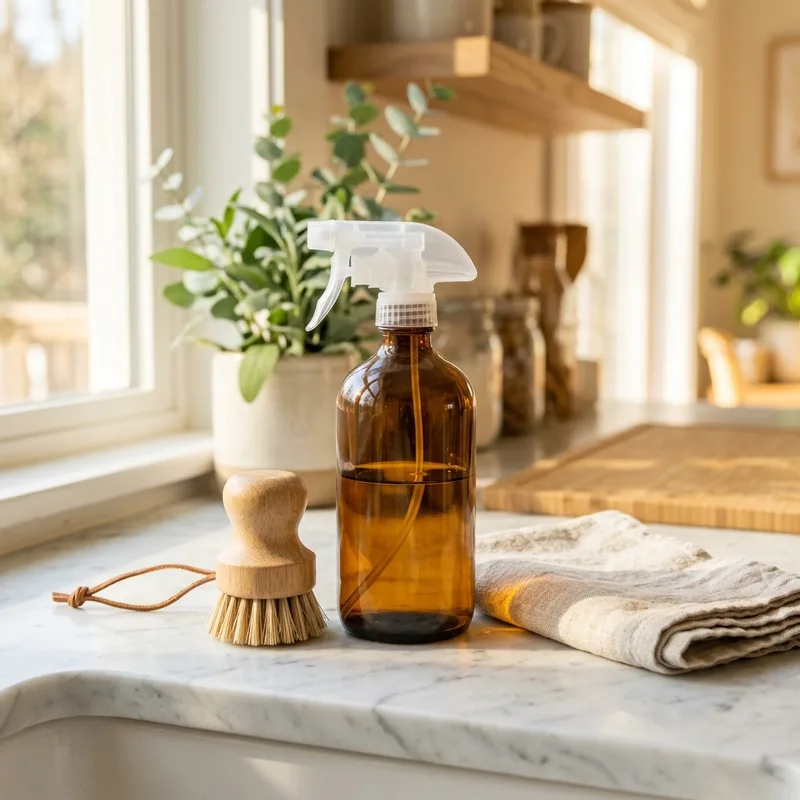
Reuse glass bottles you already have, or buy a couple of amber glass spray bottles (essential oils can degrade some plastics over time, and glass simply lasts). Label them, because a water-vinegar spray and a water-castile spray look identical and future-you will not remember.
Your tool list is short:
- 2-3 glass spray bottles
- A pack of microfiber cloths (color-code: one color for bathrooms, one for kitchen)
- An old toothbrush for grout and taps
- A scrub brush
That is it. A non toxic cleaning kit does not need a drawer full of single-purpose gadgets.
One thing people forget: the air
Cleaning is not only about surfaces. The sprays and the "fresh" scents you add change the air you breathe. This is exactly why I dropped synthetic air fresheners and why I am picky about fragrance. If that topic interests you, we cover it properly in Is Your Air Freshener Toxic? and, for home scent, in Best Non-Toxic Candles. Candles and air fresheners are a separate topic from cleaning, so I will not pile them in here.
Giving up scented products was genuinely the hardest part of my whole low-tox switch, harder than any cleaning swap. I missed that "freshly washed" smell more than I expected. A little essential oil gave me some of it back, and a few drops in a homemade spray work the same way if you go the DIY route.
How much does a non-toxic cleaning kit cost?
The DIY core is almost free: white vinegar, baking soda and castile soap are all cheap pantry staples, and a bottle of castile soap lasts a long time because you use a drop at a time. The real spend is one-time: glass bottles and a good pack of microfiber cloths, maybe around $20 to $40 total. The bought items (dish soap, dishwasher tablets, a clean toilet cleaner) cost roughly what their conventional versions do, sometimes a little more.
If money is tight and you want the smartest order to do all of this, our Where to Start With Low-Tox Living (On a Budget) guide lays out the priority order so you do not overspend, and the free swap priority planner turns it into your own list based on what you actually use.
Safer Swaps
Use up what you already have, then switch. No need to pour working products down the drain.
- Swap your all-purpose spray first (easiest, cheapest). When your current bottle runs out, replace it with the DIY vinegar spray above, or a clean store-bought one. This is the product you use most surfaces with, so it is the highest-impact first move.
- Add microfiber cloths. They cut how much of any product you need and clean a lot with just water. A small one-time buy that pays off immediately.
- Replace your dish soap with a clean one. It is in daily contact with your hands and your plates. See Best Natural Dish Soap for specifics, and Best Non-Toxic Cleaning Products for the rest of the kit.
The Bottom Line
Build the five-piece core first: a DIY vinegar all-purpose spray, baking soda, microfiber cloths, a clean dish soap and a glass cleaner. DIY the simple sprays to save money, and buy the two or three jobs DIY does poorly without guilt. Your one next step this week: when your current all-purpose cleaner runs out, mix the water-and-vinegar spray and keep it under the sink. One swap beats no swap, and this one costs almost nothing.