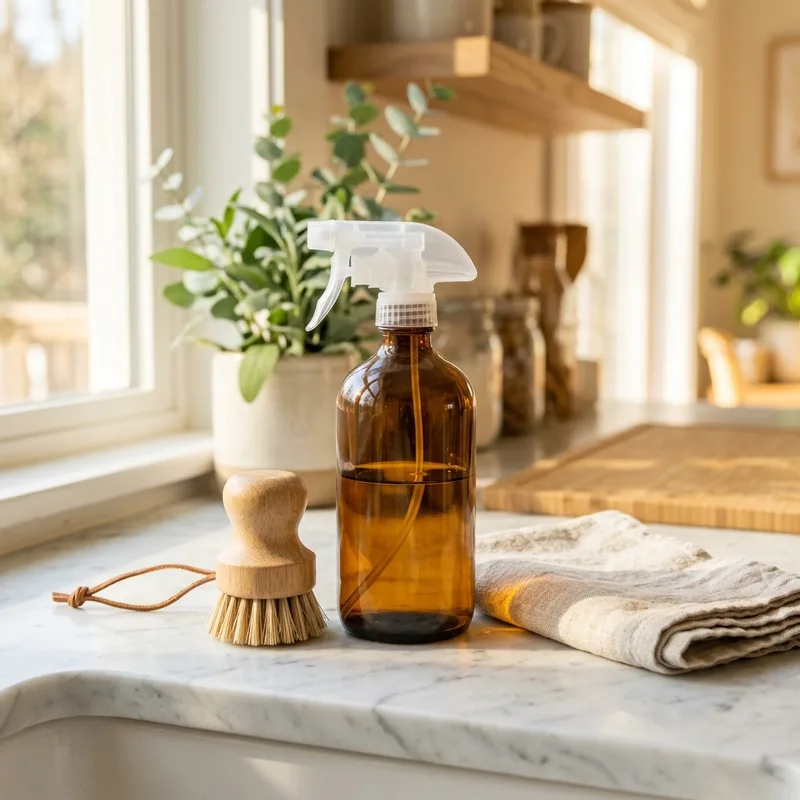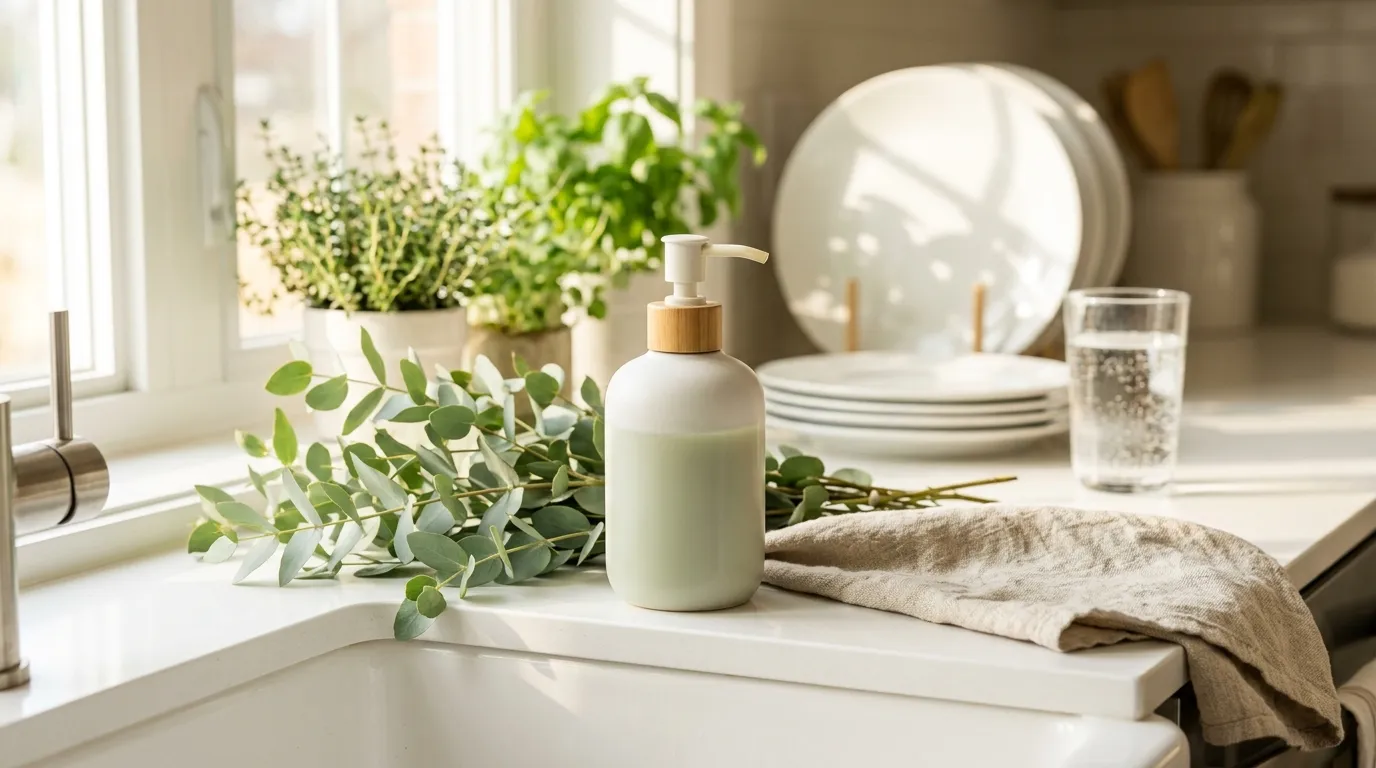
A genuinely natural dish soap is plant-based, skips synthetic dyes and vague "fragrance," discloses every ingredient, and ideally backs that up with a real certification like EWG Verified. If you want the short version: ATTITUDE Unscented is my go-to recommendation for most kitchens, Molly's Suds Unscented is the gentle alternative, the ATTITUDE refill box is the smart buy if you wash dishes constantly, and you should ignore any bottle that shouts "natural" on the front without a full ingredient list on the back.
Here is the honest part. Dish soap rinses off. It does not sit on your skin all day the way a leave-on moisturizer does, so it is not where I would spend your first low-tox dollar (that is personal care, see where to start on a budget). But it goes on your hands many times a day, and if you are sensitive to scent, a cleaner formula makes a real difference. So when your current bottle runs out, swapping to a better one is an easy, low-cost win.
What "Natural" Actually Means on a Dish Soap
"Natural" is not a regulated word. A bottle can say it with a lemon drawn on the front and still contain synthetic dyes and an undisclosed fragrance blend. The front of the bottle is marketing. The back is where the truth lives.
Here is what I actually look for, in order:
- Full ingredient disclosure. If the label hides behind the single word "fragrance," you do not know what is in there. Fragrance can legally cover dozens of undisclosed ingredients, including phthalates, the chemicals that help scent linger. Scent from named essential oils, or no scent at all, is the easy way around this.
- Gentle preservatives. Water-based soaps need a preservative. Sodium benzoate, potassium sorbate or hydroxyacetophenone are mild choices. Methylisothiazolinone and benzisothiazolinone (MIT and BIT) are common contact allergens and toxic to aquatic life, and they show up even in some well-known "green" brands.
- Plant-based surfactants. Surfactants are the cleaning agents that cut grease. Plant-derived ones (often from coconut or corn) do the job without the harsher petroleum-based options.
- No dyes. The blue or green color does nothing for your dishes. It is pure aesthetics.
- A real certification. More on that next, because this is the single fastest way to shop.
The Certifications Worth Knowing
Skip the self-made "eco" badges. Three third-party labels actually mean something, and they are not equally strict:
EWG Verified. Run by the Environmental Working Group. It requires full ingredient disclosure, including what is in any fragrance, and bans EWG's list of ingredients of concern. For dish soap, this is my top signal. Their standards are public.
EPA Safer Choice. A U.S. government program that reviews every ingredient against its safety criteria. It is a genuine review, but it still allows isothiazolinone preservatives, so a Safer Choice bottle can contain MIT or BIT. Treat the logo as a good start, then check the preservative line.
ECOLOGO (UL). An independent certification covering human and environmental health across the product's life. Legitimate, though more focused on environmental impact than on your hands.
If a dish soap carries none of these, it can still be fine, but you are relying on the brand's word and its ingredient list.
Our Top Picks at a Glance
| Product | Best For | Key Material or Certification | Why It Wins |
|---|---|---|---|
| ATTITUDE Unscented Dish Soap (23.7 oz) | Best Overall | EWG Verified, fragrance-free | Full disclosure, gentle preservatives, real grease power |
| Molly's Suds Unscented Dish Soap (2-pack) | Best for Sensitive Hands | Fragrance-free, Leaping Bunny | Glucoside surfactants, aloe, no isothiazolinones |
| ATTITUDE Unscented Dish Soap Refill (67.6 oz) | Best Refill Value | EWG Verified, fragrance-free | Same formula as the bottle, far less plastic per wash |
| Dr. Bronner's Sal Suds | Best for Scent Lovers | EWG Verified, essential oils only | Fir and spruce oils, a concentrate that also cleans the house |
Best Overall: ATTITUDE Unscented Dish Soap
This is the one I point most people to first. It is EWG Verified, which means every ingredient is disclosed and none of EWG's ingredients of concern are in it. The cleaning is done by plant-derived surfactants (sodium coco-sulfate and glucosides), and it is preserved with sodium benzoate and potassium sorbate, mild preservatives also used in food, rather than isothiazolinones. There is no fragrance at all, not even a masking one. For a daily workhorse you reach for after every meal, that combination of transparency and real grease-cutting is hard to beat.
Pros:
- EWG Verified, full ingredient disclosure
- Fragrance-free and dye-free
- Mild preservatives, no MIT or BIT
- Handles everyday grease and food residue well
Cons: It smells of nothing. That is the point, but if you are used to a lemony sink it takes a week or two to stop missing it.

Best for Sensitive Hands: Molly's Suds Unscented Dish Soap
If your hands crack in winter or react to most soaps, this is the gentle option. Molly's Suds cleans with mild glucoside and amine-oxide surfactants, adds aloe leaf juice, and preserves the formula with propanediol and hydroxyacetophenone instead of isothiazolinones. The unscented version has no fragrance, and the brand is Leaping Bunny certified cruelty-free. It comes as a two-pack, so one bottle sits at the sink and the other waits in the cupboard.
Pros:
- Fragrance-free, short and fully published ingredient list
- Gentle glucoside surfactants plus aloe
- No isothiazolinone preservatives
- Leaping Bunny certified
Cons: It does not carry EWG Verified, so you are relying on the brand's published list rather than an outside review. Milder surfactants also mean very greasy pans may need a short soak.

Best Refill Value: ATTITUDE Unscented Dish Soap Refill (67.6 oz)
Same formula as the bottle above, in a bag-in-box refill that holds nearly three bottles' worth. If you have landed on ATTITUDE and know you will keep buying it, this is the obvious move: keep one bottle at the sink and top it up, using far less plastic per wash and spending less per ounce. For a busy family kitchen, this is the quiet upgrade people forget about.
Pros:
- Same EWG Verified, fragrance-free formula, larger size
- Much less plastic waste per wash
- Better cost per ounce than the small bottle
- No scent to get tired of
Cons: You need a bottle or pump dispenser to refill, so buy the regular bottle first or reuse one you already have.

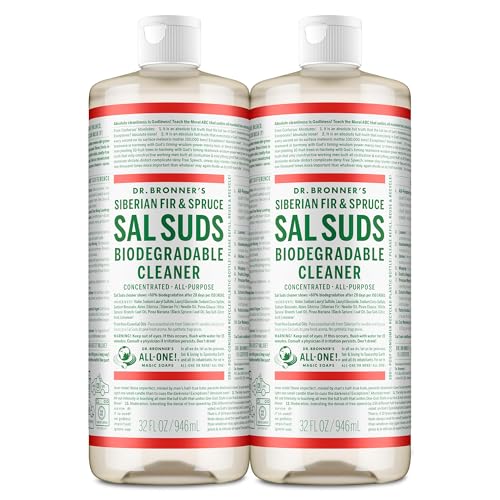
Best for Scent Lovers: Dr. Bronner's Sal Suds
Scent was the single hardest part of my own low-tox switch. I gave up perfume and scented laundry products, and honestly, I missed that "freshly washed" smell for a long time (I use a little essential oil for scent now instead). So I understand the reader who does not want their kitchen to smell like nothing. Sal Suds is scented only with fir and spruce essential oils, no fragrance blend, and it is EWG Verified. It is a concentrate: one small squirt in a sinkful of water washes a full load of dishes, and the same bottle diluted in a spray bottle cleans counters and floors.
Pros:
- EWG Verified, full ingredient disclosure
- Scented only with fir and spruce essential oils
- Concentrated, so one bottle lasts a long time
- Doubles as an all-purpose cleaner
Cons: It contains sodium lauryl sulfate, which can dry hands when used undiluted, so always dilute it and wear gloves if your skin is sensitive. And it is still a scented product: if you are highly scent-sensitive, choose one of the unscented picks.
How We Chose
I did not scrub a sink full of pans for this guide, and I will not pretend I did. These picks are chosen on low-tox criteria: plant-based surfactants, full ingredient disclosure, no undisclosed fragrance, no synthetic dyes, no isothiazolinone preservatives, and a preference for third-party certification (EWG Verified first) over self-applied "eco" claims. Ingredient lists were checked on the brands' own pages and retailer ingredient panels. Before buying any new product, I check the ingredient list the same way I check every skincare item: a quick look rather than trusting the front label. For more on reading those lists, see our guide to decoding INCI names.
How to Read the Back of the Bottle
Here is a worked example of what I mean by trusting the back, not the front. Imagine two bottles both labeled "natural lemon dish soap."
- Bottle A lists: water, plant-derived surfactants (sodium coco-sulfate, glucosides), citric acid, sodium benzoate, named essential oils, and carries an EWG Verified logo.
- Bottle B lists: water, surfactants, "fragrance," "colorant," and a cheerful lemon drawing with no certification.
Bottle A tells you what is in it and has been reviewed. Bottle B hides its fragrance and dye behind vague words. Same front, very different product. The word "fragrance" and the word "colorant" with no further detail are your two quickest red flags, and "methylisothiazolinone" near the end of the list is the third. For the fuller list of what to dodge across your cleaning cabinet, see hidden toxins in cleaning products and our top 12 chemicals to eliminate.
What About the Rest of the Kitchen?
Dish soap is one piece. The products that genuinely annoyed me were the ones I could not get clean versions of: clean dishwasher tablets I tried left the glasses cloudy or the dishes still dirty, and my family has gone back to a conventional tablet more than once while I wait for a better option. That one is still unsolved in my house, and I would rather tell you that than sell you a tablet I do not stand behind.
Cookware is a different conversation entirely. In our home there is no Teflon (PTFE) at all; our pans are mostly stainless steel, and I would happily use ceramic coating since it is PTFE-free. That deserves its own deep dive rather than a paragraph here: ceramic vs stainless steel cookware covers it. The same goes for laundry, which has its own full guide in best non-toxic laundry detergent, and for building out a whole kit in our DIY and buy cleaning kit guide.
When to Switch (and When Not To)
Do not pour out the dish soap you already have. It still works, you paid for it, and tossing a half-full bottle is waste, not progress. The low-tox move is simple: use it up, then buy a better one next time. One swap beats no swap, and dish soap is one of the painless ones because the clean versions cost about the same as conventional premium brands.
If you want a reason beyond scent to bother at all, it is the small, repeated exposures that add up across a whole home, not any single bottle. That is the idea behind the toxic buildup effect: no one product is the villain, but reducing the easy ones is worth doing.
Safer Swaps
In priority order, easiest and highest impact first:
- Finish your current bottle, then buy a cleaner replacement. Reach for ATTITUDE Unscented (EWG Verified) or, for sensitive hands, Molly's Suds Unscented. This is the whole swap for most people.
- If you wash a lot, size up to a refill. The ATTITUDE refill box cuts cost and plastic per wash, and a bottle of Sal Suds covers dishes and surfaces in one.
- Build out the rest of the cabinet slowly. When those products run low, work through our certified non-toxic cleaning products and the wider home and household guides.
The Bottom Line
Buy for the back of the bottle, not the front label. The next time your dish soap runs out, pick up one with full disclosure, no undisclosed fragrance and no isothiazolinones, which for most kitchens means ATTITUDE Unscented or Molly's Suds, and if your sink is always full, size up to the ATTITUDE refill. One painless swap, roughly the same price, and you can stop reading the front of the bottle and start trusting the back.