If you want the short version: genuinely non toxic hardwood flooring is solid or engineered wood carrying a CARB2 or NAF (No Added Formaldehyde) certification, finished in the factory with a water-based topcoat, and installed click-lock or nail-down so you never pour a bucket of adhesive. That combination handles the three real exposure points in a wood floor: the core, the finish, and the glue. Everything else is detail.
Here is the honest catch, and it is why this page is structured the way it is: you cannot buy a full hardwood floor order on Amazon the way you buy a lamp. Most reputable hardwood brands sell planks through flooring retailers and their own sites, with freight shipping and sample programs. What Amazon is good for is samples, small repair quantities, and the maintenance products that keep a finished floor non-toxic for years. I will be transparent about which is which, and I will not invent VOC numbers nobody can verify. When I say a brand is certified, I mean the certification exists, not that I measured it in a lab.
What Makes Hardwood Flooring Genuinely Low-Tox
Real wood has a reputation as the "safe" floor, and mostly that reputation is earned. But "hardwood" covers two very different products, and both can hide chemistry.
Solid hardwood is one species, top to bottom. There is no core glue, so the formaldehyde question disappears almost entirely. Your only real variable is the finish.
Engineered hardwood is a real wood veneer bonded to a plywood or HDF core. It is more stable, often cheaper, and frequently the smarter choice over concrete or radiant heat. But that core is held together with adhesive, and older or cheap imports can use urea-formaldehyde resins that off-gas for months. This is the exact concern we cover in Is Your Hardwood Flooring as Safe as It Looks?, so I will keep it short here: for engineered wood, the core certification matters as much as the finish.
The Certifications That Actually Mean Something
Labels on flooring are a mess of marketing. Here are the ones that carry weight.
- CARB2 / TSCA Title VI: California's limit on formaldehyde emissions from composite wood, adopted nationally by the US EPA under TSCA Title VI. Since March 22, 2019, composite wood products sold in the US must be labeled TSCA Title VI compliant. This is the floor, not the ceiling.
- NAF (No Added Formaldehyde): better than CARB2. The adhesive itself contains no added formaldehyde. For engineered wood, this is the one I would look for.
- FloorScore: an emission certification. The finished product is tested for indoor-air VOC emissions against California's CDPH Section 01350 limits. Good independent signal.
- GREENGUARD Gold: a stricter emission certification. UL describes it as covering more than 360 VOCs and calls it suited to nurseries, schools and healthcare spaces. If a brand carries it, that is a genuinely strong sign.
- Declare: not an emissions test but an ingredient disclosure label. Nice to see on a spec sheet as a transparency bonus, never a substitute for FloorScore or GREENGUARD Gold.
For the chemistry behind why formaldehyde matters indoors, the NIEHS overview is calm and accurate. My rule: on engineered wood I want NAF plus one air-quality cert (FloorScore or GREENGUARD Gold). On solid wood I care most about the finish.
The Finish Is Where Most People Get It Wrong
Here is the part even careful shoppers miss. You can buy a beautiful, formaldehyde-free solid oak plank and then wreck your indoor air with the wrong finish.
Factory-applied (prefinished) water-based finishes are the low-tox winner. The off-gassing happens at the plant, cured before it reaches your house.
Site-finished with oil-based polyurethane is the opposite. Those solvent fumes are high-VOC and hang around your home for days. If you are site-finishing, insist on a water-based system and ventilate hard.
"No glue" is the other free win. Click-lock floating floors and nail-down installations skip flooring adhesive entirely, which removes a whole category of exposure. Glue-down has its place over concrete, but then you need a low-VOC adhesive, and that is another product to vet.
Our Top Picks at a Glance
A note on this table: hardwood brands themselves mostly do not sell full floor orders through Amazon, so the one product you can reliably click-and-buy here is a maintenance finish. I am being upfront about that rather than linking you to listings that do not exist.
| Product | Best For | Key Material or Certification | Why It Wins |
|---|---|---|---|
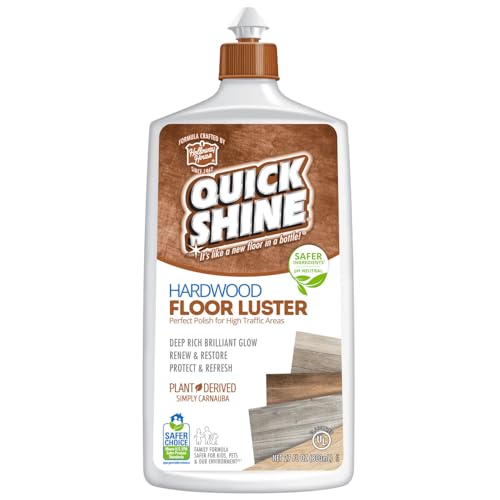
| Quick Shine Hardwood Floor Luster | Maintaining a finished floor | EPA Safer Choice certified | Keeps a low-tox floor looking new without harsh solvents |
Best Low-Tox Floor Maintenance: Quick Shine Hardwood Floor Luster
Once your floor is down and off-gassed, the thing that keeps it non-toxic is what you put on it every month. This is where a lot of people quietly undo their careful choices with aerosol sprays and solvent polishes. Quick Shine's Hardwood Floor Luster carries the US EPA Safer Choice label, which means the formula was reviewed against EPA's safer-ingredient criteria. It restores shine and fills in fine scratches on prefinished hardwood and engineered wood without the fume cloud of conventional polishes. In a house with kids and bare feet, that matters to me more than a glossier result.
Pros:
- EPA Safer Choice certified formula, an independent, meaningful label
- Widely used on both prefinished solid and engineered hardwood
- No harsh solvent smell, water-based cleanup
Cons: This is a finish and maintenance product, not actual flooring. It keeps a floor safe and looking good; it is not a substitute for choosing a low-tox plank in the first place.
Affiliate disclosure: some links on this page are affiliate links. If you buy through them, we may earn a small commission at no extra cost to you. It never changes which products we recommend, and we only point to things we would use ourselves.
The Brands Worth Shortlisting (and Where You Actually Buy Them)
Because full hardwood orders ship as freight, you buy these through the brand or a flooring retailer, and you order samples first. Order the sample, live with it in your actual light for a week, and read the product's certification sheet before you commit. Here is how the better-known lines stack up on the things that matter for non toxic hardwood flooring.
What to look for on each brand's spec sheet
- A stated NAF or CARB2 core certification (engineered lines)
- A named water-based factory finish
- A FloorScore or GREENGUARD Gold air-quality cert
- A clear installation method (click-lock and nail-down let you skip adhesive)
Reputable engineered and solid hardwood lines from major flooring manufacturers increasingly publish exactly these specs. The brands that make you hunt for the certification, or that answer "it's all natural wood!" without a document, are the ones I walk away from. A genuine NAF or FloorScore claim comes with a certificate number, not a vibe.
My buying order for a real project
- Decide solid vs. engineered by your subfloor. Concrete or radiant heat points you to engineered; a plywood subfloor on an upper floor lets you use solid.
- If engineered, require NAF. Not just CARB2. This is non-negotiable for the core.
- Require a water-based factory finish on either type.
- Choose click-lock or nail-down to skip glue, or budget for a separately-vetted low-VOC adhesive if you must glue down.
- Order samples, check the certificate numbers, then buy through the brand site.
If your budget is the main constraint, do not force hardwood. Tile, natural linoleum and cork can be both safer and cheaper, and the room-by-room ranking in Non-Toxic Flooring Options: What's Actually Safe shows where each one fits. A home gym is the one room where wood is rarely the default; the rubber, EVA and cork trade-offs are in Non-Toxic Gym Flooring.
How We Chose
We vet flooring and floor-care products on three things: the materials (real wood, with a known core for engineered lines), independent certifications (CARB2/NAF for formaldehyde, FloorScore or GREENGUARD Gold for VOC emissions, EPA Safer Choice for maintenance products), and transparency, meaning the manufacturer publishes a certificate you can actually check. We did not install these floors in a lab or measure emissions ourselves, and we do not quote VOC numbers we cannot verify. Where a product's only honest role is maintenance rather than flooring, we say so plainly.
What to Avoid
A few things that quietly undermine a "non toxic" hardwood purchase:
- Site-applied oil-based polyurethane. High-VOC solvent fumes for days. Choose a water-based system if you must finish on site.
- Cheap imported engineered wood with no core certification. This is where urea-formaldehyde off-gassing lives. No NAF or CARB2 document, no sale.
- Glue-down installs with a random adhesive. If you glue, the adhesive needs its own low-VOC certification. Click-lock sidesteps the whole issue.
- "Natural" and "eco" with no certificate. These words are not standards. See INCI Names Decoded for the same greenwashing logic applied to labels generally, and Toxic Offenders: The Top 12 Chemicals for why formaldehyde earns its spot on the watchlist.
Laminate is a different conversation, with a wood-fiber core and its own formaldehyde labels, covered in Is Laminate Flooring Safe?. Vinyl and LVP I do not recommend for a lower-tox home; what the vinyl label really means explains why without the scare stories.
When to Finish, When to Replace
A prefinished water-based hardwood floor does most of its off-gassing before it reaches you, and a solid floor can be refinished rather than replaced for decades. When that refinish comes, sanding is usually the way to remove an old floor finish; for stairs, trim and furniture where you need a chemical stripper, the gentler options are in Removing Paint Safely. That longevity is the real low-tox argument for hardwood: you buy once. Maintain it with a Safer Choice product like the one above, keep grit off it, and you avoid the whole replace-and-off-gas cycle that cheaper floors put you through every ten years.
If an older engineered floor is already down and you are worried, the fix is usually not ripping it out. Off-gassing drops sharply over the first months, ventilation helps, and a sealed, finished surface is far lower-emitting than raw board edges. Replacement is a last resort, not a reflex. During any install or refinish, a carbon air purifier helps with the fumes HEPA alone cannot catch; our VOC air purifier guide explains what to look for. And if you are painting the same rooms, do the walls first with a product from Non-Toxic Paint for Every Use, then lay the floor. The full renovation order is in our non-toxic renovation guide.
Safer Swaps
In priority order, easiest and highest impact first. Use up and keep what still works; swap when it is time.
- Swap your floor polish first. This is the one thing on this page you can buy today, it is cheap, and it stops you re-contaminating a clean floor every month. Choose the EPA Safer Choice Quick Shine Hardwood Floor Luster over any solvent polish.
- Swap the finish, not the floor, on your next refinish. When your existing hardwood needs refinishing, specify a water-based system instead of oil-based poly. Same floor, far less off-gassing, no cost beyond the refinish you were doing anyway.
- For new flooring, swap to NAF engineered or prefinished solid. Order samples, verify the certificate numbers, and buy through the brand. If the budget does not reach it, the flooring options ranking has honest alternatives.
The Bottom Line
Non toxic hardwood flooring is one of the more straightforward low-tox wins once you know the four checkpoints: NAF or ULEF core (TSCA Title VI as the legal minimum), water-based factory finish, click-lock or nail-down install, and an air-quality cert like FloorScore or GREENGUARD Gold. Buy samples before you commit, check the certificate numbers, and order the floor itself through the brand.
Your one concrete next step: if you already have hardwood, swap your floor polish to an EPA Safer Choice product this week. If you are shopping, order three samples from brands that publish a NAF certificate, and judge them in your own light before you spend a dollar on freight.