LivingToxFree
Going toxin-free has a reputation for being expensive—and it can be, if you try to replace everything at once. A single "clean living" shopping trip can run into hundreds of dollars for only a handful of products, which is enough to make most people give up before they start.
The good news: an effective, lower-toxin home doesn't require a complete overhaul or a big budget. What matters is prioritising the changes that reduce your exposure the most and making them gradually. This guide breaks down where to spend first, which swaps actually save money, and where a higher price tag buys you nothing.
Start With Your "Daily Drivers"
The most common mistake is trying to replace everything at once. A far more effective approach is to start with your daily drivers—the handful of products that touch your body or your food every single day. A deodorant worn for sixteen hours matters far more than an air freshener sprayed once a week.
Before spending anything, it helps to spend a week noticing what actually gets used daily. For most households the list is short: what food is cooked and stored in, what stays on the skin, and what is breathed indoors. Those are the areas where each dollar buys the biggest reduction in exposure—far more than chasing every chemical name on a label.
The Priority Framework
Not all swaps are equal. Ranked by return on investment—highest impact per dollar first—the priorities look like this:
| Priority | Swap | Why it matters | Budget-friendly option |
|---|---|---|---|
| 1 | Food storage | Plastic can leach into food, especially when heated | Reuse glass jars; add stainless steel containers over time |
| 2 | Cookware | Worn non-stick coatings shed hormone-disrupting "forever chemicals" | One good stainless steel or cast-iron pan |
| 3 | Leave-on personal care | Lotion, deodorant and makeup stay on skin for hours | Simpler formulas and fewer products |
| 4 | Cleaning sprays | Fragranced sprays are inhaled daily | One multi-purpose cleaner, or vinegar and water |
| 5 | Indoor air | Indoor air concentrates pollutants | Open the windows; skip plug-in fragrances (free) |
Several of the highest-impact changes—using up glass jars, opening windows, skipping plug-in fresheners—cost nothing or actually save money.
Swaps That Save You Money
Toxin-free living has a reputation for being costly, but many changes are cheaper over time:
- Reusable cloths instead of disposable wipes and paper towels
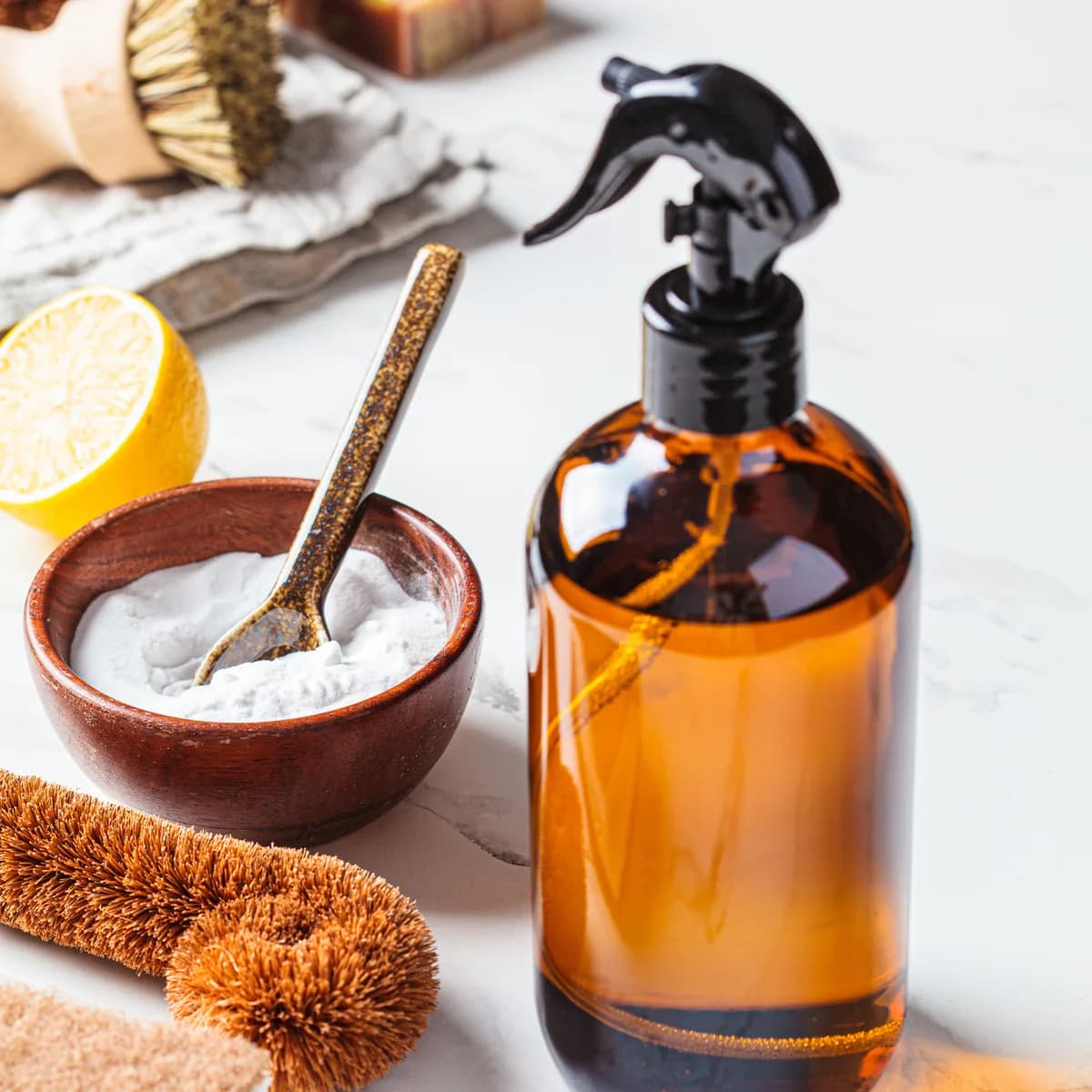
- One multi-purpose cleaner (or plain white vinegar and bicarbonate of soda) instead of a cupboard full of specialised sprays
- Fewer personal care products—a simple routine of three good items beats ten mediocre ones
- Refills and concentrates instead of single-use bottles
A simpler, lower-toxin household usually costs less to run, not more, because it relies on fewer and plainer products.
Where You Don't Need to Spend
This is the part the "clean living" industry tends to leave out: a high price and a "natural" label do not guarantee a safer product. Many premium brands charge for marketing as much as for ingredients, while a plain staple does the same job.
- A special branded version of something simple—like a kitchen or household cleaner—is rarely necessary.
- "Natural" is not the same as "safe," and "synthetic" is not the same as "harmful." It pays to read the ingredient list rather than trust the front of the pack.
- Trendy single-use gadgets add clutter, not safety. The goal is fewer toxins, not more stuff.
A Realistic Three-Month Plan
Spreading changes over time keeps them affordable and sustainable:
- Month 1: Replace the most-used food storage as it wears out, plus one pan.
- Month 2: Swap leave-on personal care as items run out—deodorant, lotion, anything used daily.
- Month 3: Simplify cleaning to one or two multi-purpose products, and improve indoor air for free.
Combined with the use-it-up principle—finishing what you have before replacing it—this approach avoids waste and the dreaded all-at-once shopping bill.
The Bottom Line
Toxin-free living on a budget isn't about buying the "right" expensive products—it's about buying fewer, simpler ones and prioritising the changes that touch you every day. Start with the biggest offenders, make one change at a time, and aim for better, not perfect.