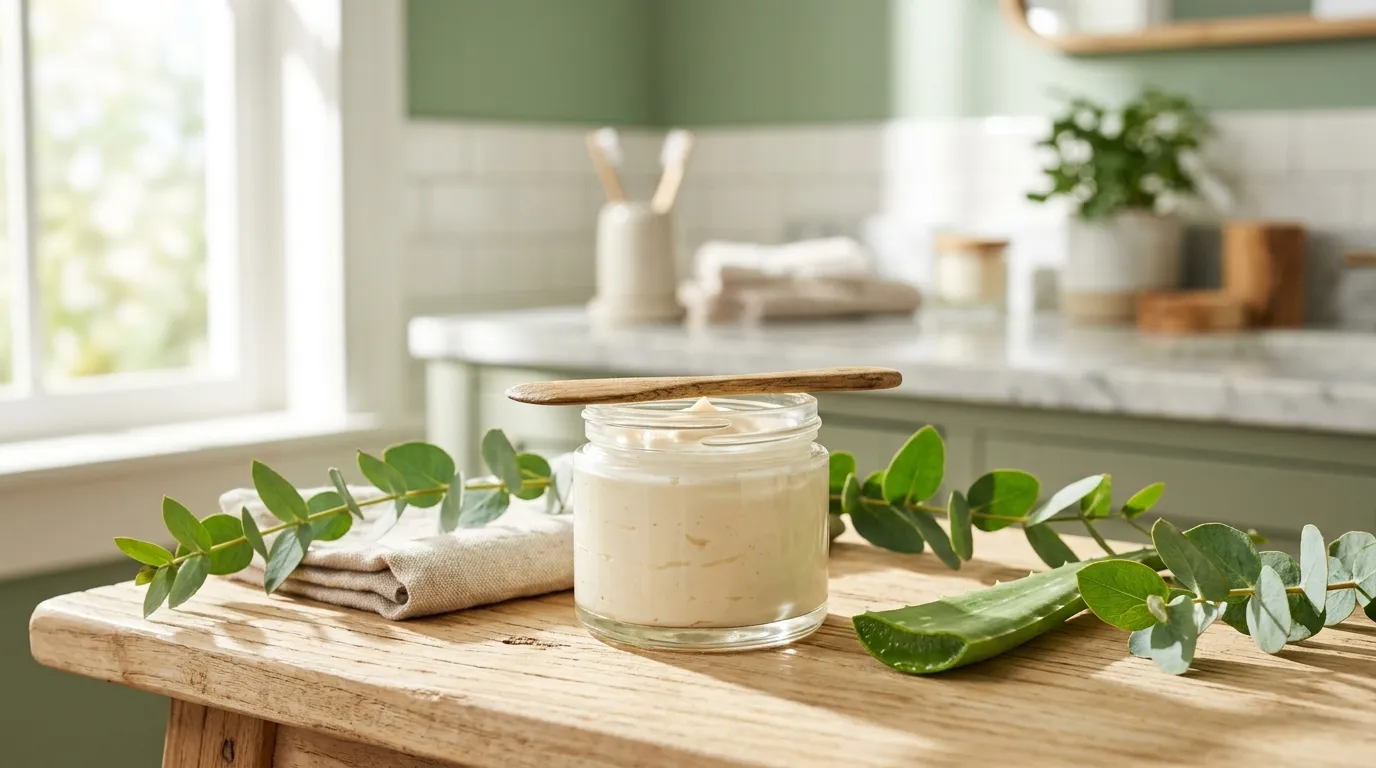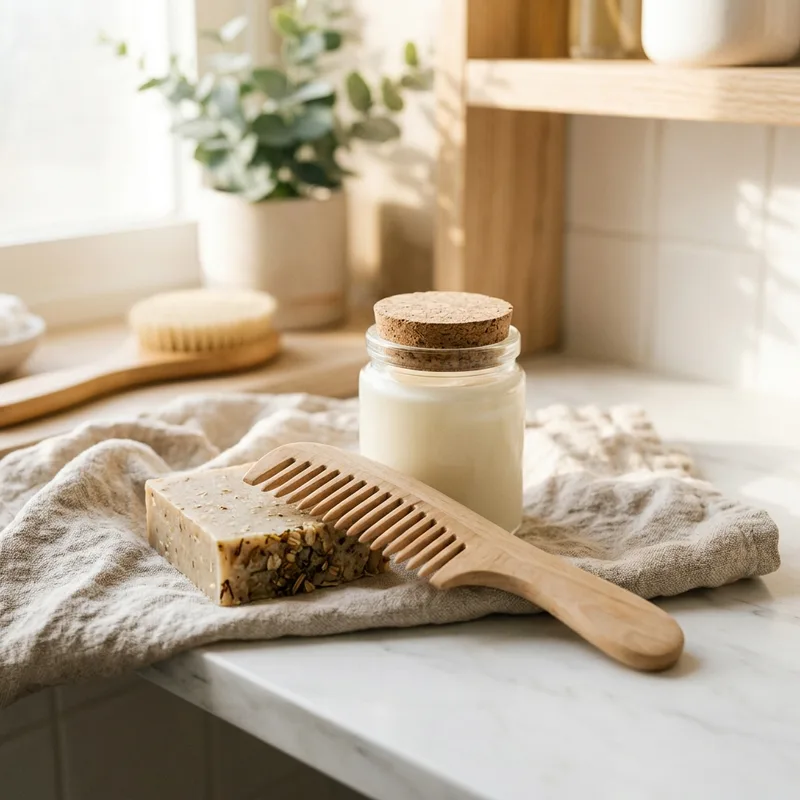
You do not need a shelf of ten products to have decent hair. For most common complaints, a natural hair care remedy you mix in your kitchen does the job: coconut or jojoba oil for dryness and breakage, a dilute apple cider vinegar (ACV) rinse for dullness and buildup, and plain aloe vera gel for a dry, itchy scalp. The trick is getting the concentrations right and not overdoing the "good" stuff, because more is genuinely not better here.
I am a DIYer who wanted to reduce how many bottles live in my shower, not someone chasing a fully product-free life. So this is the honest version: what actually works at ingredient level, why it works, and where people quietly wreck their hair by repeating a remedy too often. No invented before-and-after miracles, just the chemistry and some real caution. If you would rather buy a few clean bottles than mix anything, our guide to natural hair care products covers what the labels mean and which product to swap first.
Start With the Problem, Not the Ingredient
Here is the mistake I see constantly: people grab coconut oil for everything. Coconut oil is wonderful for one specific job and useless (or worse) for others. A remedy only works when it matches the actual problem.
So diagnose first. Is your hair dry and snapping off (that is the strand)? Or is your scalp itchy and flaking (that is the skin)? Or is your hair dull and heavy (that is buildup or hard-water minerals sitting on the cuticle)? Or frizzy (the cuticle lifting as it grabs moisture from the air)? Different problem, different fix.
Match it like this:
| Your concern | What is actually happening | Best pantry remedy | How often |
|---|---|---|---|
| Dry, rough strands | Cuticle open, moisture lost | Coconut or jojoba oil, pre-wash | 1x/week |
| Breakage, snapping | Weakened strand, low elasticity | Light oil + gentler washing | As needed |
| Dull, heavy, filmy | Product or mineral buildup | Dilute ACV rinse | 1x every 1-2 weeks |
| Frizz | Cuticle lifting, humidity | Tiny bit of oil on ends | Daily, sparingly |
| Dry, itchy scalp | Skin dryness/irritation | Aloe vera gel | 2-3x/week |
Coconut Oil: The One With Real Evidence
Of all the DIY hair ingredients, coconut oil has the most ingredient-level science behind it. Its main fatty acid, lauric acid, has a small molecular shape and a known affinity for hair protein, which means it can actually penetrate the hair shaft rather than just coating it. A 2003 study comparing mineral, sunflower and coconut oils found that coconut oil reduced protein loss from hair, used both before and after washing, in a way the other two did not (Rele and Mohile, Journal of Cosmetic Science, on PubMed). It was a lab study on hair samples, not a trial on people's heads, so treat it as a sound mechanism rather than a promise.
In plain terms: used as a pre-wash treatment, coconut oil helps hair hold onto its own protein through the stress of shampooing. That is why it reduces breakage over time.
How I would use it: warm a small amount between your palms, work it from mid-length to ends (skip the scalp if you are oily), leave it 30 minutes to overnight, then shampoo out. Less is more. Drown fine hair in it and you will be washing three times to get it out.
The honest limit: coconut oil is too heavy for some people, especially fine or low-porosity hair that sits flat and greasy after. If that is you, jojoba oil is the better pick. It is technically a liquid wax and behaves more like your scalp's own sebum, so it is lighter and rarely leaves residue.
Apple Cider Vinegar: Great for Dullness, Easy to Overdo
If your hair looks dull, filmy or weighed down, a dilute ACV rinse is the remedy I reach for. Hair likes a slightly acidic environment; its healthy surface pH sits around 4 to 5. Many washing routines and hard water nudge it more alkaline, which lifts the cuticle and makes hair look flat and feel rough. A diluted acid rinse helps the cuticle lie flat again, so light bounces off it and hair looks shinier.
The dilution matters more than anything else here. Use 1 to 2 tablespoons of apple cider vinegar per cup of water. Pour it over clean hair, let it sit a minute, rinse. That is it.
Undiluted vinegar is far too acidic for regular contact and can irritate your scalp and, over time, roughen the strand. This is the classic "if a little works, more must be better" trap, and it backfires. Once every one to two weeks is plenty for most people. If your scalp ever stings or tingles, you went too strong.
Skip ACV entirely if your scalp is broken or genuinely sensitive, and wait a couple of weeks after coloring if you want the color to last. If you color your hair and want the dye itself to be gentler, what non-toxic hair color really means is the place to start.
Aloe Vera: The Quiet Winner for a Dry, Itchy Scalp
Aloe vera is my favorite low-drama remedy for scalp dryness and itch. It is mostly water, which is the point: it hydrates the skin without a greasy film, and it is soothing enough that it rarely causes problems. The National Center for Complementary and Integrative Health notes aloe is widely used topically and generally well tolerated for skin.
Use plain aloe vera gel (ideally straight from a leaf, or a bottled gel without a long list of fragrance and dyes, check the label on INCIdecoder or our ingredient label checker first). Massage a thin layer into the scalp, leave 20 to 30 minutes, rinse. Two or three times a week is fine.
What aloe is not: a cure for dandruff or a medical scalp condition. If you have persistent heavy flaking, redness or crusting, that is a dermatologist conversation, not a kitchen one. A remedy is for ordinary dryness, not diagnosis.
Protein Treatments: The Overuse Trap Nobody Warns You About
Here is where DIY hair advice goes wrong most often. Egg masks, gelatin, "protein" rinses: people do these weekly thinking they are strengthening their hair, and then wonder why it suddenly feels like straw.
Hair needs a balance of protein and moisture. Protein treatments temporarily fill gaps in a damaged cuticle and add stiffness, which feels like strength. But too much protein, too often, leaves hair rigid, dry and more prone to snapping. This is called protein overload, and it is a real thing DIYers trip over because the ingredients are cheap and feel productive.
My rule: treat protein (eggs, gelatin, yogurt masks) as an occasional fix, once a month at most, and only if your hair is genuinely over-moisturized and limp. If your hair is already dry and brittle, protein is the last thing it needs; it needs oil and water. When in doubt, do the moisture remedy, not the protein one.
For Curls and Coils: Water First, Then Seal
If your hair is curly, coily or very dry, the remedy that matters most is not an ingredient but an order. Water is what actually hydrates hair; oils and butters slow down how fast it leaves. So apply your oil to damp hair, not dry, to seal moisture in rather than coat a dry strand. Many people with textured hair layer it as water or a water-based leave-in first, then a light oil, then a cream or butter on the ends, sometimes called the LOC method (liquid, oil, cream). A small amount of shea butter on the ends works as the "cream" step for very dry hair.
The same rule applies to everyone: oil on bone-dry hair mostly makes it greasy. Oil on damp hair makes it soft.
Essential Oils: Scent, Not Medicine
Essential oils are the obvious way to make a homemade rinse or oil smell nice, and I use them for scent myself since I gave up perfume. Two cautions keep them friendly. Always dilute them in a carrier oil or a rinse, never put them neat on the scalp, and do a patch test on your inner arm before using a new one on your head. Essential oils are fragrance ingredients in their own right, and the FDA notes that some people are allergic or sensitive to fragrance ingredients (FDA on fragrances in cosmetics); our guide to what "fragrance" on a label really covers explains why "natural scent" does not automatically mean gentle.
A Word on Hair-Growth Remedies
Rosemary oil, castor oil, onion juice and "DHT-blocking" masks are all over social media as hair-growth fixes. I do not make hair-growth claims for any kitchen remedy, and I would be wary of anyone who does. An oil can make the hair you have less likely to break, which can look like growth over months, but that is a different thing from growing new hair. Sudden shedding, patchy loss or thinning that keeps going is a reason to see a doctor or dermatologist, because it can have medical causes worth finding.
Keep It Fresh: DIY Shelf Life
Homemade remedies have no preservative, which is the point and also the catch. A few habits keep them from becoming a problem:
- Mix small batches you will use in one go or within a few days.
- Keep anything with water in it (ACV rinse, aloe mixes, tea rinses) in the fridge and use it within a few days, sooner if it smells off or looks cloudy.
- Plain oils last longer than mixes, but keep them capped and out of sunlight, and do not add water to the jar.
- Use clean hands or a spoon rather than dipping fingers into a shared jar.
What I Would Skip
Not every pantry trend deserves your scalp.
- Lemon juice to "lighten" or clarify: very acidic and photo-reactive, easy to irritate, not worth it over a dilute ACV rinse.
- Baking soda as shampoo: strongly alkaline, the opposite of what hair's surface wants, and a known route to dryness and breakage with repeated use. This one is popular and I think it is a mistake.
- Mayonnaise masks: it is just oil and egg with extras you do not need. Use plain oil.
- Beer, cinnamon, raw honey left on for hours: more mess than payoff for most people.
Strong opinion, calmly held: the best DIY routine is short. Two or three remedies you actually repeat beat a Pinterest board of twelve you try once.
If you would rather buy a few well-made bottles than mix anything, that is completely valid, and you do not have to choose one camp. I keep a couple of clean store-bought shampoos in rotation alongside the occasional oil treatment.
A Simple Weekly Plan You Can Actually Keep
You do not need all of these at once. Pick the one that matches your main complaint and add a second only if you need it.
- Dryness/breakage: coconut or jojoba oil pre-wash, once a week.
- Dullness/buildup: dilute ACV rinse, once every one to two weeks.
- Itchy scalp: aloe gel, two to three times a week.
- Frizz: a rice-grain amount of jojoba oil smoothed over dry ends, daily as needed.
Watch for the signals that you are overdoing it: greasy roots that will not wash clean (too much oil), a stinging scalp (ACV too strong or too frequent), or hair that feels stiff and snaps (too much protein). Back off and the hair recovers.
Where DIY Ends and Products Begin
DIY remedies shine for moisture, shine and scalp comfort. They are weak where you genuinely need formulation: gentle daily cleansing, heat protection, and leave-in conditioning that actually distributes evenly. That is fine. Reducing product load is the goal, not product zero.
If you want to swap the bottles you keep rather than replace your whole routine, the two biggest ones to get right are your cleanser and conditioner. I go deeper on choosing those in Are Sulfates Bad for Your Hair & Skin? and in Best Natural Shampoo & Conditioner (Sulfate-Free). And before you buy any new hair product, the half-minute habit that has saved me from a lot of fragrance-heavy bottles is checking the full ingredient list first; here is how to read it in INCI Names Decoded.
Safer Swaps
Use up what you have first, then switch one product at a time in this order:
- Swap a leave-in frizz serum for a drop of jojoba oil. Cheapest, easiest, nothing to overthink. A rice-grain amount on dry ends controls frizz without the fragrance load of most serums.
- Swap a "clarifying" shampoo for an occasional dilute ACV rinse. It handles buildup and dullness for pennies, as long as you keep it to 1-2 tablespoons per cup of water and once every week or two. For the shampoo you still use daily, choose a gentler sulfate-free one from Best Natural Shampoo & Conditioner (Sulfate-Free).
- Swap a deep-conditioning mask for a coconut or jojoba oil pre-wash. One pantry jar replaces a whole product category for most dry-hair needs.
The Bottom Line
Pick the single remedy that matches your biggest hair complaint and do only that for a month: oil for dryness, dilute ACV for dullness, aloe for an itchy scalp. Keep the concentrations low, keep protein treatments rare, and let your hair tell you when you have gone too far. That is the whole method, and it costs almost nothing. When you are ready to tidy up the bottles you actually keep, start with the swap order in Best Non-Toxic Natural Hair Care Products Compared, and for the rest of your bathroom, the non-toxic personal care guide takes it one product at a time.