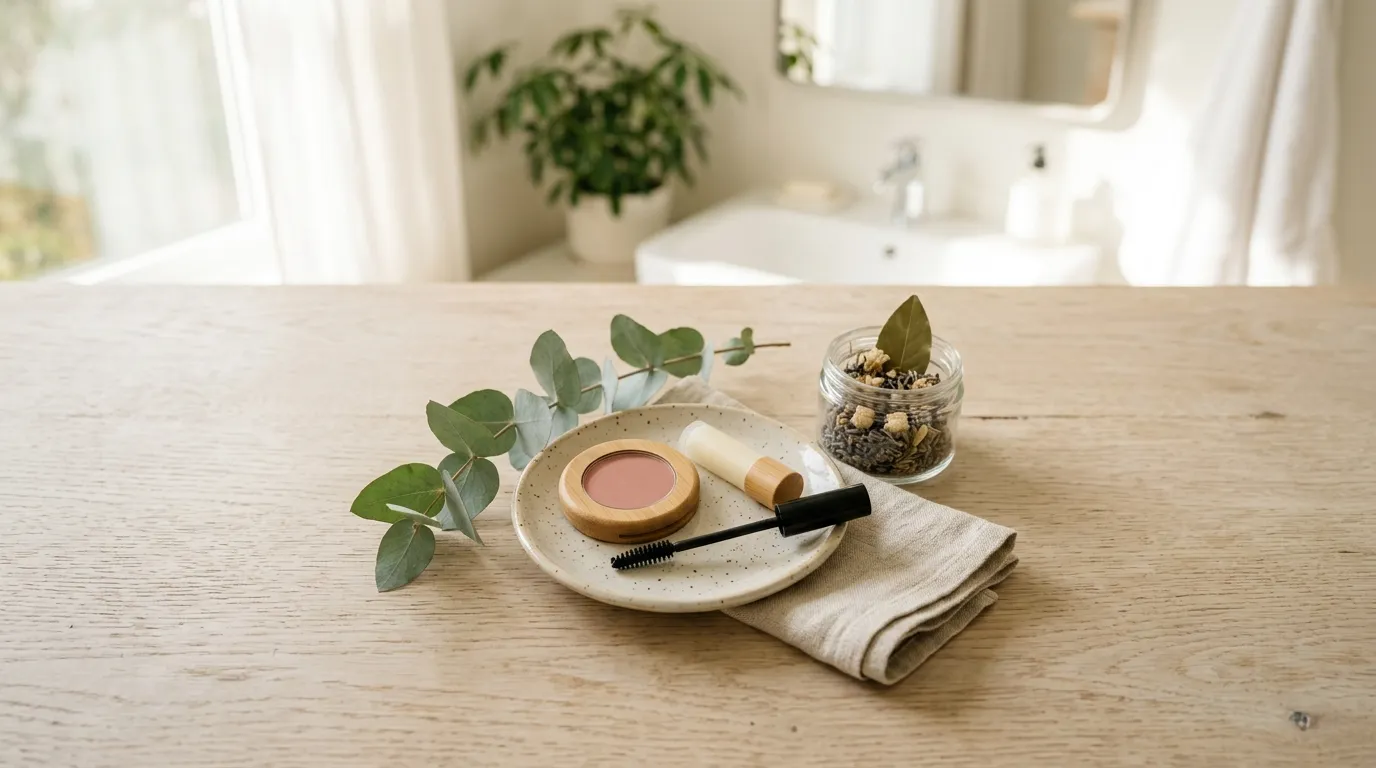
The best non-toxic makeup is the kind you wear most often, made without undisclosed fragrance, phthalates or ingredients you would rather not leave sitting on your skin all day, and ideally backed by a third-party certification like EWG Verified rather than a brand's own "clean" sticker. If you only change one thing, change the product that covers the most skin and stays on longest. For most of us that is foundation, then eye makeup.
Here is my honest position: "clean makeup" is a marketing phrase with no legal definition, so a pretty label tells you almost nothing. What actually matters is the ingredient list and whether anyone independent has checked it. Below I share how I vet makeup, four products that hold up to that scrutiny, and where I personally cut corners (yes, mascara, we need to talk).
What Makes Makeup Genuinely Low-Tox
A product earns the "non-toxic" label in my book by what it leaves out and how honest it is about the rest. The main things I look for:
- No "fragrance" or "parfum" with nothing behind it. That single word can hide dozens of undisclosed ingredients. I explain why in Is Fragrance in Products Safe?
- No added phthalates. These are chemicals that help scent linger and plastics stay flexible, and you do not want them in a product you reapply daily. More in What Are Phthalates in Cosmetics?
- A readable, complete INCI list. If a brand will not show you the full ingredient list, that is my answer. Learn to read one in INCI Names Decoded
- A real certification beats a self-declared claim. EWG Verified and MADE SAFE involve outside review. "Clean," "pure" and "natural" on their own involve nobody.
The words "clean," "natural" and "organic" are not interchangeable, and only one of them is regulated. I untangle them in Clean Beauty vs Natural vs Organic. Short version: a USDA Organic seal means something specific; a "clean beauty" badge means whatever the brand wants it to mean.
The One Swap That Matters Most
Not all makeup is equal in exposure. A quick rule I use: how much skin does it cover, and does it stay on or come off? A foundation worn all over your face, every day, for twelve hours, is a bigger deal than an eyeshadow you wear twice a month and remove by evening. Leave-on and large-surface products come first; occasional and small-area products come later.
So if your budget is one purchase this month, put it toward your everyday base, not a novelty lip color. The FDA notes that cosmetics and their ingredients are not required to have FDA approval before going to market, which is exactly why your own ingredient-checking matters so much here.
Our Top Picks at a Glance
| Product | Best For | Key Material or Certification | Why It Wins |
|---|---|---|---|
| Well People Supernatural Complexion Stick | Best Overall (everyday base) | EWG Verified | Foundation plus concealer in one, certified, highest-impact swap |
| Organic Makeup Vegan Eyeshadow Palette | Best for Clean Eyes | Vegan, organic-focused formula | Cruelty-free color with a built-in mirror |
| Laura Geller Best of the Best Baked Palette | Best Full-Face Palette | Baked, talc-conscious formulas | One palette covers eyes, cheeks and glow |
| Poppy Austin Organic Mascara | Best for Sensitive Eyes | Hypoallergenic, organic ingredients | A cleaner mascara option, the hardest category to crack |
Best Overall: Well People Supernatural Complexion Stick
If I could only point you to one product on this page, it would be a base, because that is the one that covers the most skin. The Well People Supernatural Complexion Stick does double duty as foundation and concealer, which means fewer products on your shelf, and it carries EWG Verified status, meaning an outside body has reviewed the formula against their standards rather than the brand grading its own homework. The stick format is also genuinely practical for a busy morning.
Pros:
- EWG Verified, so the ingredient vetting is third-party, not self-declared
- Foundation and concealer in one, fewer products to buy and check
- Stick application is fast and travel-friendly
- Buildable, so it works for both light and fuller coverage days
Cons: Stick foundations can look heavier on very dry skin unless you prep with moisturizer first, and the shade range, like most clean lines, is narrower than a conventional drugstore wall.

Best for Clean Eyes: Organic Makeup Vegan Eyeshadow Palette
Eyeshadow is a smaller-surface, often wash-off-by-night product, so it sits lower on my priority list, but it is a satisfying swap once your base is sorted. This vegan palette leans on organic-focused, cruelty-free formulas and includes a mirror, which matters more than you would think when you are doing eyes on the go. As always, read the full ingredient list before you buy, because "organic" on the front of a palette does not guarantee every shade is squeaky clean.
Pros:
- Vegan and cruelty-free formulation
- Built-in mirror makes it a genuine grab-and-go option
- A palette gives you range without buying singles
Cons: Color-cosmetic shades vary in pigment and staying power between tones, so expect to prime your lids for the lighter shades to really show up, and verify the INCI list yourself since "organic" is used loosely on cosmetics.

Best Full-Face Palette: Laura Geller Best of the Best Baked Palette
When you want one product that handles eyes, cheeks and a little glow, a full-face palette earns its keep, especially for travel. Laura Geller's baked formulas have a loyal following for their smooth, blendable finish, and a single palette keeps you from juggling five separate products. This is the one on the list I would call "cleaner conventional" rather than certified clean, so it is the pick for someone easing in rather than a purist.
Pros:
- One palette covers eyes, cheeks and highlight
- Baked formulas blend smoothly and layer well
- Excellent value per use for a full-face kit
Cons: It is not third-party certified the way the Well People stick is, so check the ingredient list against your own non-negotiables, and a single palette's shades will not flatter every skin tone equally.

Best for Sensitive Eyes: Poppy Austin Organic Mascara
Let me be honest with you, because this is the category where I have struggled the most. Every "clean" mascara I have tried over the years has smudged, flaked, or vanished by lunch. Mascara is genuinely the one product in my own routine that is not reliably natural, so I am not going to pretend otherwise. The Poppy Austin organic mascara is a hypoallergenic, organic-ingredient option worth a try, particularly if sensitive eyes rule out conventional formulas, but set your expectations: clean mascaras usually trade a little performance for cleaner ingredients.
Pros:
- Hypoallergenic, a plus for sensitive or reactive eyes
- Organic-ingredient formula
- Waterproof claim gives it a better shot at lasting through the day
Cons: Mascara is the hardest clean category by far, and lighter natural formulas can smudge or flake more than conventional ones, so build thin coats rather than loading it on.

How We Chose
We prioritized products that disclose a full ingredient list, favor third-party certification like EWG Verified over self-applied "clean" claims, and avoid undisclosed fragrance and added phthalates. Where a product is cleaner-conventional rather than certified, we say so plainly. We have not lab-tested these ourselves; this is ingredient-list and transparency vetting, the same half-minute check I run on every new product on INCIdecoder before it comes home.
What I Actually Do (And Where I Cut Corners)
My own makeup bag is much lighter than it used to be. I wore a lot of makeup once, and when I started reading ingredient lists I was genuinely shocked, and briefly tried to replace everything at once. That got expensive fast. What I learned: use up what works, swap thoughtfully, and accept that one category might stay imperfect. For me that category is mascara, and I have made my peace with it.
The upside nobody mentions: wearing less makeup overall quietly shrank my spending. Clean makeup is often priced like premium conventional makeup, so the real savings came from buying fewer products, not cheaper ones.
My thirty-second habit
Before any new makeup or skincare enters the house, I look it up on INCIdecoder. It takes about half a minute and has saved me from plenty of "clean" products that were not. Do this one thing and you will outgrow needing anyone's buying list, including mine.
What to Avoid on the Label
You do not need to memorize chemistry. Scan for a few recurring red flags:
- "Fragrance" or "parfum" with no breakdown
- Anything ending in "-phthalate" (rare in a clean line, common in conventional)
- Long preservative debates you would rather sidestep, covered calmly in Are Parabens Bad for You?
Repeated small exposures are the real story here, not any single product, which is the whole idea behind the toxic buildup effect. It is also why the daily leave-on base matters more than the occasional lipstick.
When to Replace Your Makeup
Clean or conventional, makeup does not last forever. Mascara and liquid eye products are the shortest-lived; the FDA notes cosmetics can grow harmful bacteria over time, especially around the eyes. Toss mascara every few months, and replace any product that changes smell, texture or color. Powders last longer than creams and liquids.
The Bottom Line
The best non-toxic makeup is not about owning a perfect, all-certified kit. It is about swapping your highest-exposure product for a cleaner, transparent one, and letting the rest follow as you use things up.
Your one next step: look at your everyday base, foundation or whatever covers the most skin, and make that your first upgrade. The Well People Supernatural Complexion Stick is the easiest high-impact choice because it is EWG Verified and doubles as concealer. Then keep building, at your pace, with help from How to Transition to Non-Toxic Personal Care and the full Personal Care & Beauty guide.